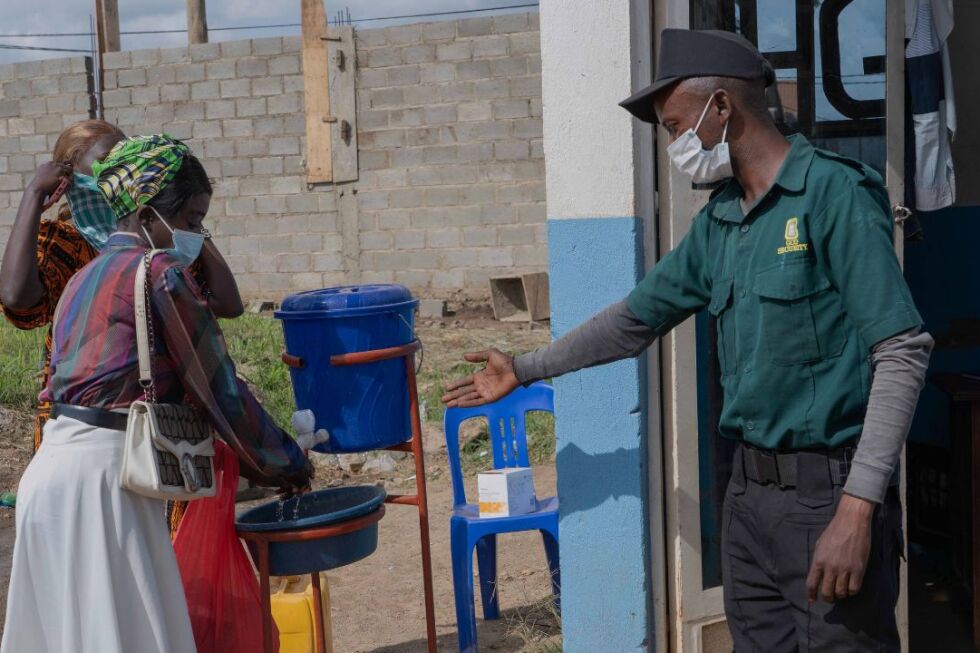
In an ongoing public health crisis centered in the northeastern Democratic Republic of the Congo, a rare strain of Ebola has sparked an outbreak that the World Health Organization has now designated a Public Health Emergency of International Concern (PHEIC), with fatalities topping 100 and cases already spreading into neighboring Uganda. What follows is a comprehensive chronological breakdown of how the under-recognized crisis unfolded, marked by early challenges in identifying the unusual pathogen behind the spread of disease.
Between April 24 and 27, the first suspected case of the mysterious illness – a local health worker – fell ill and died in Bunia, the capital of Congo’s Ituri Province. According to Congo’s health minister, the worker’s body was subsequently transported to the nearby mining hub of Mongbwalu. While Congolese officials cite April 24 as the date of death, the Africa Centers for Disease Control and Prevention (Africa CDC) records the death occurring on April 27, following the onset of severe hemorrhagic symptoms characteristic of filovirus infections like Ebola.
On April 28, the Africa CDC confirmed that a close contact of the initial suspected victim had also died after developing matching disease symptoms. Just two days later, on April 30, on-site testing of patient samples in Bunia returned negative results for Zaire ebolavirus – the strain responsible for nearly all previous large Ebola outbreaks in Congo. The WHO notes that three Ebola species are known to trigger major outbreaks: Zaire, Sudan, and the far less common Bundibugyo virus. It would take a full two additional weeks for public health authorities to confirm that the rarer Bundibugyo strain was the actual cause of the outbreak.
By May 5, the WHO was formally notified of a “high-mortality” outbreak of unknown origin in Mongbwalu, with multiple health workers already counted among the deceased. Local preliminary reports placed the death toll at roughly 50 by this point. Congolese health officials later noted that the movement of the first victim’s contagious remains to Mongbwalu likely sparked the local transmission chain there, as bodies of Ebola victims carry extremely high infection risk.
On May 11, a 59-year-old Congolese man with Ebola-typical symptoms of fever and body aches checked into a hospital in Kampala, Uganda’s capital, located roughly 434 miles from Ituri Province. Ugandan health authorities confirmed he had crossed the border from Congo to seek care. A WHO rapid response team deployed to investigate the expanding outbreak in Mongbwalu and the nearby Rwampara health zone on May 13, as transmission continued to accelerate. The following day, 13 blood samples from suspected Ebola cases in Rwampara were sent for official analysis at a national laboratory in Kinshasa, Congo’s capital. That same day, the cross-border patient from Congo died in the Kampala hospital, and his remains were returned to Congo for burial.
May 15 marked a turning point in the crisis: laboratory analysis from Kinshasa confirmed the presence of Bundibugyo virus in eight of the 13 Rwampara samples. Posthumous testing of the Ugandan patient’s sample also returned positive for the rare strain, for which no licensed vaccine or specific antiviral treatment currently exists. The Congolese Ministry of Health officially declared an Ebola outbreak, with the Africa CDC reporting 246 suspected cases and 65 fatalities. Within days, those numbers jumped to more than 300 suspected cases and over 100 confirmed deaths. Ugandan officials confirmed their country’s cases were limited to two people, both of whom had entered Uganda from Congo. This outbreak marks the 17th major Ebola event in Congo since the virus was first discovered in the country in 1976.
On May 17, the WHO formally designated the cross-border outbreak in Congo and Uganda a PHEIC, the United Nations health agency’s highest level of public health alert. The WHO emphasized that the outbreak does not meet the criteria for a pandemic classification like that applied to COVID-19, and explicitly advised against countries closing their borders to Congo or Uganda. Even so, the agency urged all nations sharing a land border with the two affected countries to immediately strengthen routine disease surveillance and ensure frontline health workers receive specialized training to identify, triage and manage Ebola cases.
The following day, Congolese health officials confirmed that an American doctor working in Bunia had tested positive for the virus. Dr. Jean-Jacques Muyembe, medical director of Congo’s National Institute of Bio-Medical Research, confirmed the case was counted among the infections in Bunia, where the doctor had been treating patients at a local hospital, according to his employing organization.
This reporting was a collaborative effort by Associated Press writers based across the African continent: Monika Pronczuk in Dakar, Senegal, Evelyne Musambi in Nairobi, Kenya, and Rodney Muhumuza in Kampala, Uganda.