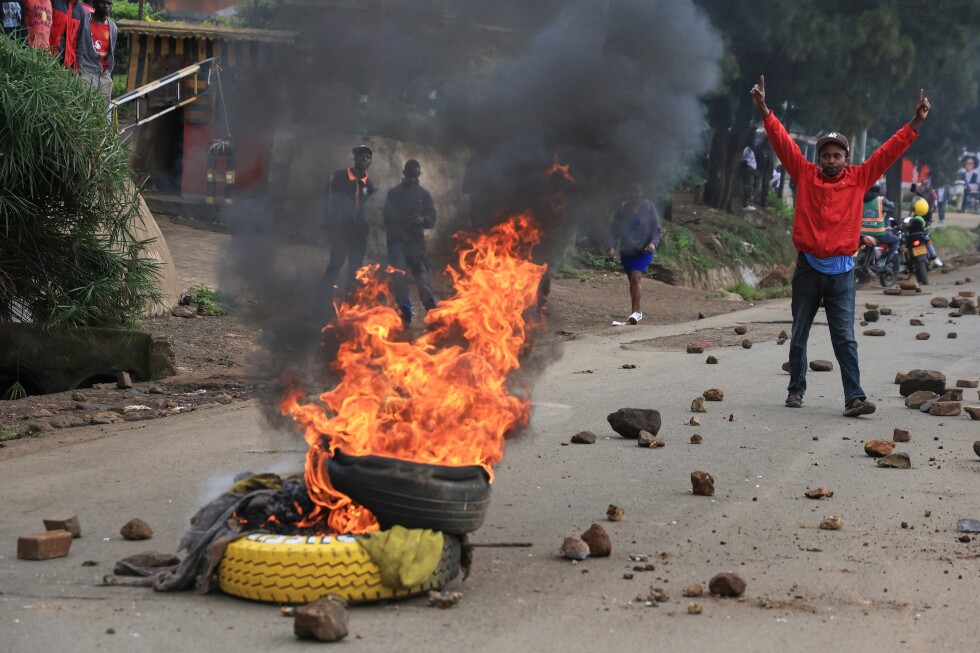
On a Monday morning in Kenya’s capital Nairobi, widespread public protests erupted alongside a coordinated national public transport strike, called to oppose a historic surge in national fuel prices that has sent shockwaves through the East African economy. The industrial action brought the country’s most populous urban center to a standstill: commuters were left trapped across suburban neighborhoods, with central business districts largely empty of daily activity. Protesters set fire to tires along major arterial roads, prompting most private motorists to avoid travel entirely and keep their vehicles parked at home. In response to the unrest, the Kenya Association of Private Schools issued guidance for member institutions to prioritize student safety, leading the vast majority of schools across the affected region to shift to remote online learning for the day. The catalyst for the unrest came just four days prior, when Kenya’s energy regulators announced a new round of fuel price adjustments that pushed costs to all-time record highs. The update set diesel prices up by 23.5% and gasoline prices up by 8% nationwide, a jump far steeper than many households and businesses had anticipated. As of Monday, President William Ruto—who is currently traveling outside of Kenya—had not issued any public statement addressing the new price levels or the resulting protests. This is not the first time Kenya has faced a politically charged fuel price crisis: during an earlier price review in April, Ruto attributed a previous jump to global market volatility tied to the Iran conflict, and intervened to cut fuel taxes in order to prevent a similarly sharp increase at that time. Kenya’s leading business advocacy group, the Kenya National Chamber of Commerce and Industry, sounded the alarm over the price hike within hours of its announcement Friday. In an official statement, the chamber warned that elevated fuel costs would ripple through every sector of the national economy, driving up prices for nearly all consumer goods and public services. The organization also pushed back against claims that the surge is driven solely by global market trends, noting that between April and May, global crude oil prices rose only around 10.7% — less than half the percentage increase seen for Kenyan diesel prices over the same window. “This points to the continued role of domestic cost buildup,” the statement read, indicating that internal factors beyond global shifts are contributing to the extreme price jump. The political opposition has seized on the crisis to criticize the Ruto administration. Former Deputy President Rigathi Gachagua, who was impeached on corruption charges in October 2024 before aligning with the national opposition, has placed the blame for the sharp surge on corrupt business elites he says are inflating prices to pad their own profit margins. Gachagua pointed out a striking comparative inconsistency: neighboring landlocked nations that import all of their fuel through Kenyan ports—including Uganda—actually have lower retail fuel prices than Kenya, despite the additional cross-border transport costs those imports incur. As a regional trade hub, Kenya handles the vast majority of fuel and goods imports for multiple East African inland nations, with all cargo moving overland from the Indian Ocean port of Mombasa. As the strike and protests enter their first day, the Kenyan public is waiting for a formal response from President Ruto, with widespread anxiety over how the fuel price increase will erode already strained household budgets across the country.
Protesters light bonfires during public transport strike in Kenya over fuel prices