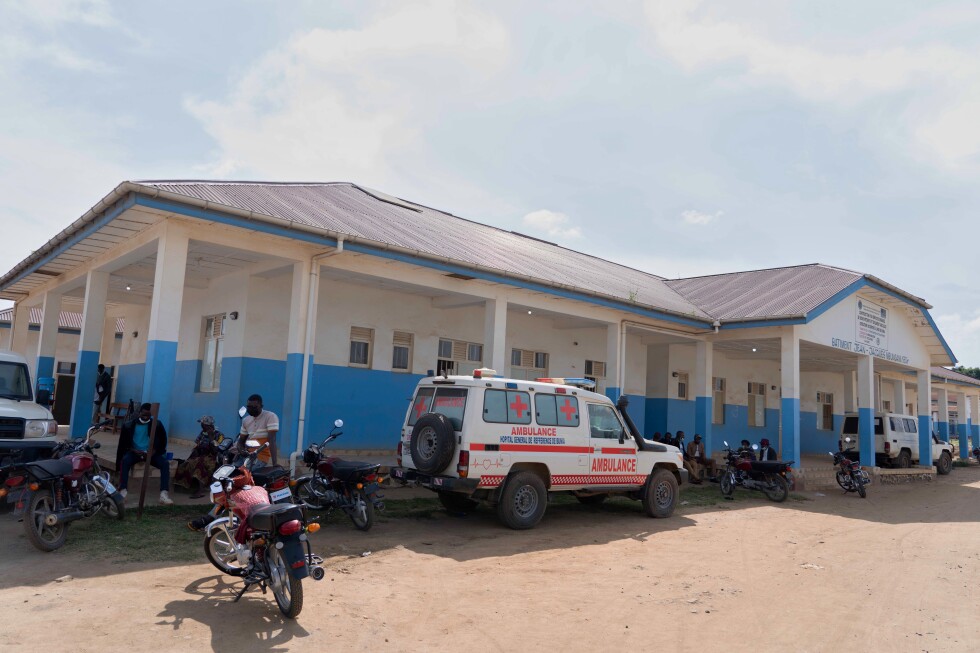
DAKAR, Senegal – As a rare and deadly Ebola outbreak continues its spread across the eastern Democratic Republic of the Congo and spill over into neighboring Uganda, global and national health authorities have ramped up emergency responses, marking one of the most pressing public health crises in Africa this year. During an official visit to the Ebola-impacted Ituri region Sunday evening, Congolese Health Minister Samuel Roger Kamba announced the launch of three new dedicated Ebola treatment centers to expand strained care capacity in the hard-hit area. Standing in Bunia, Ituri’s provincial capital and largest urban center, Kamba acknowledged that existing local healthcare facilities are already overwhelmed by a surge of patients showing Ebola symptoms, but emphasized that the new facilities will boost the country’s ability to care for infected people and slow transmission. The World Health Organization had formally designated the outbreak a Public Health Emergency of International Concern (PHEIC) – the WHO’s highest level of global public health alert – earlier the same day, following weeks of rising case counts. As of the announcement, officials have recorded more than 300 suspected Ebola cases, with 88 confirmed fatalities in the DRC and two additional deaths in Uganda, where the virus has crossed the shared border. While the epicenter of the outbreak remains Ituri, suspected cases have already been documented as far as Kinshasa, the DRC’s national capital, and Goma, the largest city in the country’s eastern region, raising alarms about potential wider spread across Central Africa. In a separate post to the social platform X Sunday, the WHO Regional Office for Africa confirmed that a joint 35-member expert team from the global health body and the Congolese Ministry of Health has already deployed to Bunia, carrying 7 tons of critical emergency medical supplies and protective equipment to support response efforts. Ebola is a highly contagious viral pathogen that spreads through direct contact with infected bodily fluids including blood, vomit, and semen. While the disease is relatively rare, it causes severe, often fatal organ damage and bleeding in a majority of untreated cases. What makes the current outbreak particularly alarming for public health experts is that it is caused by the Bundibugyo virus, a rare Ebola variant that was only confirmed as the source of this outbreak this past Friday. No officially approved vaccines or targeted therapeutics currently exist for this specific strain, creating a critical gap in response capacity. Prior to 2024, the Bundibugyo variant has only been detected two other times in recorded history: first in Uganda’s Bundibugyo District during a 2007–2008 outbreak that sickened 149 people and killed 37, and again in a 2012 outbreak in the DRC’s Isiro region that recorded 57 cases and 29 deaths. Speaking to Sky News Sunday, Jean Kaseya, Director-General of the Africa Centres for Disease Control and Prevention, acknowledged the urgent gaps in the global response, saying, “Currently I’m on panic mode because people are dying, I don’t have medicines, I don’t have vaccine to support countries.” Kaseya added that he has convened an emergency meeting of all global public health and aid partners to advance access to experimental candidate vaccines and therapeutics, with the goal of rolling out limited supplies to impacted areas in the coming weeks. The WHO’s PHEIC designation is only triggered when an outbreak meets three strict criteria: it poses a serious enough threat to global health to require coordinated action, it carries a significant risk of international spread across borders, and it demands a unified, cross-country response. Global health leaders hope the declaration will accelerate funding commitments from donor nations and spur rapid action from pharmaceutical partners to make experimental treatments available to frontline teams. With more than 20 previous Ebola outbreaks recorded across the DRC and Uganda over the past half century, health authorities have well-established protocols for containing viral spread, but the lack of targeted tools for the rare Bundibugyo variant has created an unprecedented challenge for the current response.
Congo health minister announces 3 Ebola treatment centers in Ituri amid ongoing outbreak