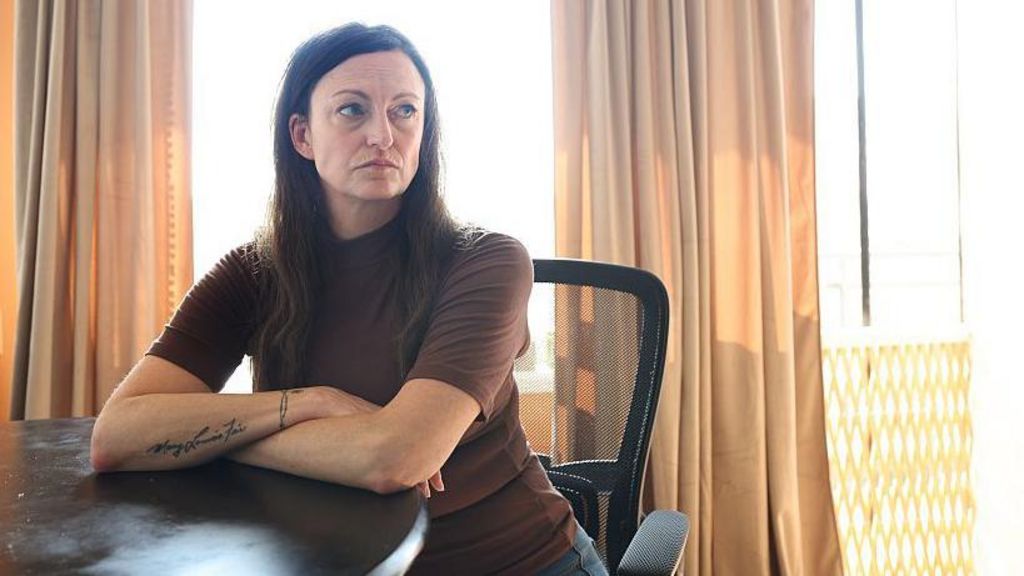
For nearly 30 years, 49-year-old Toronto-based performer Claire Brosseau has navigated a devastating path of severe, treatment-resistant bipolar disorder and post-traumatic stress disorder (PTSD). A veteran stand-up comedian and actor who has worked across film, television, and theatre worldwide, Brosseau says she has tried every available intervention for her conditions—from talk therapy and pharmaceutical interventions to electroconvulsive brain stimulation. None have brought relief. Today, she is unable to work, leave her home unaccompanied, or maintain consistent connection with her loved ones, describing her own condition as “functionally terminal.” Now, she is at the center of a high-stakes national debate over whether Canada should expand its existing legal medically assisted dying (MAID) framework to include people whose only qualifying condition is untreatable mental illness.
Currently, MAID is legal in Canada for patients with terminal illnesses and irreversible serious physical disabilities, but it explicitly excludes those whose sole diagnosis is mental illness. Brosseau, who has lived with debilitating mental illness since adolescence and received psychiatric care in four major North American cities over three decades, is now asking an Ontario court for a special exemption to access MAID immediately, arguing that the existing law is discriminatory and unconstitutional. She says she wakes every day consumed by overwhelming dread and crippling anxiety, and she wants a peaceful, controlled death rather than being forced to die by suicide.
“Stigma is at the root of this exclusion,” Brosseau explained in an interview with the BBC. “If I were diagnosed with terminal cancer tomorrow, I would be immediately eligible for MAID even if I chose to stop treatment. But people like me, living with unbearable, incurable mental suffering, are denied the same right that is already a standard part of Canadian healthcare. I am not asking for special treatment—only equal treatment.”
Canada first approved MAID for terminally ill patients in 2016, and expanded it to include non-terminal patients with irreversible serious medical conditions five years ago, following a successful legal challenge by disability advocates. The federal government had initially planned to extend eligibility to patients with treatment-resistant mental illness by 2024, but has twice delayed the expansion, most recently pushing any decision to 2026, amid widespread concerns that the Canadian healthcare system lacks the infrastructure, training, and regulatory frameworks to safely implement the change. Prime Minister Mark Carney has confirmed he will not make a decision until he receives the final recommendations from a joint parliamentary committee tasked with reviewing the proposed expansion. “I will base my position on the full evidence presented to the committee,” Carney told reporters recently.
Over two months of hearings, the cross-party committee heard conflicting testimony from medical experts, disability advocates, and international commentators that laid bare the deep divides on this issue. Critics of expansion argue that expanding MAID to mentally ill patients risks turning assisted dying into a substitute for inadequate social and medical support. They point to reports of Canadian healthcare providers offering MAID to disabled patients who never requested it, arguing that systemic gaps in affordable housing, disability support, and specialized mental healthcare leave many vulnerable people with no other option to end unaddressed suffering. “We are currently investing in ending lives instead of investing in improving lives,” said Krista Orr, president of national disability advocacy group Inclusion Canada, who called on the committee not just to reject expansion but to roll MAID back to only terminal illness cases.
Other critics warn that medical science still lacks a full understanding of many severe mental illnesses, making it impossible to definitively distinguish between temporary suicidal ideation and irreversible, untreatable suffering. Dr. Sonu Gaind, former chief of psychiatry at a major Toronto hospital, told the committee that none of the core safeguards and assessment questions have been resolved since the expansion was paused. “We now have even more evidence that we are not prepared to safely offer MAID for mental illness,” Gaind said.
International experience, particularly from the Netherlands—one of the only countries that already allows MAID for patients suffering solely from mental illness—has added fuel to both sides of the debate. The Netherlands requires all patients seeking MAID for psychiatric reasons to undergo a full assessment by a qualified psychiatrist, and approvals for these cases remain relatively rare, accounting for only 2% of all assisted deaths in the country. However, the number of approved cases has skyrocketed from just 2 in 2010 to 219 in 2024. Dutch psychiatrist Dr. Jim van Os warned Canadian lawmakers that this growing trend reflects what he calls a “suicide contagion effect,” arguing the Dutch experience is a clear warning for Canada. But fellow Dutch psychiatrist Dr. Sisco Van Veen pushed back, noting that approved cases remain rare and MAID provides critical mercy to patients whose suffering is unbearable and untreatable.
The committee itself has faced accusations of bias from supporters of expansion. Brosseau says she requested to testify before the committee multiple times but was denied a spot. One sitting member, Alberta Senator Kristopher Wells, has publicly called the review “one-sided” and says he has no confidence in the final report. Committee co-chairs Marcus Powlowski, a Liberal MP, and Conservative Senator Yonah Martin—both of whom have publicly opposed expanding MAID to mental illness—defended the process in statements, noting that limited hearing time meant prioritizing testimony from medical professionals and industry associations, and adding that the committee has “dutifully listened to both sides” of the debate. The committee’s final report is not expected to be delivered to parliament until as late as October 2025.
For Brosseau, who says her condition is worsening by the month and cannot wait for years of parliamentary review, the delay is a matter of life and death. Confined to her home, with even short trips to the local grocery store triggering crippling panic attacks, she says her legal challenge is not a campaign for death—it is a fight for equal human rights. “I’m not campaigning for death. I’m campaigning to be seen as not a subsection of human,” she said. “We deserve the same autonomy over our bodies and our suffering that people with physical illness already have.”
Public opinion polling shows a majority of Canadians support broad access to medically assisted dying, but public opinion becomes far more divided when the question is limited to mental illness. Currently, 96% of MAID approvals in Canada go to patients with reasonably foreseeable death, mostly terminal cancer patients, with only 4% going to non-terminal patients with irreversible serious conditions. As the country waits for the committee’s final recommendation, Brosseau’s legal case is pushing the judiciary to address a gap in the law that the federal government has so far been unwilling to fill.