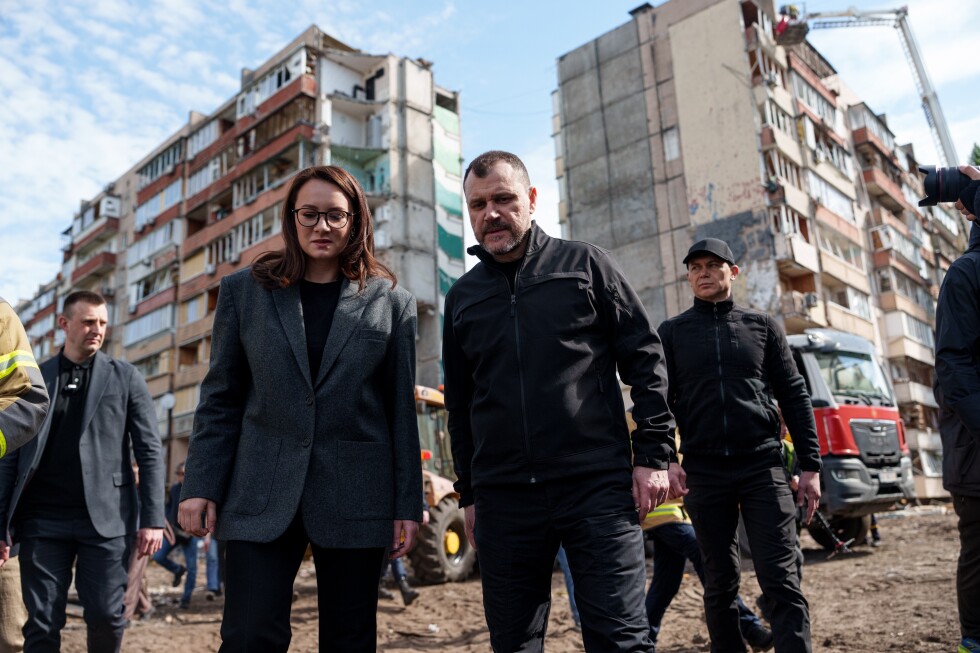
In a sharp escalation of hostilities that derails recent optimistic rhetoric of an impending end to the Russia-Ukraine war, Moscow has launched one of its largest aerial barrages since the full-scale invasion began, killing 24 civilians in a Kyiv apartment building strike and triggering reciprocal deadly drone attacks across Russian territory.
Ukrainian President Volodymyr Zelenskyy confirmed the civilian death toll from Thursday’s cruise missile strike on a nine-story residential corner block in Kyiv on Friday, noting that three of the victims were teenagers. Two children were among the 48 people wounded in the attack, which came as part of Russia’s multi-day wave of large-scale assaults. After more than 24 hours of exhaustive search and rescue operations, emergency crews completed clearing the rubble of the destroyed building, according to an update Zelenskyy posted to the social platform X.
The latest Russian offensive follows a three-day ceasefire initiative announced by former U.S. President Donald Trump, who claimed he had secured agreement from both Zelenskyy and Russian President Vladimir Putin to observe a halt to fighting between May 9 and 11. While active fighting did scale back during that 72-hour window, hostilities never fully paused. Within days of the ceasefire’s end, Russia renewed large-scale aerial attacks across Ukraine, contradicting recent public statements from both Trump and Putin that the nearly five-year-old war was moving toward a negotiated conclusion.
Zelenskyy reported that between Wednesday and the end of Thursday, Russia had launched more than 1,560 drones targeting Ukrainian populated areas, with strikes damaging roughly 180 sites nationwide — more than 50 of which were civilian residential buildings. This barrage surpasses the previous record for the largest single Russian drone attack, which saw nearly 1,000 missiles and drones fired against Ukraine between March 23 and 24 this year. The missile that destroyed the Kyiv apartment block was manufactured in the second quarter of 2025, Zelenskyy added, citing preliminary analysis of missile wreckage by Ukrainian weapons experts. This new production, he emphasized, proves Russia continues to bypass international sanctions to import critical components, raw materials and manufacturing equipment for its weapons programs. “Stopping Russia’s sanctions evasion schemes must be a genuine priority for all our partners,” Zelenskyy wrote in a separate X post Thursday night.
Kyiv declared an official day of mourning on Friday for the victims of the apartment strike, and Zelenskyy visited the blast site to meet with first responders and surviving residents.
The escalation has not been one-sided: Ukraine has significantly expanded its long-range strike capabilities in recent months, and overnight Friday Russia’s Ministry of Defense announced its air defense systems had intercepted 355 Ukrainian drones in a single night — marking one of the largest single drone attacks launched by Kyiv since the start of the full-scale invasion. The attack forced temporary flight suspensions at multiple Russian airports, and a Ukrainian drone strike on the city of Ryazan, located roughly 60 miles southeast of Moscow, left four people dead including one child, according to Ryazan Governor Pavel Malkov. The strike ignited a large fire at a local oil refinery that sent thick plumes of black smoke billowing into the air, consistent with Ukraine’s recent strategy of targeting Russian energy infrastructure to cut off critical export revenue that funds Moscow’s war effort and increase domestic pressure on the Kremlin. Ukrainian officials have not issued any immediate public comment on the Ryazan strike.
Amid the spiraling violence, a rare diplomatic breakthrough brought a measure of positive development Friday: both countries confirmed a large prisoner of war exchange brokered with the assistance of the United Arab Emirates. A total of 205 prisoners from each side returned to their home countries Friday, in what Zelenskyy described as the first phase of a planned 1,000-for-1,000 swap. Many of the released Ukrainian prisoners had been held in Russian captivity since 2022, having fought in some of the war’s bloodiest and most protracted battles. Russia’s Defense Ministry officially confirmed the exchange and publicly thanked the UAE for its mediation work.
This reporting is part of ongoing comprehensive coverage of the Russia-Ukraine war from the Associated Press, with additional contributions from correspondent Lorne Hatton reporting out of Lisbon, Portugal.