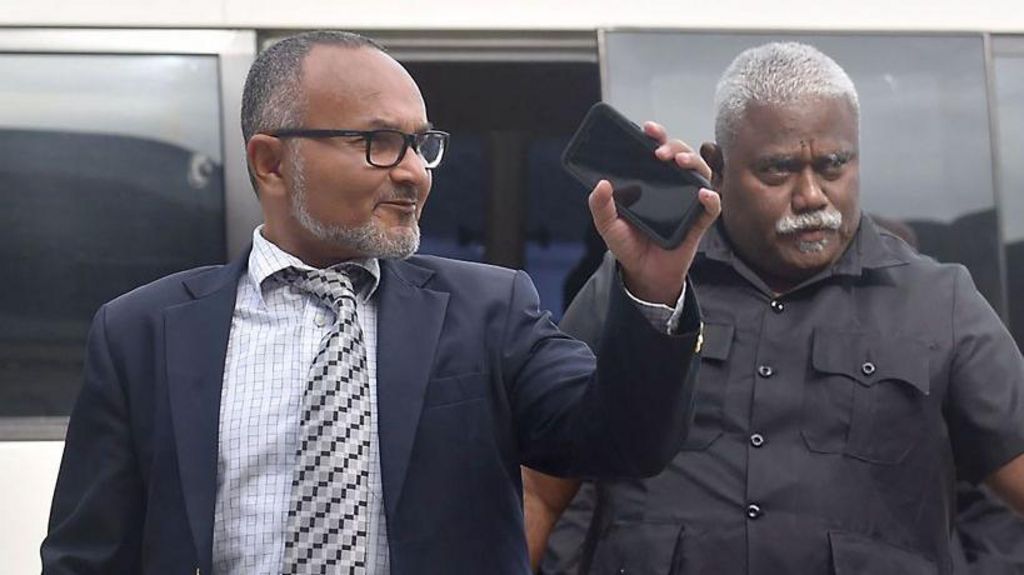
The Solomon Islands has ushered in a new head of government after weeks of political turbulence, with long-time opposition leader Matthew Wale securing the post of prime minister following a parliamentary vote that ousted the previous pro-Beijing administration. Wale’s elevation comes one week after former prime minister Jeremiah Manele was removed from office via a no-confidence motion, a motion fueled by months of growing public anger over skyrocketing living costs and sustained political uncertainty. By late March 2026, 12 sitting ministers from Manele’s cabinet had already stepped down and defected to the opposition bloc, creating a fatal rift in the pro-Beijing government that ultimately led to its collapse.
In Friday’s parliamentary vote, Wale defeated former foreign minister Peter Shanel Agovaka by a clear margin of 26 votes to 22, locking in his victory as the nation’s new leader. In his first address to the public after the win, the 57-year-old politician pledged to deliver systemic change for the island nation, noting that the Solomon Islands, located at the center of contemporary great power competition in the South Pacific, cannot escape the spillover effects of ongoing geopolitical gridlock. “These changes are necessary and may be painful. I ask that you join with your government by putting your hand to the plough,” Wale said, adding that he urged Solomon Islanders to hold his new administration accountable, reminding voters: “When we act as if we are your lords, please remind us we are your servants.”
Wale has been a fixture of Solomon Islands opposition politics for nearly a decade, and first rose to regional prominence for his fierce opposition to the 2022 security pact between the Solomon Islands and China. At the time of the pact’s signing, Wale argued that a majority of Solomon Islanders opposed any expanded Chinese presence in the country, and launched an unsuccessful bid to oust then-prime minister Manasseh Sogavare, who oversaw the agreement. For context, the 2022 security pact was reached just a few years after the Solomon Islands broke its decades-long diplomatic ties with Taiwan to switch recognition to Beijing, and the deal grants China permission to deploy police and military personnel to the island nation. The agreement immediately sparked deep alarm across Australia and other Pacific regional powers, which raised concerns that the deal could clear the way for a permanent Chinese military base in the strategically critical South Pacific.
In recent years, however, Wale has softened his hardline stance on the agreement and on ties with China more broadly, shifting to call for “balanced international engagement” rather than a full withdrawal from the pact. He has not made any public pledge to scrap the existing security agreement, a key detail that has led regional analysts to predict that major shifts in the Solomon Islands’ foreign policy are unlikely.
Connor Graham, a research fellow specializing in Pacific affairs at the Lowy Institute’s Pacific Islands Program, explained that despite hopes from Canberra and Western allies for a policy pivot, Wale’s election is unlikely to upend the Solomon Islands’ existing relationship with Beijing. “Chinese infrastructure is embedded. China is also critical to Solomon Islands economy as a major export destination, and now, thanks to the security pact, its military and police are increasingly integrated,” Graham wrote in a recent commentary. He added: “What changes under Wale is tone, transparency and openness to traditional partners. What doesn’t change is the structural weight of seven years of Chinese investment.”
Australia has remained the Solomon Islands’ largest single aid donor for decades, even as the island nation has deepened its economic and diplomatic ties with Beijing in recent years. Following Wale’s election, Australian Prime Minister Anthony Albanese extended an official congratulation via a post on X, stating that he looks forward to “working together to continue strengthening our economic, development and security partnership” between the two nations. As of publication, Chinese state media has reported on Wale’s victory, but central government authorities in Beijing have not yet released an official comment on the outcome of the parliamentary vote.