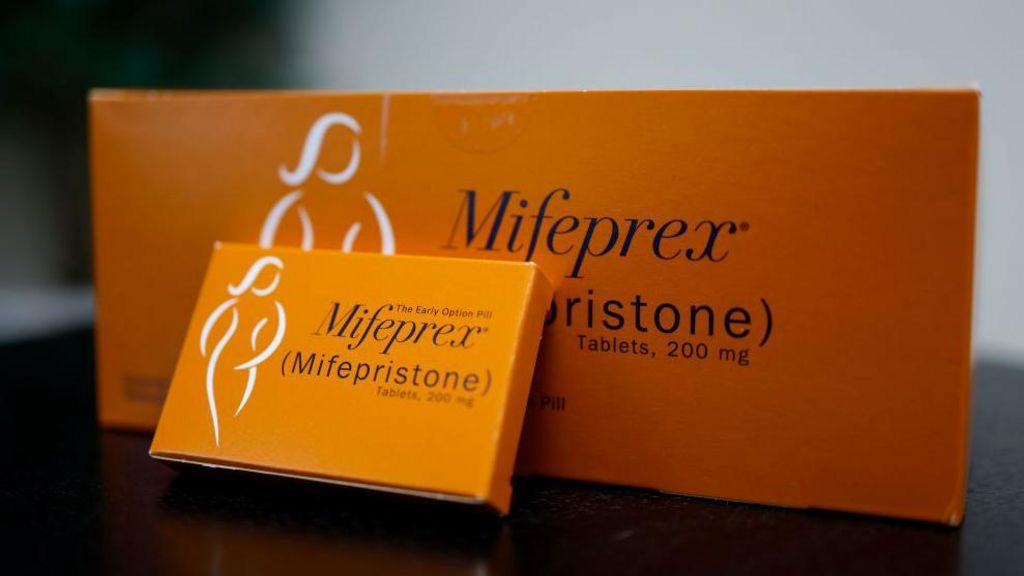
In a high-stakes decision that will shape abortion access across the United States for the coming months, the U.S. Supreme Court has ruled that mail delivery of the abortion pill mifepristone can remain legal while broader litigation over the drug’s regulatory status moves through the court system. The emergency order, issued Thursday, blocks harsh restrictions imposed by a lower appellate court that would have required patients to obtain the pill in person, delivering a temporary win to reproductive rights advocates after weeks of uncertainty.
The case stems from a lawsuit filed last October by the state of Louisiana, which aimed to halt all mail distribution of mifepristone. Louisiana argued that the U.S. Food and Drug Administration’s policy allowing nationwide mail access interfered with the state’s strict total abortion ban, writing that “Every abortion facilitated by FDA’s action cancels Louisiana’s ban on medical abortions and undermines its policy that ‘every unborn child is human being from the moment of conception and is, therefore, a legal person.” In early May, the 5th U.S. Circuit Court of Appeals responded to the suit by temporarily reinstating a long-suspended rule requiring in-person pickup of the drug.
Within days, Danco Laboratories and GenBioPro, the two companies that manufacture mifepristone, asked the Supreme Court to intervene to block the appeals court’s restrictions while the legal process moves forward. Thursday’s ruling, which is known as a “stay,” grants that request: the restrictions on mail access will remain off the table until the Supreme Court decides whether it will take up the full emergency appeal from the manufacturers. That decision could come as late as next year, meaning current access rules will stay in place for months.
The order came out of the court’s emergency docket and was issued without a full accompanying explanation, but it revealed a familiar split among the justices. The court’s two most conservative members, Justices Clarence Thomas and Samuel Alito, issued dissents opposing the decision to keep mail access open. In his written dissent, Thomas argued that because mifepristone distribution by mail is classified as illegal under Louisiana state law, the drug manufacturers have no right to challenge the lower court’s order, writing that they are not entitled to “based on lost profits from their criminal enterprise.”
The long-running legal battle over mifepristone comes against a shifting regulatory and legal landscape for abortion access in the U.S. Mifepristone, the first medication in the FDA-approved two-drug regimen for early pregnancy termination, has become the most common method of abortion across the country in recent years, and its availability via mail is particularly critical for patients living in the more than 20 states that have banned or severely restricted abortion since 2022.
The current rules allowing mail access date back to 2023, when the FDA made permanent a pandemic-era policy that lifted the requirement for in-person dispensing of the drug, first implemented in 2021. That policy change came just months after the Supreme Court’s 2022 decision overturning *Roe v. Wade*, the landmark 1973 ruling that had established a constitutional right to abortion nationwide. The 2022 ruling handed authority to regulate abortion to individual states, leading dozens of conservative-led states to implement near-total or total bans.
Last year, the Supreme Court unanimously rejected an earlier attempt to restrict mifepristone access, but that ruling explicitly left the door open to future legal challenges targeting the drug’s availability. Thursday’s order is the first major outcome from the wave of new challenges that followed, and it keeps the current access model intact for the immediate future.