For a veteran pilot with 25 years of aviation experience, Ian Nixon had never encountered a crisis as harrowing as the mid-flight failure that left him and 10 passengers adrift for hours in the Atlantic Ocean off Florida’s eastern shore. What was meant to be a routine 20-minute inter-island flight across the Bahamas turned into a fight for survival on Tuesday, when one critical system failure cascaded into total disaster: first the navigation system cut out, followed by the aircraft’s radio, then one engine failed, and seconds later, the second engine went silent.
Speaking to CBS News, U.S. news partner to the BBC, Nixon recalled the terrifying silence after the radio stopped working: “I wasn’t able to reach anybody on the radio for a while. I tried to call Freeport, I tried to call Miami radio. I don’t know if they were hearing me, but I didn’t get a response.”
The flight was traveling from Marsh Harbour on the Bahamas’ Abaco Islands to Freeport on Grand Bahama. Left with no safe landing option and rapidly losing altitude, the Bahamian pilot executed a last-resort emergency maneuver known as ditching, landing the disabled aircraft in open water approximately 175 miles (289 kilometers) north of Miami. In that first moment after the plane hit the waves, Nixon said his overwhelming emotion was relief. “Once I hit the water, my first thought was, ‘We didn’t die,’” he shared.
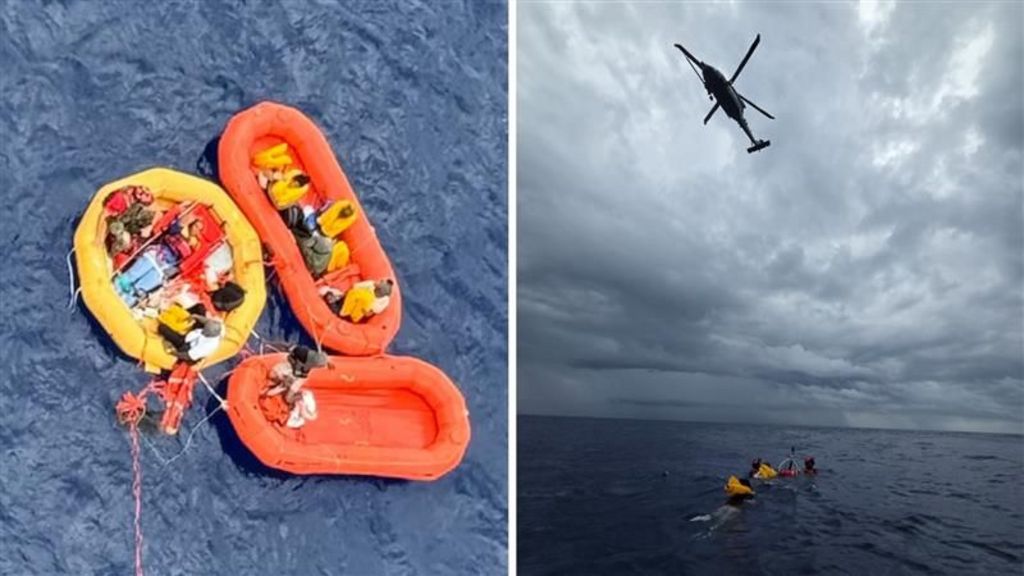
In the aftermath of the crash, all 11 people on board escaped the sinking plane and climbed onto a single inflatable life raft, where they would wait five hours for rescue. As the group drifted under open sky, Nixon worked to keep the passengers calm and hopeful, repeating reassurances that rescuers would arrive within minutes.
That promise nearly proved prophetic when a passenger called out that they could hear a distant sound cutting through the air. It was a rescue helicopter from the U.S. Air Force Reserve’s 920th Rescue Wing, which had been diverted from a routine training mission after the plane’s emergency locator transmitter broadcast a distress signal to the U.S. Coast Guard, triggering the large-scale search operation.
When rescuers spotted the life raft, Captain Rory Whipple said the toll of hours adrift was already clear: “They had already been in the raft for about five hours. You could tell just by looking at them that they were in distress – physically, mentally and emotionally.”
The rescue team raced against a tight deadline, needing to pull all 11 survivors on board before their helicopter ran low on fuel and required refueling. For the crews involved, the outcome was nothing short of extraordinary. “I have not known anyone to survive a ditching in the ocean,” said Major Elizabeth Piowaty, an aircraft commander who took part in the mission. “And, from what I’ve seen, I mean, for all those people to survive is pretty miraculous.”
All 11 survivors were transported to a hospital in Florida for evaluation. Only three people sustained minor injuries, and everyone escaped with their lives. Passenger Olympia Outten described the overwhelming joy of being rescued, saying: “Everybody was rejoicing to know that we get saved because we thought we were going to die. That was a scene that was just like it was a movie.”
Bahamian aviation authorities have launched a formal investigation to determine what caused the sequence of system and engine failures that led to the crash, with no further details on potential causes released as of initial reports.