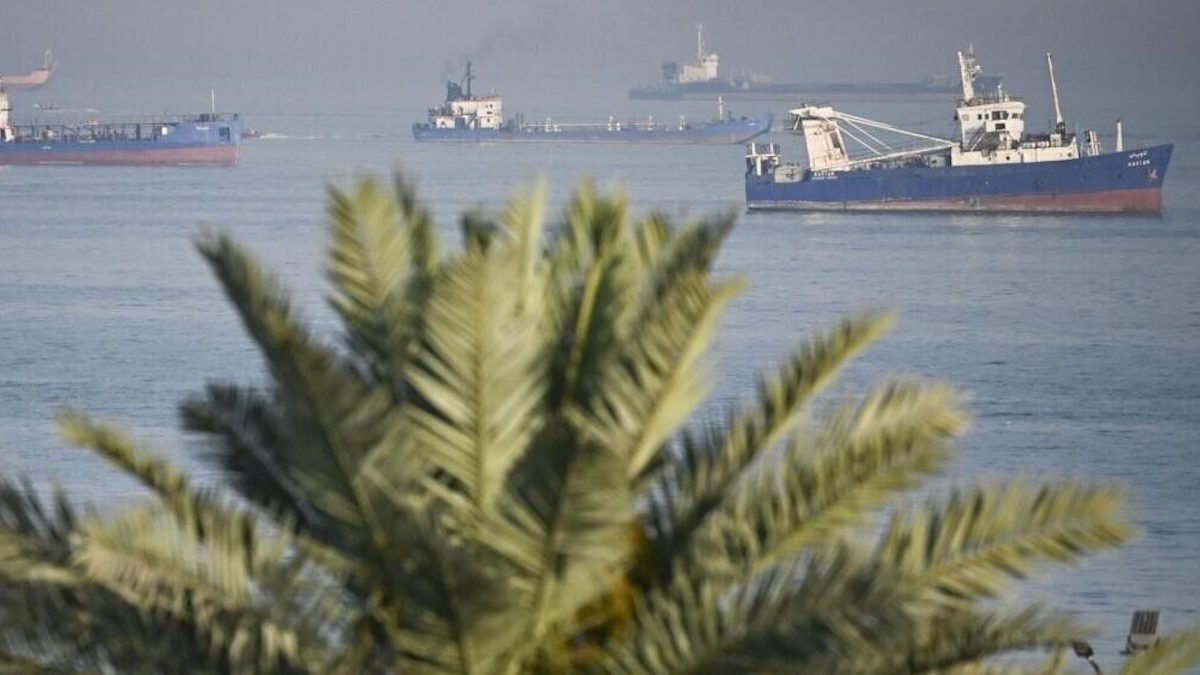
The ongoing indirect negotiations between Iran and the United States, mediated by Pakistan, have hit a fresh impasse following Tehran’s response to Washington’s latest peace proposal and former President Donald Trump’s outright rejection of the deal. At the heart of the deadlock is Iran’s insistence on asserting exclusive sovereignty over the Strait of Hormuz – a demand that stands in direct conflict with established international maritime law, and has thrown global energy markets into turmoil.
The dispute over Hormuz’s status is a secondary outcome of the current conflict, not its root cause, and it cannot be resolved as a bilateral issue between the two nations. Free and unimpeded transit through the strait is an internationally recognized right held by all maritime states, making it a matter of global concern rather than a bargaining chip between Tehran and Washington. Experts widely agree that separating the Hormuz question from other outstanding disagreements between the two powers is the most logical path forward. Restoring unconditional transit through the chokepoint is critical to reversing what has become the most severe disruption to global petroleum supplies in modern history, and to securing long-term navigation freedom after the bulk of U.S. military forces withdraw from the region.
Right now, the ongoing blockage has already triggered a global energy crisis, pushing up prices for crude oil, agricultural fertilizers, and a wide range of consumer and industrial goods worldwide. With every additional day of restricted shipping, supplies continue to dwindle, and price pressures are projected to intensify. That makes urgent diplomatic action to fully reopen the strait a top global priority.
To understand the legal framework governing Hormuz, it is important to place it in context alongside other critical global maritime chokepoints, including the Strait of Gibraltar, the Strait of Malacca, and the Bab-el-Mandeb. Like these waterways, the Strait of Hormuz is extremely narrow: the 12-nautical-mile territorial seas of coastal states Iran and Oman actually meet in the middle of the shipping channel. To codify navigation rights for such strategic international straits that connect two open bodies of water, the 1994 UN Convention on the Law of the Sea (UNCLOS) – ratified by 168 nations – explicitly requires that coastal states may not block or suspend transit passage through international straits. They are also prohibited from charging tolls or discriminating against shipping from any country. While the United States has never formally ratified UNCLOS, it has long abided by this provision and many others, recognizing them as codification of centuries of customary international maritime law.
This legal regime functioned smoothly in the Strait of Hormuz for years before the current conflict broke out. Restoring full compliance with UNCLOS rules must be a core non-negotiable international objective. The precedent matters: if Iran is allowed to charge transit tolls or assert exclusive control over Hormuz, coastal states controlling other chokepoints around the world will almost certainly follow suit, driving up global trade costs dramatically. Already, a former Indonesian finance minister has publicly floated the idea of charging tolls for ships passing through the Strait of Malacca, a key route for trade between Asia, Europe, and the Middle East. Major global trade routes could easily see multiple tolled chokepoints if the Hormuz precedent is broken.
In the wake of Israeli and U.S. strikes on Iran earlier this year, Tehran declared the central navigation channel, which runs through Omani territorial waters, to be dangerous due to alleged mining. This forced all commercial shipping to reroute to the Iranian side of the strait, giving Tehran greater control over traffic and opening the door to potential transit fees. The U.S. responded with its own naval blockade of Iranian shipping in mid-April, a move that followed logically from Tehran’s actions.
Today, both sides remain convinced that their respective blockades give them greater negotiating leverage, that time is on their side, and that the opposing party will eventually be forced to concede to their demands. Iran’s push for a new regulatory regime and exclusive sovereignty over the strait directly contradicts internationally accepted maritime law, while the U.S. has tied the resolution of the Hormuz dispute not just to a full reopening of the waterway, but also to the outcome of other contentious issues on the negotiation table.
Weeks into the opposing blockades, both sides have demonstrated they are capable of maintaining their restrictions against challenges from the other. The net result is that commercial transit through the strait has slowed to a tiny fraction of pre-crisis volumes. A coalition of nations led by France and the United Kingdom has indicated it is prepared to deploy a symbolic naval presence to defend freedom of navigation, but it will only act after the broader conflict is resolved. This leaves the world in a dangerous holding pattern – so what actionable path forward exists to break the deadlock?
A temporary, mutually agreed opening that allows shipping to use channels along both the Iranian and Omani coasts while mine-clearing operations proceed in the central channel would immediately address the urgent humanitarian issue of freeing dozens of commercial ships and their crews currently trapped in the Persian Gulf. This could be achieved as part of a ceasefire extension, or negotiated as a standalone humanitarian corridor similar to the 2022 Black Sea Grain Initiative that allowed Ukrainian grain exports during the war. However, such a measure would only be a temporary fix, not a permanent resolution to the underlying dispute.
The core of the problem is that two nations are clashing over a right that belongs to the entire international community. While individual major powers including China have called for the strait to be reopened, there has been no unified collective action from the global community to date.
A more effective, permanent path forward would be a coordinated, high-impact diplomatic initiative by a large coalition of UNCLOS member states demanding the immediate restoration of the UNCLOS maritime regime in the Strait of Hormuz. This coalition would need to include countries with influence over both Iran and the United States to carry weight. Logically, leadership for this initiative should come from small and middle-sized Asian economies that are most heavily dependent on unimpeded Hormuz transit, but it must also include major powers including China, India, and key European economies. Crucially, the initiative would be strictly diplomatic, and would not take sides in the broader Iran-U.S. conflict – its only demand would be compliance with existing, widely accepted international law.
Would this proposal gain traction with both parties? It is possible that both sides would embrace the initiative as a face-saving way out of their current mutual stalemate, providing a clear path to a mutually acceptable agreement. The UNCLOS-based solution fully preserves Iran’s and Oman’s sovereignty over their territorial waters and islands within the strait, just as it preserves sovereignty for the parties that control other international straits: for example, Morocco, Spain, and the United Kingdom share sovereignty over the Strait of Gibraltar in line with UNCLOS, just as Indonesia and Malaysia do for the Strait of Malacca.
It is possible that Iran’s insistence on full control is merely a bargaining tactic to gain leverage in other areas of negotiation, but ultimately Tehran must accept that no unique exception can be made for Hormuz that deviates from the rules applied to every other international strait in the world.
Neither side would surrender meaningful leverage by accepting this multilateral proposal: both have already proven their military capability to block the strait, a capability that would remain intact even if the current blockade were lifted. At the same time, both sides would see immediate economic and political gains from reopening the waterway to full commercial traffic.
Separating the Hormuz issue also allows negotiators to turn their full attention to the original core dispute between the two nations: Iran’s enriched uranium program. This is a complex, high-stakes negotiation that requires specialized technical expertise. As Trump has noted, the issue is less immediately pressing than the Hormuz blockage, since Iran’s existing enriched uranium stockpiles are deeply buried and under close international monitoring. Ultimately, the two parties should be able to agree on a clear core goal: full Iranian compliance with the Treaty on the Non-Proliferation of Nuclear Weapons within a defined timeframe.
If a resolution can be reached through this multilateral UNCLOS-based approach, the ongoing Iran-U.S. negotiations could serve as a tentative but transformative first step toward a broader restructuring of the Middle East regional order. The first major breakthrough of this kind came in the late 1970s, with the historic peace deal between Israel and Egypt, followed later by normalization with Jordan. Extending that difficult peace process to include Iran may seem even more ambitious today than the Egyptian-Israeli reconciliation seemed in the years immediately after the 1973 Yom Kippur War. But if pursued with patience and consistent commitment, this diplomatic effort would mark a truly unprecedented step forward for Middle East peace.