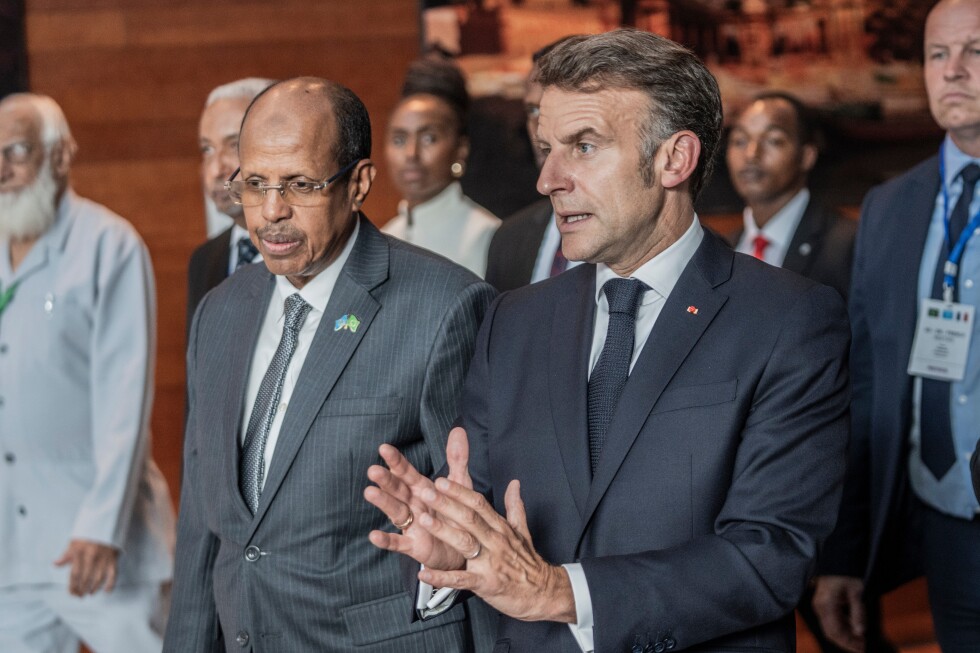
On Wednesday, French President Emmanuel Macron wrapped up his multi-stop African tour in Ethiopia’s capital Addis Ababa, where high-level talks centered on one of the continent’s longest-standing global governance demands: permanent representation on the United Nations Security Council.
Macron’s three-nation trip, which also included stops in Egypt and Kenya, concluded with a full schedule of diplomatic engagements: he first held one-on-one discussions with Ethiopian Prime Minister Abiy Ahmed, then joined a multilateral meeting with African Union Commission Chairperson Mahamoud Ali Youssouf and UN Secretary-General António Guterres to examine reforms to global inclusive governance structures. A joint readout from the gathering confirmed all participants agreed on the critical necessity of expanding African representation within key UN bodies.
The push for Security Council reform gained new momentum earlier during the trip, at the first-ever Africa Forward Summit co-hosted by France and Kenya in Nairobi, a landmark moment as the summit was held for the first time in an English-speaking African nation. During his opening address to the summit, Macron explicitly backed the call for African nations to receive permanent seats on the Security Council, a position he reiterated during his Addis Ababa talks. The final peace and security declaration adopted at the summit echoed this demand, calling for urgent comprehensive reform to make the Security Council both more effective and reflective of today’s global population.
Africa’s campaign for permanent Security Council representation is rooted in a decades-long push to align the UN’s top decision-making body with modern geopolitical realities. Continental leaders and institutions have long criticized the current structure, which excludes the 1.4 billion people living on the African continent from permanent decision-making power, leaving the body out of touch with the world’s current demographic and geopolitical landscape.
Guterres echoed this critique during Wednesday’s meeting, noting that global governance would be far stronger with a geographically inclusive Security Council. “A Security Council that today does not represent geographically the realities of the world,” he said. “We have three European permanent members, one North American and one Asian. No Latin American, no African is obviously a Security Council that has a problem of legitimacy, and that brings with it a problem of effectiveness.”
Beyond high-level discussions of global governance, the diplomatic visit delivered tangible outcomes for Ethiopia: following Macron’s talks with Abiy, officials announced a new $63.9 million loan agreement to support the East African nation’s green energy investments and national digitalization program. This agreement aligns with the broader financial pledge Macron made at the Africa Forward Summit, where he announced that the French government and private sector would mobilize $27 billion in targeted investments to drive inclusive, sustainable economic growth across the entire African continent.