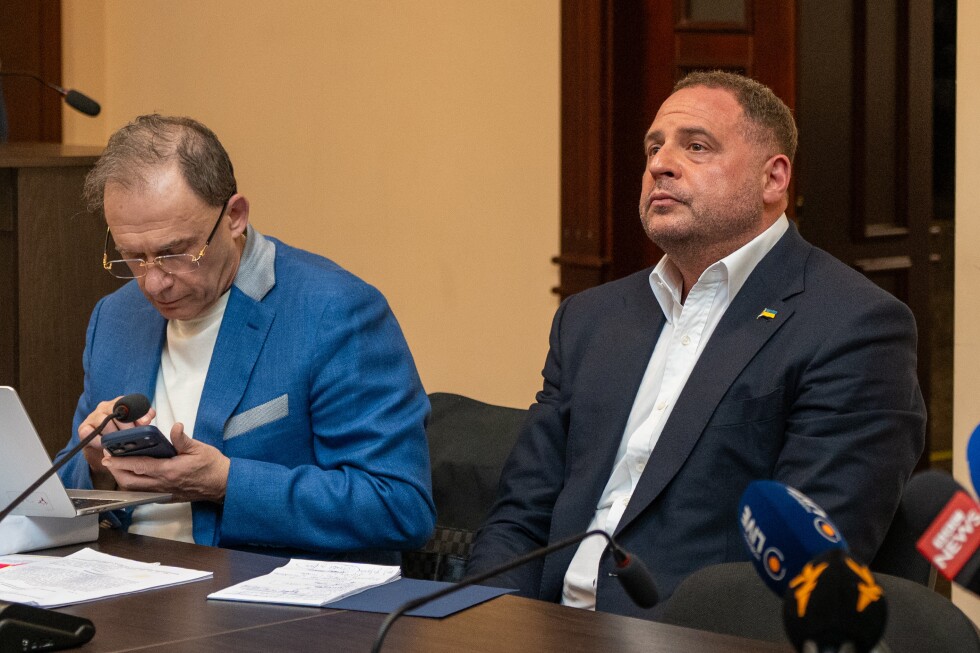
KYIV, Ukraine – Two of Ukraine’s leading anti-corruption oversight bodies have named Andrii Yermak, former chief of staff to President Volodymyr Zelenskyy and once one of the most powerful figures in the country’s wartime leadership, as an official suspect in a high-stake graft investigation that has already shaken the Zelenskyy administration to its core.
The National Anti-Corruption Bureau of Ukraine and the Specialized Anti-Corruption Prosecutor’s Office confirmed that Yermak is formally suspected of participating in an alleged $10.5 million (460 million hryvnia) money-laundering conspiracy, while explicitly clearing President Zelenskyy of any connection to the case. No formal charges have been filed against Yermak, who stepped down from his post in November 2025 amid a wave of public outcry that marks the most significant challenge to Zelenskyy’s government since Russia launched its full-scale invasion in 2022. Prior to his resignation, Yermak served as Ukraine’s lead negotiator in diplomatic talks with the United States.
Yermak has long been one of Ukraine’s most divisive political figures. His professional relationship with Zelenskyy stretches back more than 15 years, when he was a practicing lawyer expanding into television production, and Zelenskyy was a household name as a comedian and actor. He joined Zelenskyy’s first presidential team as a foreign affairs lead before being promoted to chief of staff in February 2020. In that role, he became the country’s de facto second-most powerful public official, acting as the primary gatekeeper for access to the president and widely credited with handpicking most top government appointments, including prime ministers and cabinet ministers. Zelenskyy placed immense trust in Yermak, bringing him along on every international trip following the 2022 Russian invasion. When the corruption scandal first emerged in late 2025, Zelenskyy initially resisted widespread public pressure to remove Yermak from his post. During his tenure, Yermak also oversaw high-stakes diplomacy with Western partners and drafted potential ceasefire frameworks with Russia.
The allegations against Yermak center on a luxury construction project located outside Kyiv. Anti-corruption investigators claim the project was used as a front to launder funds through a sprawling network of shell companies, with Yermak and a group of associates allegedly planning to build four private luxury mansions and accompanying high-end amenities. Yermak’s legal team has dismissed the suspicion notice as entirely baseless and denied any involvement in the scheme. During the first court hearing held on Tuesday, Yermak reiterated his innocence, telling the court he only owns one apartment and one passenger vehicle. The judicial proceedings are set to continue through this week.
The case is part of a much broader corruption investigation that was first made public last year, a sprawling $100 million kickback scheme that has already ensnared multiple senior officials and close associates of Zelenskyy. The public revelation of the scheme last November directly forced Yermak’s exit from the presidential administration. Investigators have laid out claims that high-ranking officials pressured private construction contractors to pay kickbacks of up to 15% to secure public contracts with Energoatom, Ukraine’s state-owned national nuclear energy operator. The probe has included more than 1,000 hours of wiretapped conversations, with targets using coded code names to discuss the scheme. After the details of the scheme became public, Ukraine’s parliament approved President Zelenskyy’s request to dismiss both the country’s energy and justice ministers. The presidential administration also imposed sanctions on several close associates linked to the scheme, including Tymur Mindich, a business partner in the media production company that Zelenskyy co-owned before entering politics. Mindich has reportedly fled Ukraine to avoid prosecution. Prosecutors have not yet confirmed whether any of the funds Yermak is accused of laundering originated from the Energoatom kickback scheme.
While Zelenskyy is not a suspect in the case, the formal implication of his former closest advisor and right-hand man has cast a growing shadow over the Ukrainian president’s credibility. Endemic systemic corruption remains one of the primary hurdles blocking Ukraine’s path to European Union membership, a top policy priority for Zelenskyy alongside maintaining critical Western military and financial support for the war against Russian invasion. The probe has also drawn in sitting senior officials involved in ongoing peace negotiations mediated by the United States. Rustem Umerov, head of Ukraine’s National Security and Defense Council and a key figure in U.S.-led diplomatic efforts, has already been questioned as part of the investigation.
Zelenskyy’s presidential term officially expired in May 2024, but he has continued to lead the country without holding new national elections, arguing that voting is impossible while Russian forces occupy roughly one-fifth of Ukraine’s sovereign territory. Political critics and anti-corruption activists alike note that cleaning up graft is critical to maintaining trust with Western allies, whose ongoing support is indispensable to Ukraine’s war effort and any future negotiated end to the conflict.