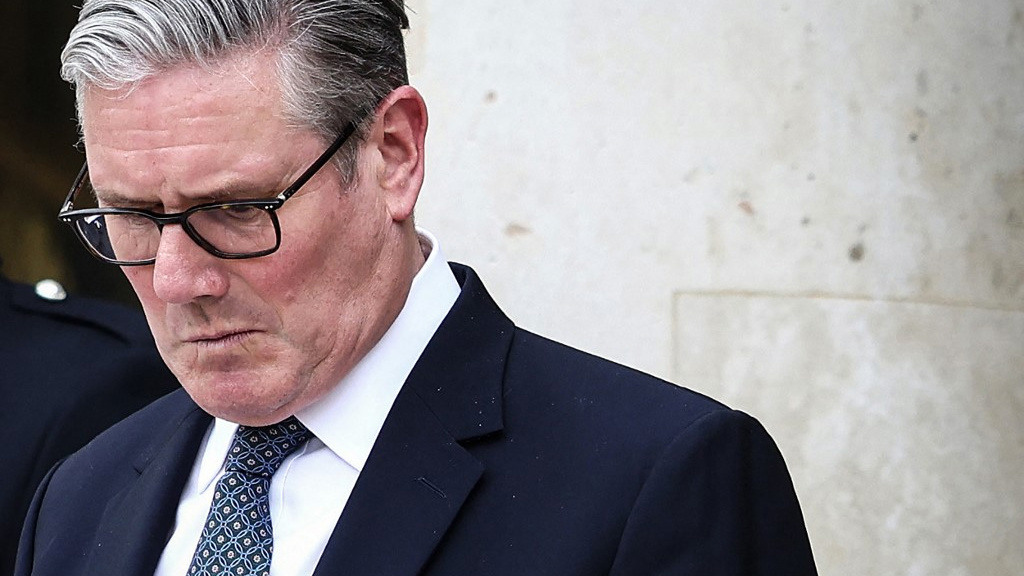
British Prime Minister Keir Starmer is currently fighting to retain his hold on Downing Street, with political insiders widely predicting his premiership could end in a matter of days as rival factions within the Labour Party scramble to position his successor.
During a Tuesday morning Cabinet meeting held at 10 Downing Street, the embattled prime minister pushed back against growing pressure to step down, telling his senior ministerial team that the Labour Party’s formal leadership challenge process had not yet been activated. “The country expects us to get on with governing. That is what I am doing and what we must do as a Cabinet,” Starmer told attendees, according to accounts of the closed-door meeting.
But few senior officials in London’s Whitehall government district believe Starmer can cling to power for much longer. His bloc of loyal allies has shrunk rapidly in recent days, and more than 80 Labour MPs spanning every ideological faction of the party have publicly and privately called on him to acknowledge his leadership is finished. The unrest spilled into open revolt on Monday night, when five junior ministerial aides resigned from their government posts in protest of Starmer’s continued tenure.
With Starmer’s position hanging by a thread, a bitter power struggle has erupted between the centre-right and soft-left wings of the Labour Party over who will take the top job, multiple party sources confirmed to Middle East Eye.
Health Secretary Wes Streeting, a figure aligned with the party’s centre-right, is moving quickly to force Starmer out before soft-left opponents can organize a coordinated campaign, Labour insiders say. Streeting’s push has already drawn accusations of an undemocratic power grab from left-wing party figures.
One of the most high-profile potential challengers from the soft left is Greater Manchester Mayor Andy Burnham, who has spent weeks quietly building support for a leadership bid among sitting Labour MPs. Burnham’s path to the premiership faces major structural barriers, however: he currently does not hold a seat in the House of Commons, a requirement for the office of prime minister in the UK.
To resolve this obstacle, an unnamed Labour MP is reportedly preparing to resign their parliamentary seat to clear a path for Burnham. If the MP steps down, Burnham would need to win a subsequent by-election to enter the Commons before he could launch a formal leadership challenge. A further complication comes from the Green Party, which has indicated it will mount a aggressive left-wing campaign to defeat Burnham in any by-election he contests.
Another leading soft-left contender is Angela Rayner, Starmer’s former deputy leader, who has positioned herself as a unifying candidate for the party’s progressive wing. Rayner stepped down from the Cabinet last September after revelations she underpaid stamp duty on her £800,000 coastal vacation property. One senior soft-left Labour insider warned Middle East Eye that opposition researchers have compiled damaging information on Rayner that would be released if she takes power, saying “there is a truck load of dirt on Rayner waiting to be unloaded if she becomes PM.” The insider compared Rayner’s potential short-lived premiership to that of Conservative former Prime Minister Liz Truss, who resigned after just 49 days in office.
Energy Secretary Ed Miliband, another veteran soft-left politician, has been urged by dozens of MPs to launch his own leadership bid, though he has so far declined to comment publicly on his plans. Some party figures have floated the idea of a joint Burnham-Miliband ticket to unify the soft left against Streeting’s faster-moving campaign. The soft left as a whole is working against the clock, as it needs time to organize its base while Streeting pushes for an immediate ousting of Starmer.
John McDonnell, a veteran left-wing Labour MP and former Shadow Chancellor, publicly condemned Streeting’s maneuver on Tuesday morning via social media, writing that Streeting “has launched coup for fear of a democratic process & whilst candidates are blocked”. Labour Together, the influential centrist think tank that was instrumental in getting Starmer elected Labour leader, is widely understood to be backing Streeting to retain its hold on power after Starmer departs.
Streeting faces his own major headwinds in a leadership contest, however. He is widely tied to former senior Labour minister Peter Mandelson, a once-powerful party figure who was disgraced earlier this year for his long-standing close personal ties to convicted sex offender and disgraced financier Jeffrey Epstein. Streeting, who has previously been described as a protégé of Mandelson, has struggled to distance himself from the scandal. Most critically, Streeting’s popularity among rank-and-file Labour Party members is far lower than his leading rivals: a recent survey conducted by the progressive think tank Compass found 42 percent of Labour members backed Burnham in a potential leadership race, compared to just 11 percent who supported Streeting.
For Streeting, that means his only realistic path to power is to force a leadership vote before Burnham can resolve his by-election barrier and gain the ability to contest the leadership.