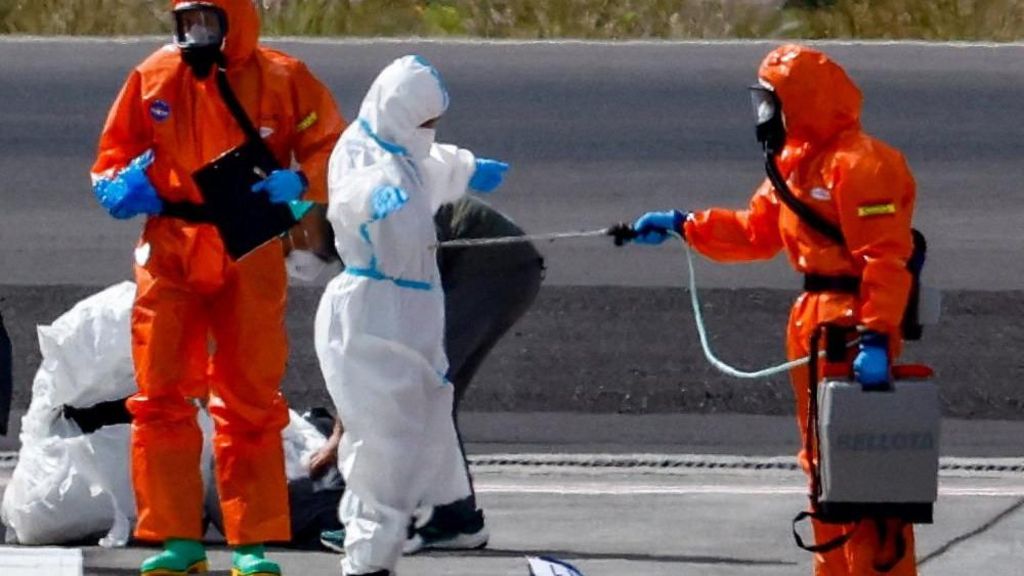
A hantavirus outbreak aboard the expedition cruise ship MV Hondius has triggered a mass international evacuation of passengers and crew, with global health authorities moving quickly to contain the spread of the virus while reassuring the public that the risk of widespread community transmission remains extremely low.
Three passengers who traveled on the vessel have died, two of whom have been confirmed to have been infected with the Andes strain of hantavirus. To date, nine total cases have been linked to the outbreak, seven of which have been confirmed via laboratory testing. The origin of the outbreak is still under active investigation. Hantavirus is most commonly transmitted to humans from rodents, through inhalation of air contaminated with viral particles from rodent urine, feces, or saliva. Since the cruise sailed through remote, wildlife-rich regions, public health experts say an infected passenger could have picked up the virus either during an onshore excursion or before boarding the ship.
Unlike highly contagious respiratory viruses such as COVID-19 or influenza, the Andes hantavirus does not spread easily through casual contact. While limited human-to-human transmission is possible through prolonged, close physical contact, World Health Organization (WHO) technical lead Dr. Maria Van Kerkhove emphasized in a Thursday update that this outbreak does not signal the start of a new global pandemic. “This is not Covid, this is not influenza, it spreads very, very differently,” she stated, adding that the overall risk of global infection remains low. UK health officials have echoed this assessment, confirming the virus cannot spread through routine social interactions in public spaces such as shops, offices, or schools.
Experts note that the cramped, shared living quarters common to even large cruise ships create conditions that could enable limited transmission between passengers in close contact, such as cabin mates. The first recorded death linked to the outbreak was a passenger who died on board the vessel on April 11; his wife, a Dutch national who disembarked when the ship stopped at St. Helena on April 24, later died, and officials are still working to confirm the cause of the first passenger’s death.
All passengers and crew have now been evacuated and repatriated to their home countries for medical monitoring and isolation. Some passengers departed on earlier connecting flights, and global contact tracing efforts are underway to track every potential exposed individual as a precaution. UK Health Security Agency (UKHSA) chief scientific officer Prof. Robin May described the massive contact tracing operation as “quite a mammoth effort,” noting the work would continue for an extended period.
Due to the virus’s incubation period, which can range from two weeks to more than a month, exposed passengers face a recommended isolation period of more than 40 days. Multiple countries have implemented formal quarantine protocols for repatriated citizens: 14 Spanish nationals are undergoing mandatory quarantine at a military hospital in Madrid, 20 British passengers arrived in the UK on a chartered flight Sunday and will spend 72 hours in quarantine at Arrowe Park Hospital before completing an additional 42 days of self-isolation at home. Prof. May confirmed all British evacuees are currently healthy and showing no symptoms, and added that the isolation period may be adjusted in the coming days as new scientific data emerges.
As of the latest updates, new symptomatic and confirmed cases continue to be identified among evacuated passengers. One French passenger developed symptoms during repatriation and is currently isolating in Paris, where her health is reported to be deteriorating; 22 of her close contacts have already been traced. Two British citizens with confirmed cases are receiving treatment in the Netherlands and South Africa, respectively. Spanish health authorities announced Monday that one quarantined passenger in Madrid has received a preliminary positive test result. Two U.S. passengers also reported potential exposure: one has developed mild symptoms, while the other received a weak positive test result for the Andes strain. Both were transported in specialized biocontainment units on their repatriation flight out of an abundance of caution, U.S. health officials confirmed.
Common symptoms of Andes hantavirus mirror early influenza, including fever, fatigue, and muscle aches, and can progress to shortness of breath, abdominal pain, nausea, vomiting, and diarrhea. While diagnostic testing is available, there is no specific antiviral treatment for hantavirus infection; clinical care focuses on managing symptoms, though early supportive hospital care has been shown to improve survival rates.
Global health authorities have repeatedly stressed that the risk of infection for members of the general public with no direct connection to the MV Hondius outbreak remains extremely low, and there is currently no cause for widespread public alarm.