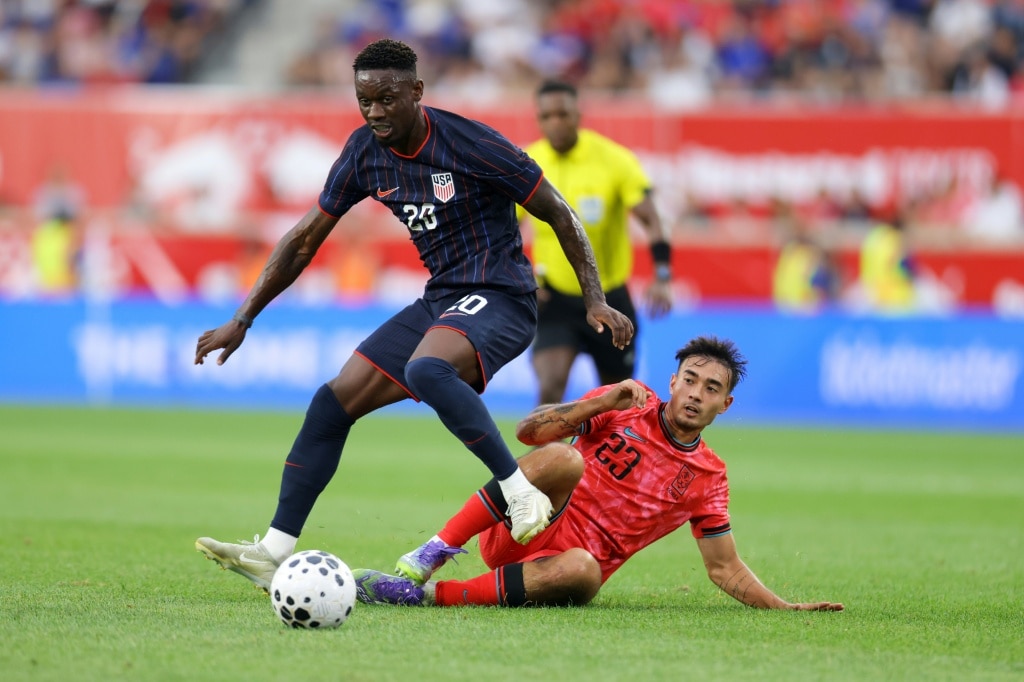
As the 2026 FIFA World Cup approaches, co-host United States is entering the tournament with a sense of anticipation and quiet confidence rarely seen in its soccer history. Led by charismatic head coach Mauricio Pochettino, who took charge of the men’s national team in late 2024, this young, talented roster has earned widespread acclaim as America’s “golden generation” of soccer – and Pochettino is encouraging fans and players alike to believe a historic deep run is within reach.
For decades, the United States was considered a minor player on the global soccer landscape, even as the world’s largest economic and cultural superpower. But the sport has experienced exponential growth across the country since the US last hosted the World Cup in 1994, and today’s co-hosts are far from the decorative participants they were once written off as.
A new wave of young American talent now holds key roles at some of Europe’s most prestigious clubs. Christian Pulisic plies his trade at Serie A giant AC Milan, Weston McKennie anchors the midfield at Juventus, and captain Tyler Adams leads the line for Premier League high-flyer Bournemouth. Other standout players like Lille winger Timothy Weah have only improved their form since the 2022 Qatar World Cup, where a young US squad defied expectations to reach the round of 16 before falling to eventual runners-up the Netherlands.
In public comments this spring, Pochettino, a veteran manager who has previously led top European sides including Tottenham Hotspur, Chelsea and Paris Saint-Germain, made no secret of his ambitious goals for the tournament. “I am here because I believe that we can win,” he said. Repeating his rallying cry three times, he added: “Why not us? Why not us? Why not us? We need to really believe that we can be there.”
Despite this optimism, significant challenges remain for the USMNT. Drawn into Group D alongside Paraguay, Australia and Turkey, the team will need to defeat elite European or South American opposition to advance deep into the knockout stages – a test that has exposed long-standing weaknesses in recent matches. Last March, the US suffered a lopsided 5-2 defeat to Belgium and a 2-0 loss to Portugal, after promising statement wins over Uruguay and Paraguay the previous year.
Question marks also hang over the form of star forward Pulisic, who has not found the back of the net for AC Milan since December and has lost his automatic starting spot at the club. Pochettino himself recently acknowledged that none of his squad members rank among the world’s top 100 players, a comment that does little to quiet concerns over the team’s ability to compete with pre-tournament favorites such as defending champion Argentina, European champion Spain, and France.
Pochettino has spent recent months experimenting with dynamic formations and rotating squads as he prepares to name his final tournament roster later this month, which will be drawn from three distinct talent pools. The first group is homegrown American players who have thrived at top European Champions League clubs, headlined by Pulisic, McKennie and Weah. McKennie’s influence at Juventus has become so pronounced that Pochettino recently joked the Serie A side is “Weston McKennie plus 10 players.”
The second group is made up of diaspora and dual-national talents who have chosen to represent the US, the most notable being British-raised striker Folarin Balogun, who is expected to lead the American attack after a breakout goalscoring season with Ligue 1 side Monaco. Other dual-national key players include Dutch-born fullback Sergino Dest, English-born fullback Antonee Robinson, and German-born Bayer Leverkusen midfielder Malik Tillman.
Finally, a small group of Major League Soccer stars, including Real Salt Lake’s Diego Luna, are expected to earn spots, in what will be widely viewed as a key test of the growing strength of America’s booming domestic top flight.
Zooming out, the rapid progress of American men’s soccer over the past 35 years is undeniable. The USMNT failed to qualify for the World Cup for 40 straight years until 1990, and has only missed one tournament since, regularly advancing past the group stage. The team’s best modern performance came in 2002, when Bruce Arena’s side upset Portugal in the group stage, eliminated Mexico in the first knockout round, and reached the quarter-finals before falling to eventual champion Germany. Most analysts view matching that quarter-final finish as the baseline for a successful 2026 campaign on home soil.
For Pochettino, though, the goal is to push beyond low expectations and embrace ambition. “We need to dream… Dreams inspire reality,” the coach said.