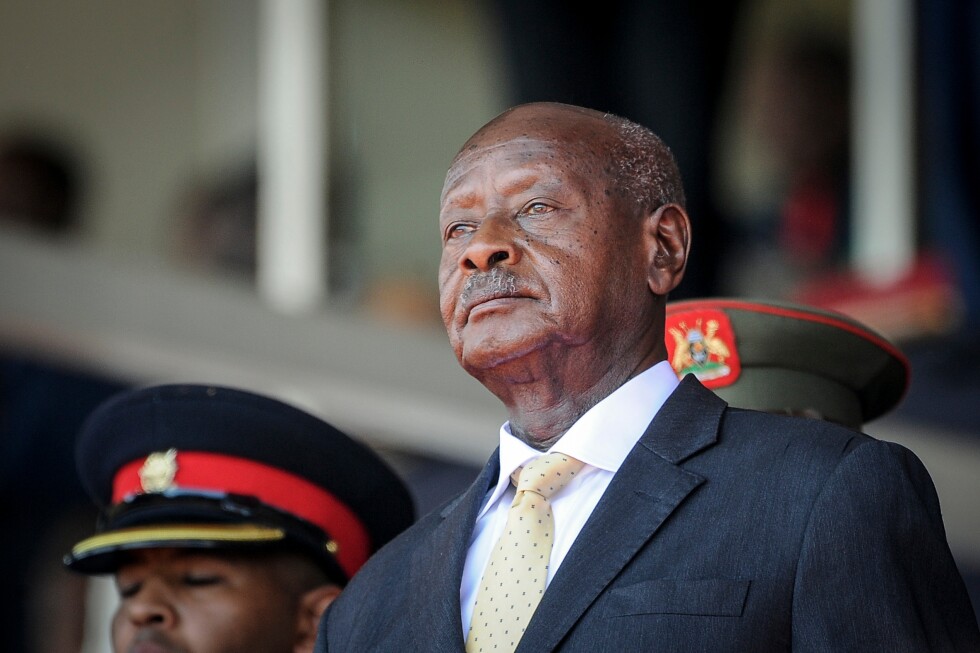
As the Ugandan capital Kampala prepares for Tuesday’s inauguration of 81-year-old Yoweri Museveni for an eighth five-year term, the East African nation turns its focus to a question that will define its future: how will power transition when the leader who has ruled for four decades finally steps down?
For millions of Ugandans, Museveni’s presidency is the only national leadership they have ever known. While most accept his time in office is drawing to a close, the path forward remains deeply unclear, with growing speculation that the presidency could pass to his son, army chief General Muhoozi Kainerugaba, who has openly declared his ambition to succeed his father.
Kainerugaba, 52, the widely presumed heir apparent, has already taken a prominent public role in the lead-up to the inauguration, overseeing days of military parade rehearsals that saw Russian-made Sukhoi fighter jets roar over Kampala’s ceremonial grounds. Two potential paths to the presidency have emerged for the general, though both carry significant questions. The first is an unconstitutional but peaceful handover of power directly to Kainerugaba, while the second would rely on the ruling party’s overwhelming parliamentary majority to pass a constitutional amendment clearing his path to the nomination. A straight electoral victory is widely seen as a major challenge: opposition leader Bobi Wine, a popular former entertainer who has already run for president twice and rejected the results of January’s election that extended Museveni’s tenure, is expected to mount a strong challenge if Kainerugaba runs.
Top ruling party figures have already lined up to back Kainerugaba’s bid. Parliamentary Speaker Anita Among told a gathering of lawmakers celebrating the general’s birthday last month that the ruling party’s majority in parliament would clear any obstacle for him, noting that the opposition was already marginalized in the 11th parliament and would be soundly defeated in the 12th. “For the sake of MK, just assure MK that we will do whatever it takes,” Among said, using Kainerugaba’s initials.
The rush of senior politicians to pledge allegiance to Kainerugaba not only reflects their own calculations for political survival but also confirms his growing status as Uganda’s de facto authority as his father ages and relies increasingly on military leadership to govern. Andrew Mwenda, a close associate of Kainerugaba, wrote last month in online publication The Independent that “Many Ugandans close to power have learned this lesson. That the president is old and exhausted, both intellectually and physically. He has a limited ability to monitor many things across a large spectrum of sectors.”
Kainerugaba’s rise through the military ranks, which began after he joined the armed forces in the late 1990s, has long been controversial, with critics labeling the planned succession the “Muhoozi Project.” While Museveni and Kainerugaba have repeatedly denied any pre-planned hereditary transfer of power, observers say it has become increasingly clear over the past two years that this is Museveni’s preferred outcome. With no viable rivals to Museveni within the ruling National Resistance Movement, many analysts agree the military will ultimately wield decisive influence over the selection of the next president.
“While people are waiting for the legal transition from Museveni, the de facto transition has already happened,” said Angelo Izama, an analyst with Uganda-based think tank Fanaka Kwawote. “Kainerugaba, more than the president, is the final voice on defense and security matters.”
Unlike his father, who cultivated a charismatic, pragmatic populist style that allowed him to co-opt rivals and retain power for decades, Kainerugaba is known for a more confrontational approach. Associates describe him as a disciplined career military officer, educated at elite military institutions in the United States and United Kingdom, who avoids ostentatious displays of wealth. He also founded the Patriotic League of Uganda, a political activist group that draws support from across the ruling establishment, including sitting government ministers and prominent business figures. But he lacks Museveni’s ability to build cross-factional alliances, and has drawn criticism for provocative, offensive public posts on social media. He has also pursued a high-profile anti-corruption crackdown that has led to the arrest of several senior generals, including former allies.
Museveni first seized power in 1986 at the head of a guerrilla movement, promising to bring democracy to Uganda after years of civil war and political chaos. At the time, he famously criticized Africa’s problem of leaders clinging to power long after they had lost public support. Later, he revised his stance, arguing his criticism only applied to leaders who extended their rule without winning an electoral mandate.
Over his four decades in office, Museveni, a key U.S. ally in regional counterterrorism and security efforts, has been widely credited with delivering sustained relative peace and economic growth to Uganda. But in recent years, he has drawn growing international criticism for an increasingly authoritarian turn that contradicts his early democratic promises. Term and age limits for the presidency have been scrapped, leading political opponents have been jailed or sidelined, and new legislation has raised alarms about shrinking space for civil society and opposition activity.
Most recently, Ugandan lawmakers passed a bill framed as a measure to counter foreign interference in domestic politics. The legislation caps annual funding from foreign sources for any local actor at roughly $110,000, requiring government approval for any funding above that limit. Critics warn the law will cripple the work of independent non-governmental organizations and opposition groups. Wine’s National Unity Platform condemned the legislation as “unconstitutional, irrelevant and brought in bad faith to further persecute those with divergent views.”