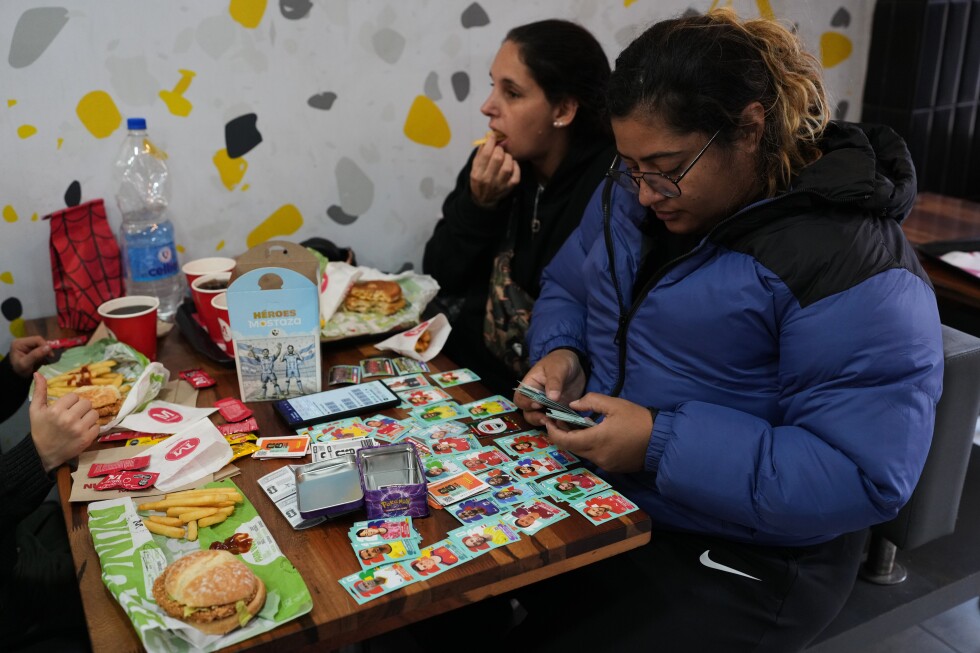
MONTEVIDEO, Uruguay – As countdown clocks tick down to the opening kickoff of the FIFA World Cup, just four weeks away, a beloved quadrennial off-pitch tradition is bringing thousands of soccer fans flooding into public plazas across Argentina: the decades-old ritual of collecting and swapping stickers to complete Panini’s official World Cup sticker album.
For more than 50 years, Panini sticker albums have been an irreplaceable, cherished cornerstone of the global World Cup experience. Neighborhoods, schools, workplaces, and town squares transform into informal trading hubs, where fans lay out duplicate stickers and negotiate to track down the rare, coveted entries missing from their collections. In South America, where the hobby carries special cultural weight, the tradition has expanded beyond in-person meetups to digital spaces, with hundreds of WhatsApp groups, dedicated mobile apps, and fan-run websites popping up to connect collectors and facilitate swaps.
This past weekend, crowds packed central Buenos Aires to trade their stacks of multicolored stickers, each emblazoned with the portrait of one of the world’s top soccer stars. Some collectors spread their duplicates across folding tables, dealing cards just like a poker dealer at a casino, while children carefully carry their half-filled albums, waiting to paste their newly acquired stickers in precisely the right spot.
Juan Valora, an Argentine collector who was trading stickers alongside his girlfriend, highlighted the unique social magic of the physical hobby. “This connects you with the world. Everyone does it,” he explained. “If this was only a virtual activity, you wouldn’t get that face-to-face interaction looking through the stickers and making trades. You’d lose a lot of that human connection that makes it special.”
For this year’s expanded World Cup – the first to feature 48 participating nations, up from the previous 32 – Panini has released its largest sticker collection to date. Each pack contains seven stickers, retailing for roughly $1.50 in both Argentina and Uruguay. This era of Panini’s iconic stickerbooks will draw to a close after the 2030 World Cup, when global sports retail giant Fanatics takes over as FIFA’s exclusive licensed sticker and collectibles partner. Vintage, completed Panini World Cup albums already command thousands of dollars on the secondary collectibles market, a testament to their enduring cultural value.
To skip the hassle of trading for rare stickers, many modern collectors now opt to buy pre-packaged bulk boxes of stickers, rather than hunt for individual missing entries. A full box can hold up to 104 packs, priced at $180 with flexible installment payment options, and often includes the album itself. Even the most sought-after rare stickers – featuring global superstars such as Lionel Messi, Cristiano Ronaldo, and Kylian Mbappé – can be purchased directly this way, cutting out the need for trades entirely.
Matías Inglesi, a software developer whose 9-year-old son Lucas is an avid collector, said the bulk-buying approach actually saves money in the long run. “It’s a way to avoid spending extra extra money chasing down that last missing sticker to finally complete the album,” explained Inglesi, who estimates his family spends around $20 a week on the hobby.
For many young fans, filling the entire sticker album is a more prized goal than watching their home national team lift the World Cup trophy, and many parents pitch in to help their children reach that milestone. Child psychologist Agustina Zerbinatti noted that the hobby offers more than just entertainment: it delivers tangible developmental benefits for children. Beyond being a fun, engaging challenge, collecting and pasting stickers helps kids build fine motor skills, she explained, while teaching them core academic concepts from geography – including learning about each participating nation and its languages – to basic math skills like number sequencing, cardinality, and ordinality.