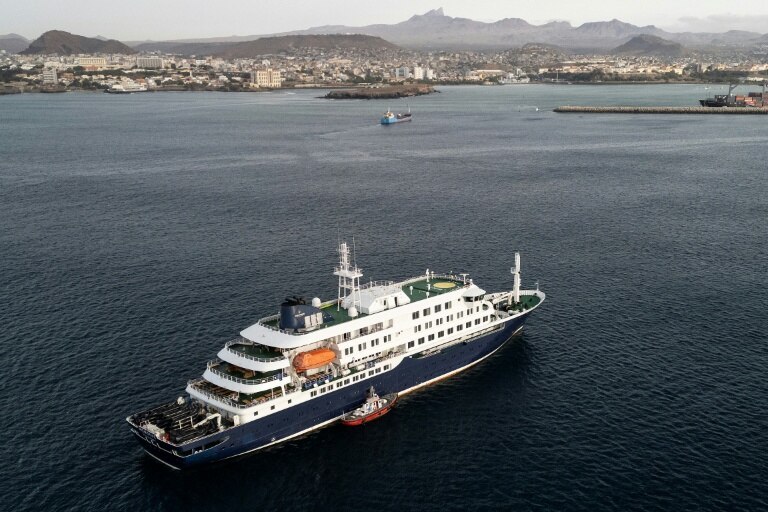
A cruise ship grappling with a deadly hantavirus outbreak is making its way to Spain’s Canary Islands, where authorities are preparing to evacuate nearly 150 passengers and fly them back to their home countries after weeks of isolation at sea. Three fatalities have already been linked to the outbreak on the Dutch-flagged MV Hondius, and multiple other passengers have fallen ill with the rare pathogen, which is most commonly carried and spread by rodent populations.
The vessel, which departed Cape Verde after three infected people were evacuated earlier this week, is projected to reach offshore waters near Tenerife by early Sunday dawn, between 03:00 and 05:00 GMT. World Health Organization Director-General Tedros Adhanom Ghebreyesus is personally assisting with coordination of the complicated evacuation operation, after meeting with Spanish Prime Minister Pedro Sanchez in Madrid Saturday ahead of traveling to the archipelago with the country’s health and interior ministers.
Confirmed cases on the ship have been identified as Andes virus, the only strain of hantavirus capable of spreading between human beings — a detail that has sparked widespread international concern over potential secondary transmission. To mitigate this risk, regional Canary Islands authorities have rejected requests to allow the ship to dock at a local port. Instead, the MV Hondius will remain anchored offshore during the evacuation, which is scheduled to take place between Sunday and Monday, the only window health officials say weather conditions will permit for the complex operation.
On the quay at Granadilla de Abona port, AFP reporters observed emergency response teams have already erected white screening tents, but daily life across the island has continued largely unchanged. Local lottery vendor David Parada noted that while there is underlying worry about potential community risk, most residents have not panicked over the situation. Tedros sought to further calm public fears in an open letter to Tenerife residents Saturday, stressing that “this is not another Covid” and that the population-wide risk of transmission from the ship remains “low”.
Spanish officials have echoed these assurances, outlining strict protocols to prevent any contact between passengers from the ship and local communities. After completing medical screenings on board the MV Hondius, passengers will be transferred via small boats to shore, then bussed directly to the airport along fully sealed routes. A maritime exclusion zone will be enforced around the anchored vessel, and all areas passengers transit through on shore will be closed off to the public. Evacuations will proceed in groups organized by nationality, with the 14 Spanish citizens on board set to leave first, according to Spanish Health Minister Monica Garcia Gomez. A portion of the crew will remain on the ship to sail it onward to the Netherlands after the evacuation is complete.
As of Friday, the WHO confirmed six positive hantavirus cases out of eight earlier suspected cases on the vessel, and no new suspected cases remain on board. Global health authorities are now conducting extensive contact tracing for passengers who disembarked the MV Hondius earlier in its voyage, which began on April 1 when it departed Ushuaia, Argentina for a transatlantic cruise to Cape Verde. Argentine health officials have concluded that the initial infected Dutch passenger almost certainly did not contract the virus in Ushuaia, based on the pathogen’s incubation period.
Multiple secondary testing and monitoring efforts are underway across the globe: A KLM flight attendant who developed mild symptoms after coming into contact with an infected passenger tested negative for the virus, though a Spanish woman who sat two rows away from one of the fatal cases on a Johannesburg-Amsterdam flight has been isolated in a Spanish hospital for testing, with officials noting her infection remains highly unlikely. Two former passengers in Singapore tested negative but will remain in quarantine as a precaution, and British health authorities are investigating a suspected case on the remote South Atlantic outpost of Tristan da Cunha, which is home to just 220 permanent residents.