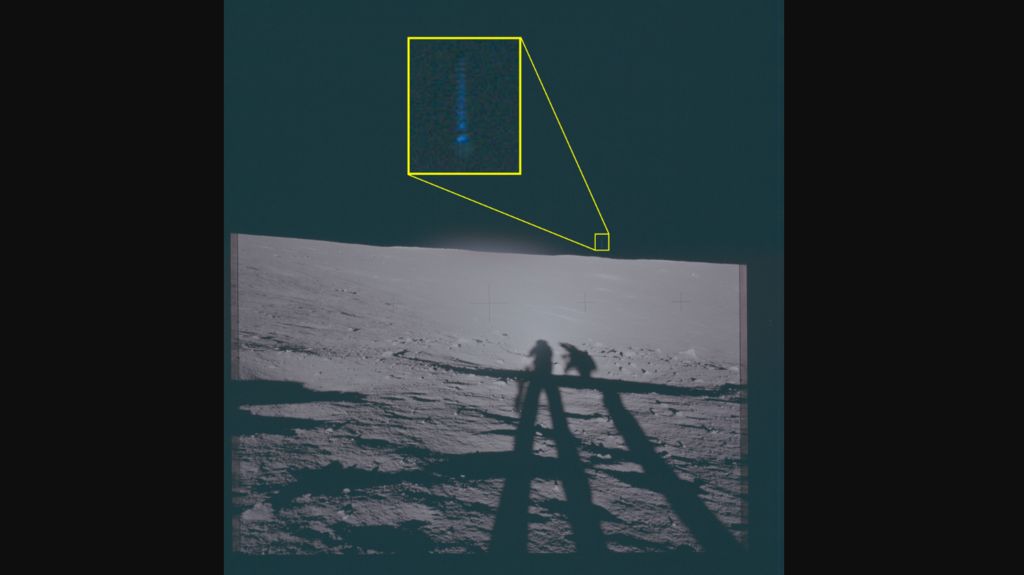
In a historic move aligned with a presidential directive, the U.S. Pentagon has publicly released 161 declassified documents detailing decades of reported unidentified anomalous phenomena (UAP) — more commonly known as UFOs — spanning sightings from Earth-bound civilians to Apollo astronauts walking on the surface of the moon. Additional files are expected to be made public in the coming months.
The disclosure, posted Friday to the Department of Defense’s official website, came at the direction of President Donald Trump, who ordered the release earlier this year after noting overwhelming public curiosity around the topic of extraterrestrial life. Trump first announced his plan to declassify the full cache of UAP-related records after growing public pressure for greater federal transparency, a conversation that gained new momentum following comments made by former President Barack Obama in a February interview.
During that interview, Obama sparked global headlines when he referenced that aliens are “real, but I haven’t seen them.” He later walked back the provocative statement, clarifying that while statistical probability suggests extraterrestrial life could exist elsewhere in the universe, he never encountered any confirmed evidence of alien visitors during his time in office. Within weeks of Obama’s comments, Trump formally instructed the Pentagon to declassify all records related to UAP, UFOs and potential extraterrestrial life.
The newly released tranche of documents includes decades of internal military memoranda, civilian witness reports, mission transcripts from NASA’s iconic Apollo program, declassified audio recordings, and military footage captured across the globe. Notably, the files contain previously secret communications from three of NASA’s successful moon landing missions in the 1960s and 1970s, all of which document unexplained sightings by astronauts on the lunar surface and in lunar orbit.
Apollo 11 astronaut Buzz Aldrin, the second person to walk on the moon, described a puzzling bright light source during his 1969 mission, according to a 1969 interview included in the release. Aldrin told interviewers the object was bright enough to stand out against the black backdrop of space, and the crew initially tentatively attributed it to a possible laser transmission from Earth.
For Apollo 12, which landed on the moon later in 1969, astronaut Alan Bean reported seeing tiny particles and flashes of light “sailing off in space” that appeared to be “escaping the Moon” from his vantage point on the surface. Apollo 17 astronaut Jack Schmitt, who walked on the moon during the 1972 final mission of the Apollo program, similarly described a display of flashing lights so striking he compared it to a Fourth of July fireworks display. The crew of Apollo 17 ultimately hypothesized the lights could have been reflections from stray fragments of ice, but the observation remains formally unconfirmed.
The records also date back further than the Apollo program: a 1965 audio recording from the Gemini 7 spaceflight captures astronaut Frank Boman reporting an unidentified object, which he called a “bogey,” alongside “trillions of little particles” floating to the left of his spacecraft to NASA mission control.
Beyond space missions, the declassified files include dozens of civilian sighting reports collected across decades. One 1957 report to the FBI details a civilian witness account of a large, circular craft rising from the ground, while more recent interviews from 2023 include multiple accounts from U.S. residents describing hovering metal objects that emerged suddenly from bright light. The Pentagon also published previously unreleased 2022 military footage captured in multiple locations across the Middle East, including Iraq, Syria, and the United Arab Emirates, that the DoD labels as “unresolved unidentified anomalous phenomenon.” One clip, filmed at an undisclosed Middle Eastern location, shows an oval-shaped object moving rapidly from left to right across the frame, with the accompanying incident report flagging it as a “possible missile” that was never formally identified.
Reaction to the release has split along political lines, even among members of the Republican Party who have long pushed for greater UAP transparency. Congressman Tim Burchett of Tennessee, a leading GOP advocate for UAP disclosure, praised the release in a post on X, calling it a “great start” toward greater government openness. Florida Congresswoman Anna Paulina Luna, another transparency advocate, similarly called the disclosure “a massive first step in the right direction.”
Not all political figures welcomed the move, however. Former Congresswoman Marjorie Taylor Greene, a once-close ally of Trump who has since split with the president and left Congress, argued the disclosure was a deliberate distraction from far more urgent issues facing American voters, including persistent price inflation and ongoing conflict in Iran. “I’m so sick of the ‘look at the shiny object’ propaganda,” Greene wrote in a post on X.
The release comes amid a years-long resurgence of public and congressional interest in UAP in the United States. In 2022, Congress held the first formal hearings on UFOs in more than half a century, and the U.S. military has repeatedly committed to increasing transparency around unexplained sightings reported by military personnel and pilots.