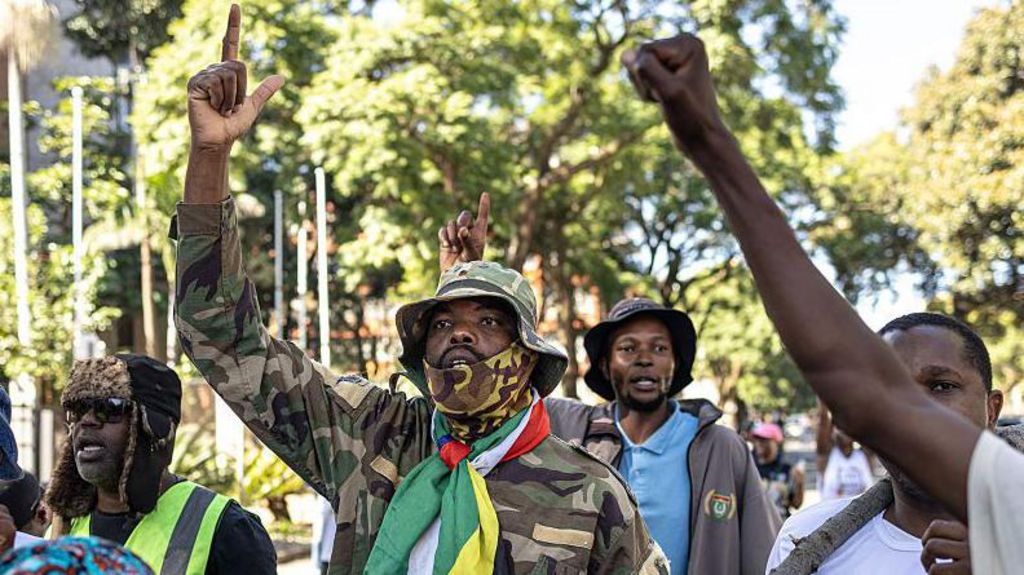
Across major urban centers of South Africa, thousands of demonstrators have gathered in recent days to stage coordinated protests against undocumented immigration, a demonstration of public frustration that has ignited sharp diplomatic friction between Pretoria and several other African nations. The unrest stems from circulating online video footage, first shared roughly two weeks ago, that appears to capture vigilante groups targeting and harassing individuals they identify as undocumented migrants. One widely shared clip reportedly shows a Ghanaian national being confronted over his immigration status and ordered to return to “fix his own country.”
In response to the outcry that followed the spread of the footage, South African officials have pushed back forcefully, condemning what they describe as manipulated and false visual content designed to damage the country’s global standing. During a press briefing Thursday following a weekly cabinet meeting, Minister in the Presidency Khumbudzo Ntshavheni told reporters that the discredited clips and images serve a deliberate purpose: to undermine South Africa’s international reputation and derail its regional agenda focused on advancing a more integrated, prosperous Africa. Ntshavheni clarified that while South Africans hold a constitutional right to protest the growing challenges of uncontrolled illegal immigration, the violence that marred past anti-immigration demonstrations will not be tolerated. She also stressed that there are no targeted xenophobic attacks currently occurring in the country, noting that any violence against foreign nationals can be attributed to general criminal activity that law enforcement is already addressing, not organized xenophobic aggression.
Presidential spokesperson for Cyril Ramaphosa echoed this position earlier this week, emphasizing that South Africa remains a welcoming nation, and its people are open and warm, rejecting all attempts to label the country or its population as inherently xenophobic. Ntshavheni added that South Africa has “nothing to hide” regarding the current situation and is committed to transparency with regional partners.
Unlike previous waves of anti-immigrant unrest that included deadly attacks and looting of foreign-owned businesses, the current wave of protests has remained largely peaceful, with no official reports of widespread violence against undocumented migrants or attacks on foreign-owned properties. South African protesters argue that high levels of undocumented immigration have placed unsustainable pressure on domestic access to jobs, affordable housing, and public safety, driving the recent demonstrations.
Despite the South African government’s reassurances, multiple African nations have raised urgent alarms over the safety of their citizens residing in the country. Ghana became the first country to escalate the issue to the African Union, submitting an official letter requesting the pan-African body open formal discussions on the matter. Ghana’s government argues that the alleged rise in xenophobic violence poses a direct threat to the safety and well-being of all Ghanaian and African citizens in South Africa, and runs counter to core shared principles of African solidarity, fraternity, and continental unity. Ghana is pushing for the AU to deploy an independent fact-finding mission to South Africa to investigate the situation on the ground.
Nigeria has echoed Ghana’s concerns, announcing it stands ready to facilitate the repatriation of any Nigerian nationals who wish to leave South Africa amid safety fears. Kenya, Malawi, Lesotho, and Zimbabwe have all issued official travel advisories to their citizens currently residing in South Africa, urging them to remain vigilant and avoid areas at high risk for potential attacks.
As regional pressure builds, the South African government has ramped up targeted diplomatic outreach across the continent to ease growing anxiety over rising anti-immigration sentiment. The current dispute brings renewed attention to longstanding challenges around xenophobia in South Africa, where intermittent outbreaks of deadly anti-foreigner violence have occurred for decades, testing the commitment to regional integration enshrined in the African Union’s founding principles.