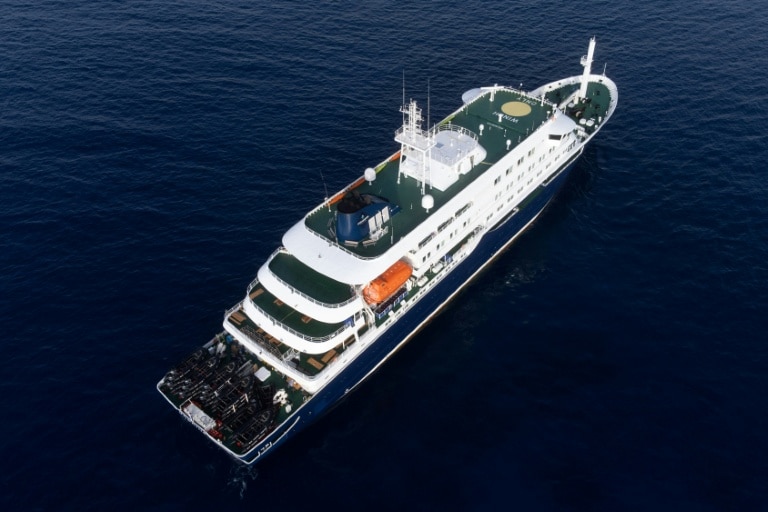
A rare, human-transmissible hantavirus outbreak on the Dutch-flagged polar expedition cruise ship MV Hondius has triggered an ongoing international public health response, with evacuations of infected individuals off the vessel underway Wednesday, the World Health Organization (WHO) has confirmed. The ship, which carries 88 passengers and 59 crew members hailing from 23 different nationalities, has remained anchored off the coast of Cape Verde near the capital Praia since Sunday, after Cape Verdean authorities barred it from docking to contain the potential spread of the virus. As of Wednesday, three people believed to be infected — two crew members and one passenger — are being evacuated from the vessel, with all three currently in stable condition, and one showing no symptoms at all, according to Ann Lindstrand, WHO’s representative in Cape Verde. The crisis first emerged on Saturday, when global health officials were alerted that three people linked to the cruise had already died from suspected hantavirus exposure, marking the start of an international health scare that has stretched across four continents. The MV Hondius departed on its polar expedition from Ushuaia, Argentina on April 1, with the first infected person developing symptoms as early as April 6. Investigators are still working to trace the origin of the outbreak on the ship. Health officials have now confirmed the outbreak is caused by the Andes strain of hantavirus, the only known variant of the disease that can spread from person to person. “As we said, we want to repeat again, such transmission is very rare and only happens due to very close contact between people,” South African Health Minister Aaron Motsoaledi told a parliamentary committee Wednesday. This confirmation was echoed by Geneva University Hospital, which added that the Andes strain is responsible for all three recorded deaths linked to the outbreak. Hantavirus is most commonly spread to humans from infected rodents via exposure to their urine, feces, or saliva, and human-to-human transmission has only ever been documented in previous Andes strain outbreaks in South America, where the virus circulates naturally in local animal populations. Concerns of wider community spread grew this week after it emerged that a symptomatic Dutch woman who disembarked from the cruise traveled on a commercial passenger flight to Johannesburg, South Africa, where she died on April 26. The flight, operated by South African carrier Airlink, carried 82 passengers and six crew members, and contact tracing efforts are now active to locate and test all people who shared the flight with the infected traveler. On Wednesday, Swiss health authorities also confirmed that a former passenger from the MV Hondius had been hospitalized with a confirmed hantavirus infection in Zurich. Earlier this week, the cruise line’s Dutch operator, Oceanwide Expeditions, announced that the three evacuated individuals would be airlifted to the Netherlands for treatment, after which the remaining passengers and crew would sail the ship to Spain’s Canary Islands, the closest location with adequate medical and public health facilities to support the response. Spanish health ministry officials confirmed Tuesday that the ship is expected to reach the Canary Islands in three to four days. To date, the WHO has confirmed two cases of hantavirus linked to the ship: the deceased Dutch woman and a British passenger who remains in intensive care in Johannesburg. Five additional suspected cases are still being investigated. Multiple passengers and crew have already entered isolation on board the anchored vessel to prevent further spread of the virus among people on the ship.