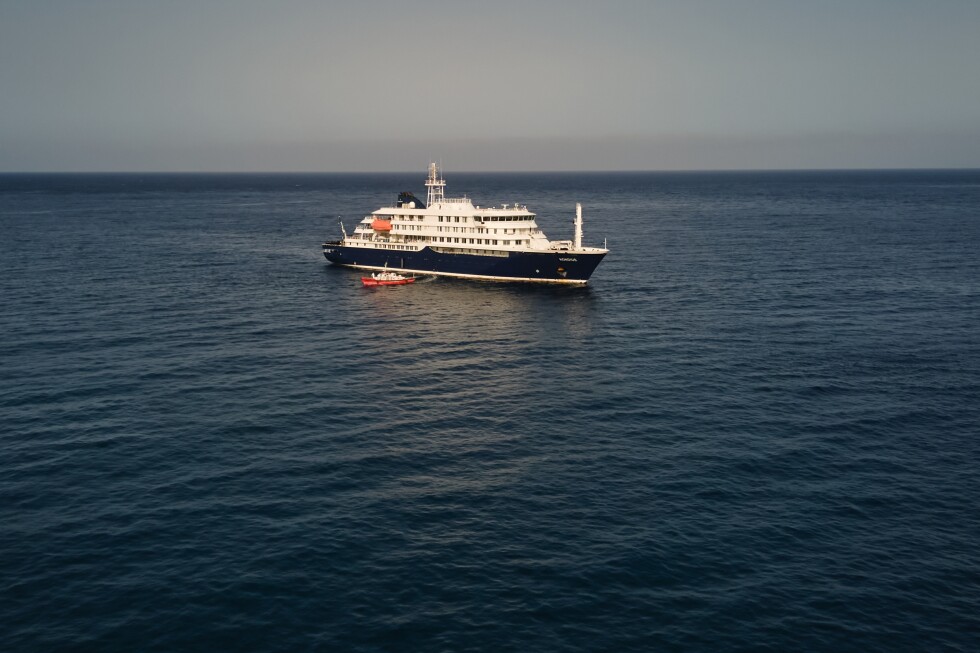
In an ongoing developing public health emergency, the World Health Organization (WHO) announced Wednesday that three patients with suspected hantavirus infection have been evacuated from the Dutch-flagged cruise ship MV Hondius, which is currently stranded off the coast of Cape Verde, and are en route to the Netherlands for further medical care.
WHO Director-General Tedros Adhanom Ghebreyesus confirmed Wednesday that the United Nations’ leading health body is collaborating closely with the cruise line’s operators to track the health status of all remaining 150 passengers and crew members currently onboard the vessel. In a public post to his X social media account, Tedros emphasized that “At this stage, the overall public health risk remains low.”
The MV Hondius departed Argentina on April 1 for an Atlantic cruise that was originally scheduled to include stops in Antarctica, the Falkland Islands and other regional destinations. The trip quickly turned into a public health crisis when three passengers died from confirmed hantavirus infection, with at least five additional people reporting symptomatic infection to date. Three cases have received full laboratory confirmation so far.
Genetic sequencing conducted by public health officials in South Africa and Switzerland has identified the pathogen as the Andes strain of hantavirus, a variant native to South America that is extremely rare for its limited ability to spread between humans. Unlike most hantavirus strains, which only spread to humans through contact with contaminated rodent droppings, experts note that Andes hantavirus can pass between people through prolonged close contact such as cohabitation or shared food, though such transmission events remain uncommon.
Two of the confirmed cases were first identified by South African health authorities after the passengers were evacuated to the country for treatment. One of those patients, a British national, remains in intensive care at a South African hospital, while the other tested positive posthumously after dying shortly after arriving in the country. A third confirmed case was reported Wednesday by Swiss public health officials: a man who returned from the cruise to Switzerland at the end of April, who tested positive for Andes hantavirus after seeking care at the University Hospital Zurich upon learning of the outbreak from the cruise operator. He has been placed in isolation for treatment, and his wife, who has not developed symptoms, is self-isolating as a preventive measure. Swiss officials have stressed there is currently no broader risk to the general public in Switzerland.
After the outbreak was declared, the MV Hondius anchored off the coast of Cape Verde, a small Atlantic island nation off the west coast of Africa, while global health authorities coordinated a response. On Tuesday, Spain’s Health Ministry announced it had approved a request from WHO and the European Center for Disease Prevention and Control to allow the vessel to dock in the Canary Islands for disembarkation and further care.
However, local political leaders in the Canary Islands have pushed back against the plan. Regional president Fernando Clavijo told local radio station Onda Cero Wednesday that he shares significant concerns about the risk the vessel’s arrival could pose to local residents, and has requested an urgent meeting with Spanish Prime Minister Pedro Sánchez to address the situation. “Neither the populace nor the government of the Canary Islands can rest assured because it is clear that the danger to the population is real,” Clavijo said.
All remaining passengers currently onboard the vessel are isolating in their individual cabins to reduce the risk of further transmission, per WHO guidance. Medical evacuation teams were on standby Wednesday in the Cape Verde capital of Praia, ready to conduct further evacuations if needed. On Tuesday night, Associated Press reporters on the scene observed a boat approach the stricken vessel before turning back shortly after, though it remains unclear what the mission was and whether the attempt to evacuate patients was aborted.
As this is a breaking public health event, authorities continue to update response plans and case counts as more information becomes available.