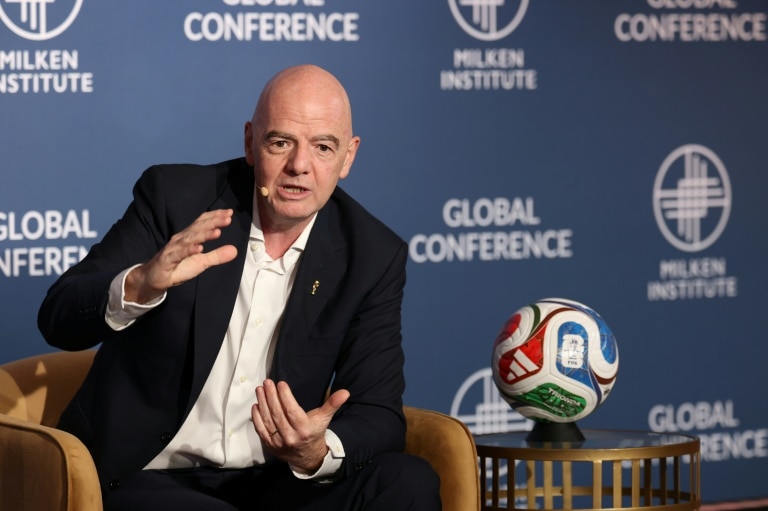
As criticism from global football fan groups continues to mount over the exorbitant pricing of 2026 FIFA World Cup tickets, FIFA President Gianni Infantino has stepped forward to defend the governing body’s policies, pushing back against accusations of exploitative pricing during his appearance at the Milken Institute Global Conference in Beverly Hills this Tuesday.
The controversy surrounding World Cup ticketing erupted into a formal dispute earlier this year, when European fan advocacy group Football Supporters Europe (FSE) filed an official lawsuit with the European Commission, calling out FIFA for what it labels “excessive ticket prices” for the upcoming tournament. FSE has gone as far as branding the 2026 pricing structure “extortionate” and a “monetary betrayal” of the global football community.
Public anger reached a new peak last week, when four tickets for the 2026 World Cup final, scheduled to take place in New Jersey on July 19, were listed for more than $2 million apiece on FIFA’s official resale platform, FIFA Marketplace. The sky-high listing prices drew widespread condemnation from fans and sports commentators alike, who pointed to the stark contrast between 2026 pricing and the 2022 Qatar World Cup, where the most expensive face-value final ticket cost just around $1,600 — compared to the 2026 final’s $11,000 original price tag.
Addressing the backlash directly, Infantino pushed back against claims that FIFA is responsible for the exorbitant resale prices. He argued that the multi-million dollar listings do not reflect actual baseline ticket costs, and there is no guarantee any buyer will actually pay those extreme sums. In a characteristically blunt remark, Infantino joked that if any fan does actually purchase a $2 million final ticket, he will personally deliver a hot dog and a Coke to their seat to ensure they have an enjoyable experience.
Infantino defended the sharp rise in face-value ticket prices, framing the increase as a reasonable adjustment to market conditions. He noted that the 2026 World Cup is being hosted in the United States, the world’s most commercially developed entertainment market, where market-rate pricing is unavoidable. He added that U.S. regulations permit legal ticket resale, meaning if FIFA set lower original prices, scalpers would simply buy up large blocks of tickets and resell them for far higher margins, leaving FIFA with no revenue from the markup.
“Even though some people say our prices are high, the resale market still marks them up to more than double our original prices,” Infantino explained. He also pushed back on claims that all tickets are out of reach for casual fans, pointing out that 25 percent of group stage tickets are priced below $300, a rate that he argues is competitive for major live events in the U.S. “You cannot go to a U.S. college sports game for less than $300 these days, let alone a top-tier professional event, and this is the World Cup,” he said.
Infantino also highlighted unprecedented demand for the 2026 tournament as justification for the pricing model. He told the conference that FIFA has already received more than 500 million ticket requests for the 2026 World Cup, a figure that dwarfs the combined total of fewer than 50 million requests for both the 2018 Russia World Cup and 2022 Qatar World Cup.