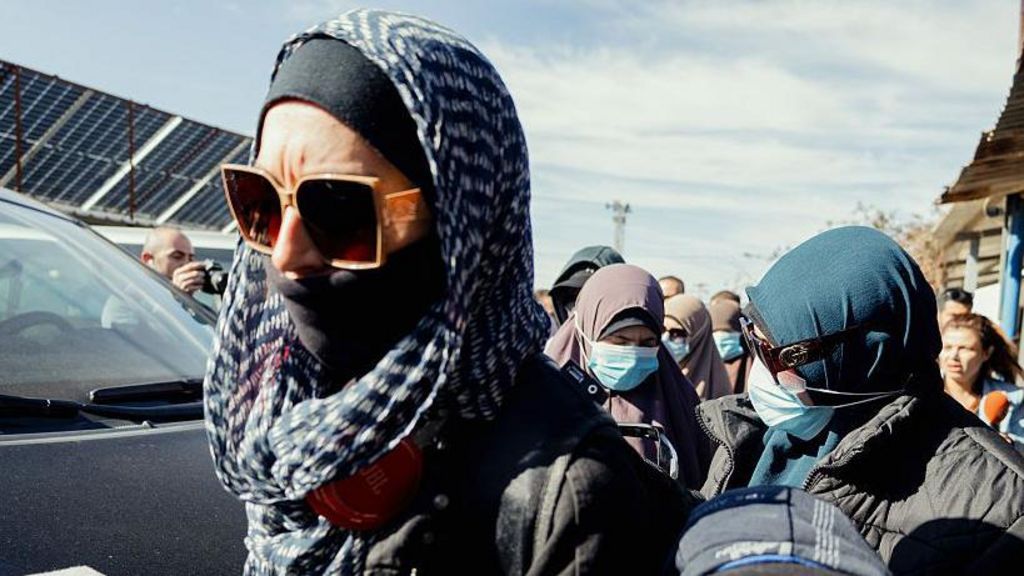
In a development that has reignited debate over how countries handle citizens linked to terrorist groups, the Australian government has confirmed that 13 individuals — four women and nine children with ties to the Islamic State (IS) extremist network — have purchased commercial airline tickets to return to Australian territory after years of detention in a Syrian displacement camp.
This cohort is part of a larger group of 34 IS-linked people, 23 of whom are children, who have been held at the al-Roj camp in northern Syria since 2019, when IS was defeated and ousted from its final controlled territory in the country. According to official updates, the entire 34-person group left the camp back in February with plans to arrange repatriation, but was forced to return to the facility for unspecified technical reasons, as the Australian government has consistently declined to facilitate official government-led repatriation for the cohort.
Speaking to reporters on Wednesday, Australia’s Home Affairs Minister Tony Burke emphasized that the federal government has not provided and will not provide any logistical, financial or official support to the group for their journey home. “These are people who made the horrific choice to join a dangerous terrorist organisation, and they chose to put their children in an unspeakable situation,” Burke told media. “As we have stated repeatedly, any member of this group who has committed criminal acts will face the full weight of Australian law.”
Burke added that Australian authorities were notified of the planned return immediately after the airline bookings were confirmed earlier this same day, noting that there are strict legal limitations on the government’s ability to block its own citizens from entering the country. “We have had long-standing, tested plans in place to manage and monitor this cohort’s return since 2014,” Burke said, confirming ongoing preparation across national security and law enforcement agencies.
Australian Federal Police (AFP) Commissioner Krissy Barrett confirmed that when the 13-person group arrives on Australian soil, some individuals will be taken into custody and formally charged with criminal offenses. For more than a decade, Barrett explained, Australian investigators have been compiling evidence of potential terrorism offenses, as well as crimes against humanity including involvement in the slave trade, linked to members of the group. While Barrett declined to specify exactly how many of the 13 will face arrest, she confirmed that any individuals not taken into custody will remain the subject of active ongoing investigations.
For the returning children, Australian authorities have outlined a support plan that includes community integration initiatives, mental health and therapeutic support, and programming designed to counter violent extremism and support long-term reintegration.
Mike Burgess, director-general of the Australian Security Intelligence Organisation (ASIO), the country’s domestic spy agency, told public broadcaster the Australian Broadcasting Corporation that he does not see immediate major security risks from the group’s return, but that all members will remain under close ongoing monitoring. “It’s up to them what they do when they get here,” Burgess said. “If they start to exhibit signs that concern us, we and the police, through our joint counter-terrorism teams, will take swift action.”
Earlier in 2025, Australia issued a temporary exclusion order barring one member of the 34-person cohort from returning to the country for a period of up to two years. Australia is not alone in its approach to repatriation: a number of other Western governments, including France, the Netherlands and the United Kingdom, have also refused to repatriate the majority of their own citizens still detained in Syrian camps linked to IS.