As U.S. President Donald Trump prepares for his highly anticipated summit with Chinese President Xi Jinping in Beijing, the White House has launched an urgent push for China to leverage its considerable economic and political sway over Iran to reopen the strategically vital Strait of Hormuz, a key global energy chokepoint whose closure has shaken global energy markets over two months of ongoing conflict.
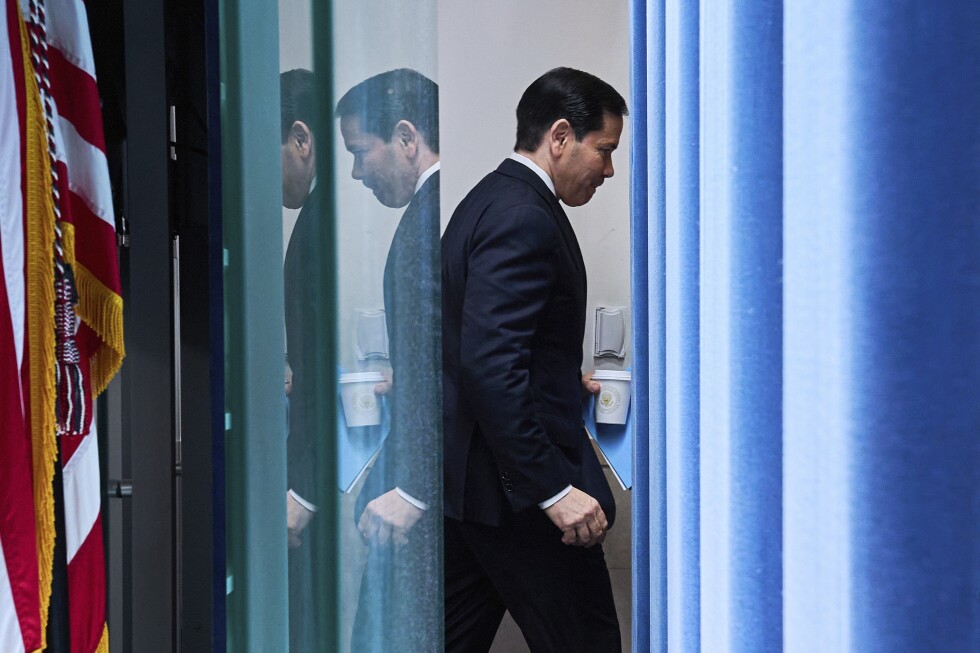
Speaking at a White House press briefing on Tuesday, Secretary of State Marco Rubio made a direct public appeal, noting that Iranian Foreign Minister Abbas Araghchi was scheduled to travel to Beijing for talks the following day. Rubio called on Chinese leaders to deliver a clear, uncompromising message to Tehran: its actions to restrict traffic through the strait have left Iran globally isolated, casting the country as the primary aggressor in the unfolding crisis. “I hope the Chinese tell him what he needs to be told,” Rubio stated.
Rubio emphasized that opening the strait aligns directly with Beijing’s own core economic interests. Official data from China’s General Administration of Customs shows that roughly half of China’s total crude oil imports and one-third of its liquefied natural gas supplies originate from the Middle East, nearly all of which pass through the Strait of Hormuz. Unlike the United States, which has reduced its dependence on Middle East energy supplies in recent years, China’s export-driven economy is far more exposed to the disruptions caused by the closure, Rubio argued.
Beyond direct appeals to Beijing over the strait, a senior anonymous diplomat confirmed to the Associated Press that U.S. diplomatic teams have also been engaged in intensive negotiations to convince China not to veto a new U.S.-backed United Nations Security Council resolution that would condemn Iran’s actions and demand the immediate reopening of the waterway. Last month, China and Russia — Iran’s closest allies on the 15-member council — blocked an earlier draft resolution, arguing that it failed to address the U.S. and Israeli strikes that triggered the current two-month conflict and unfairly targeted only Tehran.
Rubio’s public push follows remarks from Treasury Secretary Scott Bessent, who confirmed on Monday that the Strait of Hormuz dispute and Iran policy would feature prominently on the summit agenda, marking the first meeting between the two leaders during this U.S. administration and the first official presidential visit to China from the U.S. since 2017.
The closure of the strait has sent shockwaves across Asian energy and trade markets, prompting Beijing to already pursue behind-the-scenes diplomatic outreach: Chinese officials have worked with Pakistan to help broker a fragile two-week ceasefire between warring parties, and multiple anonymous diplomatic sources have confirmed that Beijing — the world’s largest purchaser of Iranian crude oil — used its economic leverage to bring Tehran back to the negotiating table last month when talks faltered. President Trump himself has previously acknowledged China’s role in encouraging Iran to agree to that temporary ceasefire.
Despite these existing diplomatic efforts, the Republican U.S. administration argues Beijing can and should do more to secure the permanent reopening of the strait. “The threat of attacks from Iran has closed the strait — we are reopening it,” Bessent said during an interview on Fox News. “So I would urge the Chinese to join us in supporting this international operation.”
Trump struck a more measured tone when discussing China’s role during remarks to reporters in the Oval Office on Tuesday, noting that Beijing has not directly challenged U.S. policy even as Washington continues to press Tehran to abandon its nuclear program and reopen the waterway. Still, China has repeatedly criticized U.S. military action against Iran, one of its longest-standing economic partners in the Middle East. Trump also noted that China relies heavily on the Strait of Hormuz for energy supplies, slightly exaggerating the share of China’s oil that transits the waterway at 60%.
Tensions over Iran-China ties have already strained bilateral relations in recent weeks. The U.S. government has long accused Beijing of supporting Iran’s ballistic missile program by supplying dual-use industrial components that can be diverted to weapons production. Last month, Trump said Xi had given assurances that China would not send weapons to Iran, amid circulating reports that Beijing was considering arms transfers. Just days after Trump confirmed receiving the assurance, he claimed U.S. forces had intercepted a vessel carrying a “gift” of military supplies from China to Iran, though he offered no additional evidence or details to back up the claim.
The U.S. has also moved to ramp up economic pressure on Beijing over its trade ties with Tehran. On April 24, the Treasury Department announced sweeping new sanctions targeting a major Chinese oil refinery, as well as roughly 40 shipping companies and tankers involved in transporting Iranian crude. The sanctions cut all of the targeted entities off from the U.S. financial system and impose secondary penalties on any third-party business that engages with the sanctioned firms.
Beyond the Iran dispute, the summit will also address longstanding tensions over Taiwan, the self-governing island that Beijing claims as an inalienable part of its territory. Rubio confirmed Tuesday that the issue will be on the agenda, noting that Beijing has already signaled it will push the U.S. to roll back recent arms sales to Taipei. “I think both countries understand that it is neither one of our interests to see anything destabilizing happen in that part of the world,” Rubio said. “We don’t need any destabilizing events to occur with regards to Taiwan or anywhere in the Indo-Pacific. And I think that’s to the mutual benefit of both the United States and the Chinese.”
In December, the Trump administration announced a record $11.1 billion arms sale package to Taiwan, a move that drew fierce condemnation from Beijing. Trump later suggested he would open discussion of the arms sales with Xi during the summit, a shift that has sparked alarm among Taiwanese government officials. Last week, Chinese Foreign Minister Wang Yi emphasized in a call with Rubio that the U.S. must “make the right choices” on Taiwan to preserve bilateral stability, according to an official statement from the Chinese Foreign Ministry.