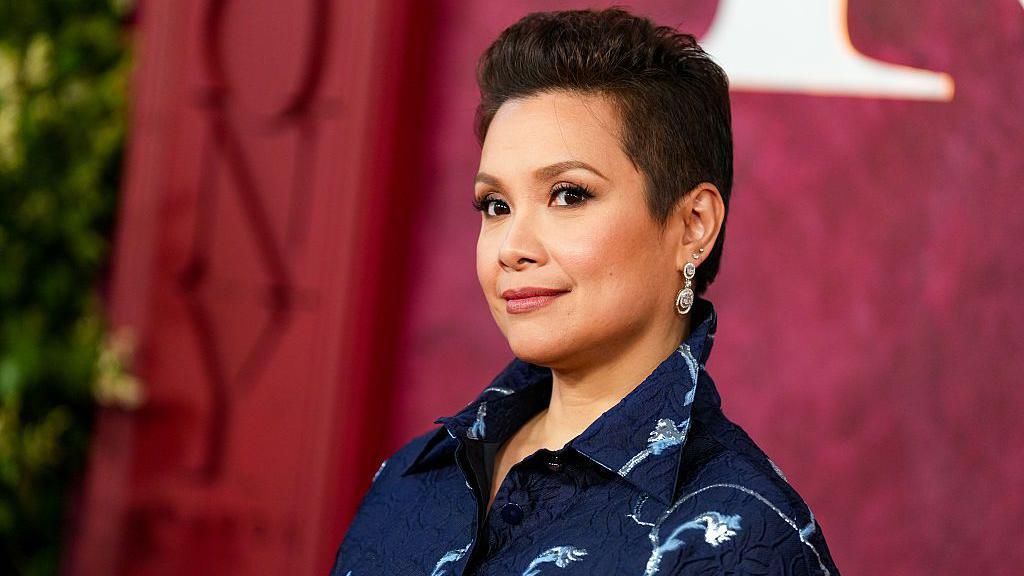
Thirty-five years ago, a young Filipina performer named Lea Salonga stepped onto the Broadway stage and made history, winning a Tony Award for her breathtaking lead performance in *Miss Saigon*. What many do not know, however, is that even after this career-defining win, systemic barriers kept her from chasing the next opportunity. In a candid interview with the BBC, Salonga opened up about the rampant anti-Asian bias that defined her early years in Western theater: agents would submit her for auditions, only for casting teams to reject her out of hand, citing her ethnicity as the reason. “They were unable to imagine someone like me playing those roles,” she recalled.
Today, that kind of outright exclusion feels almost unthinkable. We live in an era where K-pop powerhouses BTS and Blackpink top global music charts, Asian-led hits like *Shōgun* and *Squid Game* dominate major awards ceremonies, and Asian-led projects draw sold-out crowds on Broadway. For Salonga, who has since cemented her status as a global Broadway icon and national treasure in the Philippines, this sea change has been decades in the making.
Even as a Tony-winning performer, Salonga’s path to the next landmark role of her career was only possible through the support of insider advocates. The opportunity to play Eponine in the long-running hit *Les Misérables* came to her without an audition, thanks to the producers of *Miss Saigon*, who also backed the iconic musical. Salonga made history as the first Asian actor to land a principal role in the production, but she remembers the casting being framed internally as little more than a low-stakes experiment.
“When I was cast, the show had already run for five years, and January is usually a slow ticket season, so producers felt there was minimal risk,” she explained. At the time, she was the only person of color in the entire company, and the production openly questioned whether casting an Asian actor in a traditionally white role was just a publicity stunt. “Is this going to work? If it works, the reward would be great,” was the general attitude, she said.
Stepping into that role was an experience Salonga describes as “incredibly stressful” — far more nerve-wracking than *Miss Saigon*, where she played an Asian character that fit casting expectations. “With *Les Mis*, it’s like, we’re going to cast this Asian chick in this show — and there’s never been an Asian in this show,” she said. Yet even amid the pressure, she understood the magnitude of what that breakthrough meant for future generations: “It meant that anyone who had their sights on Eponine could play it. Because if I could do it — then anyone else could, regardless of ethnic background.”
More than 30 years later, that breakthrough has come full circle during the 2026 Singapore run of *Les Misérables The Arena Spectacular*, where Salonga now performs alongside 28-year-old Nathania Ong — the current actress playing Eponine, and the first Singaporean to ever take on the role on London’s West End. Watching Ong from backstage as she prepares for her own performance, Salonga says it’s clear the experiment she joined all those years ago worked. “It makes me think that the experiment worked. And it’s something I’m very proud to have participated in. And now it’s time for the next generation of actors to step up,” she joked.
Ong grew up watching trailblazers like Salonga break barriers, but says she did not immediately grasp the historic weight of her own casting. “I didn’t even realize what a big deal it was to have gotten the part,” she shared. “It took a few months before I was like… I’ve made it. I’ve actually done something with this.” While she credits Salonga for opening doors for all BIPOC performers, she notes that the fight for equal representation has evolved — but is far from over. Today, the struggle is no longer just about getting a foot in the audition room: it’s about being recognized for your talent, not just hired to check a diversity box. “The thing with going for parts as an East Asian is that sometimes we struggle with the idea of: ‘Have we been hired to meet a diversity quota, or are we actually being hired because we’re good at our jobs?’” she said.
For Salonga, the biggest and most exciting shift extends beyond casting of traditional Western roles: Asian creators are now writing and headlining their own stories, rather than just fitting into narratives crafted by others. She points to the recent Tony-winning success of *Maybe Happy Ending*, the South Korean musical that earned the country its first ever Tony Award, as a perfect example of this new era. “Seeing a show like that…winning so many awards… tells me that if something is just so good that it cannot be ignored, it will be seen,” she said. When she was a young performer, she never could have imagined a story so inherently Asian earning such widespread acclaim on Broadway, and she notes how transformative that representation is for young Asian artists growing up today. “I think for a lot of young people to be able to see somebody that looks like them up on that stage… is incredible. I think there was a generation of Asians who wanted to do this but didn’t have that representation upon which they could reflect themselves,” she said. “I’m so glad that I am now getting to see it because now my son gets to see it.”
Salonga is also a self-described huge fan of BTS, whose global dominance she calls a landmark moment for Asian artists. She sees a familiar weight in the pressure the band carries, recalling the expectation she felt as a young performer breaking out on the global stage: “When you head to the West End and you have to be excellent or you will let 75 million people down [the population of the Philippines], that’s a lot to put on your shoulders. The responsibility is heavy,” she said. “That’s also why I appreciate BTS so much because it’s like, here you go, the weight of all of Asia is now on your shoulders.”
The momentum for authentic Asian storytelling extends far beyond Broadway, Salonga adds, pointing to her own upcoming project: a DreamWorks animated film entirely rooted in Philippine folklore, a project she never thought possible earlier in her career. “An animated film that is based on my culture… I’d never thought I’d see something like that in my lifetime,” she said.
When asked what her 18-year-old self would make of how far the industry has come, Salonga says the younger version of herself would be incredulous — but also inspired to know there is a space for Asian talent. “Incredibly shocked, but I think also inspired to know… that there is a space for me,” she said. “You know, you can push us to the margins – but we’re just going to centre ourselves.”