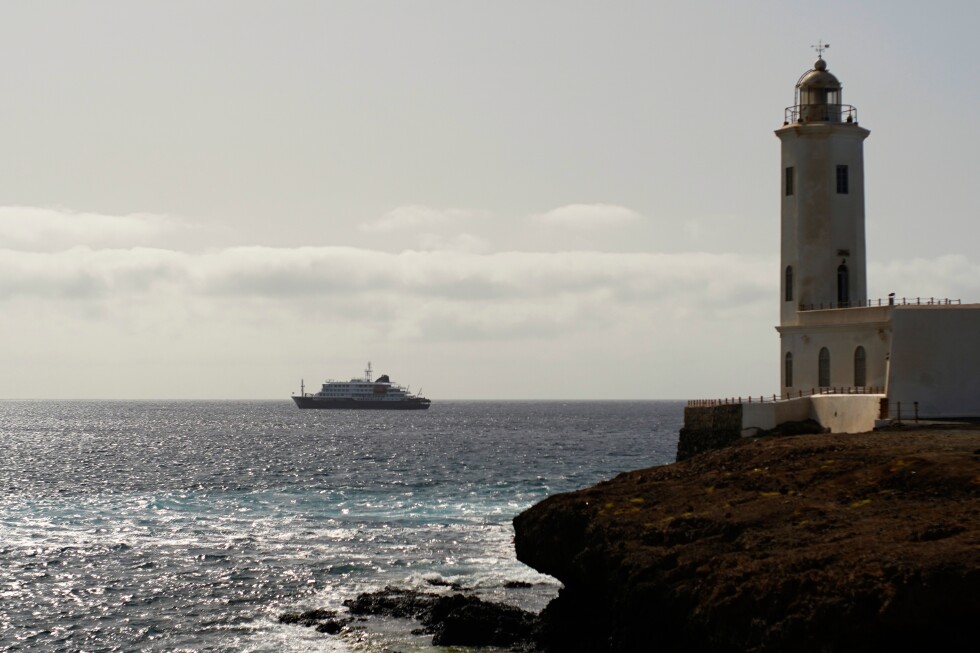
A Dutch-operated polar cruise vessel carrying nearly 150 people is currently anchored off the coast of Cape Verde in the Atlantic Ocean, waiting for local authorities to grant evacuation permission after a suspected hantavirus outbreak left three passengers dead and at least three others in serious condition, the World Health Organization (WHO) and cruise line operator have confirmed. Among the 88 passengers on board the MV Hondius are 17 American citizens, alongside travelers from the United Kingdom, Spain and other nations.
The multi-week expedition, which began in Ushuaia, southern Argentina, was originally scheduled to take passengers through Antarctica, the Falkland Islands, South Georgia and a series of remote South Atlantic island outposts. The first fatality was recorded on April 11, when a 70-year-old Dutch passenger died on board after developing classic hantavirus symptoms including fever, headache, abdominal pain and diarrhea, according to Netherlands-based operator Oceanwide Expeditions. His remains were disembarked nearly two weeks later at Saint Helena, a British overseas territory roughly 1,900 kilometers off the African coast, where they remain awaiting repatriation to the Netherlands.
The man’s 69-year-old wife, who had also fallen ill, was evacuated to South Africa alongside the body. She collapsed shortly after arriving at Johannesburg’s OR Tambo International Airport and died at a nearby hospital. By April 27, the ship reached the remote Atlantic outpost of Ascension Island, where a sick British passenger was evacuated for emergency care in South Africa. That patient later tested positive for hantavirus, and remains in critical, isolated care in an intensive care unit in South Africa.
A third fatality occurred on board Saturday, when a German national passenger died. Their body is still being held on the MV Hondius, as local authorities have not yet permitted anyone to disembark after the vessel reached Cape Verde on Sunday to request emergency assistance. To date, only the evacuated British patient has received a confirmed positive hantavirus diagnosis; WHO officials note that five total cases are suspected, including the three fatalities.
Two additional crew members — one British, one Dutch — are currently on board experiencing severe symptoms and require urgent evacuation, Oceanwide Expeditions confirmed. As of Monday, the operator was still waiting for approval from Cape Verdean public health authorities to offload sick passengers and crew. If evacuation permission is not granted in Cape Verde, the company says it is considering rerouting to the Spanish Canary Islands, specifically Las Palmas or Tenerife, to offload those in need of care.
Oceanwide Expeditions stated that it has implemented strict precautionary protocols on the vessel, including isolation of symptomatic people, and no other people on board have reported developing hantavirus symptoms. The WHO is coordinating a multi-country public health response to the incident, working alongside local authorities and the cruise operator to conduct a full public health risk assessment, coordinate evacuations, and carry out further laboratory testing and epidemiological tracing. Viral sequencing is also underway to confirm the strain of the virus. The Dutch Ministry of Foreign Affairs is also assisting in exploring evacuation options for people on the vessel.
Hantavirus is a rare pathogen spread primarily through contact with urine or feces from infected rodent populations such as rats and mice. The virus gained renewed public attention last year, when Betsy Arakawa, wife of veteran Hollywood actor Gene Hackman, died from a hantavirus infection in New Mexico. While rare cases of person-to-person transmission have been recorded, the virus is not easily spread between humans, WHO officials emphasize. There is no specific cure or targeted treatment for hantavirus, but early clinical intervention significantly improves a patient’s chance of survival. The virus causes two severe syndromes: hantavirus pulmonary syndrome, which impacts the lungs, and hemorrhagic fever with renal syndrome, which affects kidney function; pulmonary syndrome is the more common presentation in the Americas, per the U.S. Centers for Disease Control and Prevention (CDC).
“While severe in some cases, it is not easily transmitted between people. The risk to the wider public remains low. There is no need for panic or travel restrictions,” Dr. Hans Henri P. Kluge, WHO Regional Director for Europe, said in a public statement Monday.
The MV Hondius is a 107-meter expedition vessel with capacity for 170 passengers across 80 cabins, and typically sails with a crew of approximately 70, including a full-time on-board doctor. Oceanwide offers 33- and 43-night “Atlantic Odyssey” expeditions along the route the MV Hondius was traveling when the outbreak began. While the source of the current outbreak has not yet been identified, a 2019 hantavirus outbreak in southern Argentina killed at least nine people, prompting a 30-day lockdown of a remote rural town to halt transmission.
South African public health officials are currently conducting contact tracing in the Johannesburg region to identify any people who may have been exposed to the infected passengers who disembarked in the country. Like the WHO, South Africa’s Department of Health has stressed that there is no cause for public panic, noting that international health authorities are coordinating a coordinated cross-border response to contain any potential spread.