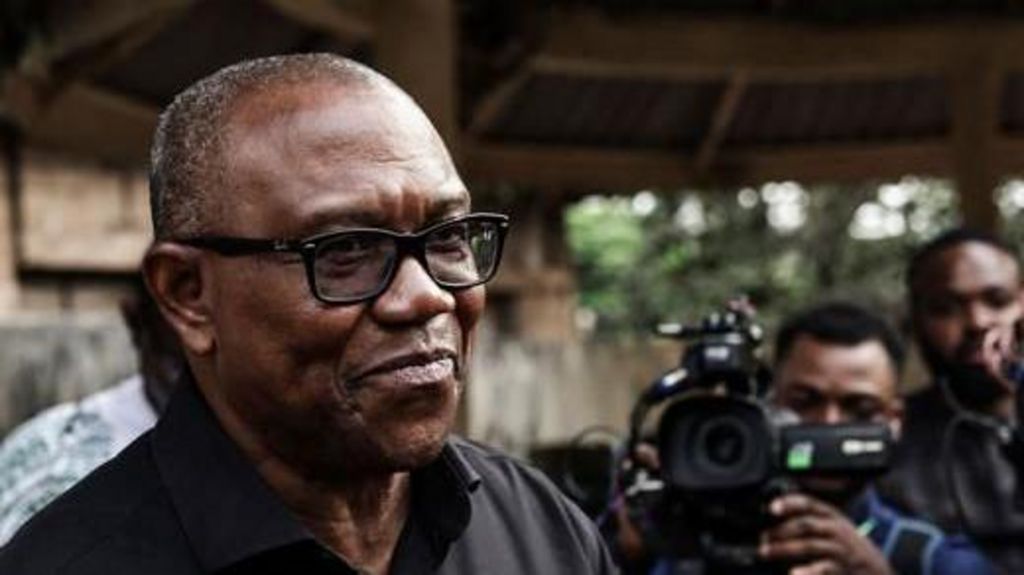
Nigeria’s political landscape is bracing for a major shift nine months ahead of the 2026 presidential election, as two of the country’s highest-profile opposition figures have announced a surprise party switch that could upend the race against incumbent President Bola Tinubu.
Former governors Peter Obi and Rabiu Kwankwaso, who placed third and fourth respectively in the 2023 presidential contest, formally joined the Nigeria Democratic Congress (NDC) during a ceremony at the party’s Abuja national headquarters on Sunday, where they were welcomed by NDC national leader Senator Seriake Dickson. The move opens the door for a united opposition joint ticket to challenge Tinubu’s ruling All Progressives Congress (APC) in the January 2026 vote.
Prior to this switch, Obi and Kwankwaso were members of the African Democratic Congress (ADC), alongside 2023’s second-place finisher, former Vice-President Atiku Abubakar. Their exit from the ADC comes less than a year after all three opposition heavyweights merged into the party, an alliance that quickly collapsed amid messy public legal disputes over party leadership.
Obi, who ran as the Labour Party’s 2023 presidential candidate before leaving the party, blamed the infighting on interference from the ruling government. “The same Nigerian state and its agents that created unnecessary crises and hostility within the Labour Party that forced me to leave now appear to be finding their way into the ADC,” he stated in his remarks on Sunday. Allies of President Tinubu have rejected these claims, denying any coordinated effort to sabotage opposition political groups.
While some political observers frame the split as further fragmentation of Nigeria’s already fractured opposition, supporters of the new NDC alliance argue the move will eliminate internal chaos and create a more cohesive, focused challenge to the APC. Both Obi and Kwankwaso bring distinct, complementary electoral strengths to the new party: Obi commands massive, enthusiastic support from young voters across Nigeria’s southern regions, while Kwankwaso holds substantial political influence in the country’s populous north. Both have built robust grassroots followings from their tenures as state governors.
Following their formal induction into the NDC, Obi and Kwankwaso issued calls for national unity, expanded economic and social opportunities for Nigeria’s large youth population, and an end to the persistent internal infighting that has weakened the country’s opposition movements in past elections.
Political analyst Bala Yusuf told the BBC that the party switch has the potential to completely redraw Nigeria’s electoral map ahead of next year’s vote. “If the NDC fields Obi as its presidential candidate and Kwankwaso as vice-president, they will definitely give the ruling APC a run for their money at the polls,” Yusuf noted.
One key unresolved question remains: the alliance has not yet announced who will take the top spot on the presidential ticket, a contentious issue that has sunk previous opposition power-sharing deals in Nigeria. President Tinubu, who assumed office in May 2023, has not yet issued any public response to the opposition’s latest restructuring.
Next January’s election will mark Nigeria’s eighth democratic presidential contest since the end of military rule in 1999.