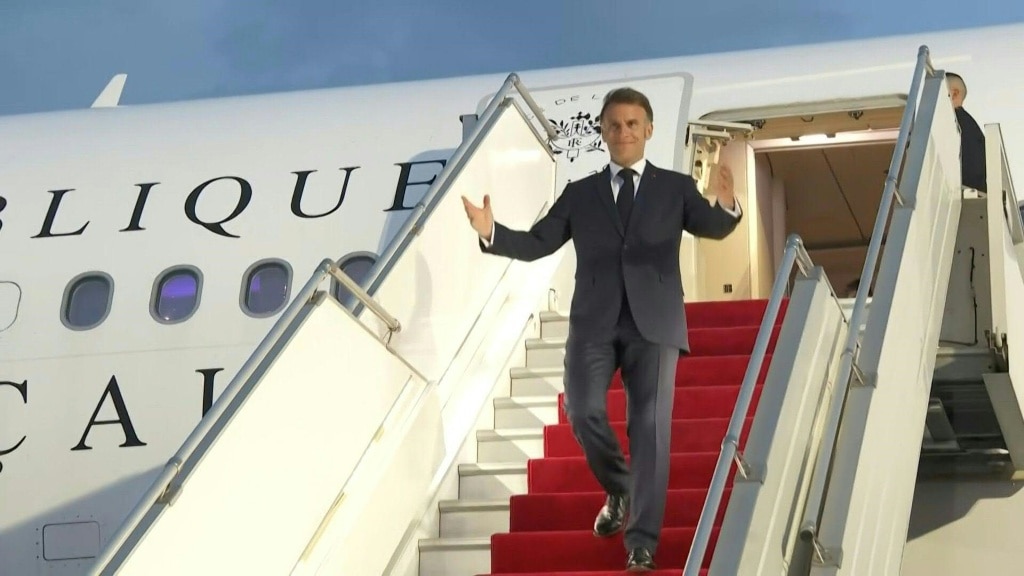
Against a backdrop of shifting global alliances and rising geopolitical uncertainty driven by U.S. policy shifts under Donald Trump, dozens of European leaders and Canadian Prime Minister Mark Carney convened in Armenia’s capital Yerevan on Monday for the latest summit of the European Political Community (EPC), a biannual forum designed to strengthen cross-continental security cooperation.
The geopolitical shadow of U.S. President Donald Trump hangs heavily over the two-day gathering, held at a strategic crossroads between Russia and the Middle East — the two core topics dominating the summit agenda. Ahead of the official opening of talks, European Council President Antonio Costa posted to social media Sunday after arriving in Yerevan, noting that leaders from across Europe, joined by Canada as an invited guest, would collaborate on strategies to boost collective security and regional resilience.
Two ongoing conflicts have sent shockwaves through transatlantic relations in recent months: the escalating Iran war, which has sent global energy prices soaring and disrupted international markets, and Russia’s full-scale invasion of Ukraine, now grinding into its fifth year. Recent tensions between Trump and German Chancellor Friedrich Merz — who publicly criticized Washington’s handling of the Iran conflict — prompted the U.S. to announce plans to withdraw 5,000 American troops from Germany, deepening existing doubts about Washington’s long-term commitment to defending its NATO allies in Europe.
Key attendees at the summit include Ukrainian President Volodymyr Zelensky and NATO Secretary General Mark Rutte; Merz will be represented by French President Emmanuel Macron for the proceedings. Notably, Carney’s participation marks the first time a non-European leader has joined EPC talks, a shift widely interpreted as a response to closer alignment between Ottawa and Europe amid shared pushback against Trump’s policies. Like many European economies, Canada has taken major damage from Trump’s sweeping tariffs, and Carney has emerged as a leading voice for middle powers pushing back against the U.S. president’s unilateral agenda. Earlier this year, he delivered a widely cited address calling on mid-sized nations to unite in the face of a new global order defined by great power competition and the erosion of long-standing international rules-based systems.
Sebastien Maillard, a special adviser at the Paris-based Jacques Delors Institute think tank, noted that the EPC was originally framed as a cooperative body focused on countering Russian aggression after the 2022 invasion of Ukraine. “With the invitation to Canada, this initiative — which was initially driven by geography — is now taking on an anti-Trump slant,” Maillard explained. In a tangible step to deepen its ties with Europe, Canada has already become the first non-European country to join the EU’s defense financing scheme, as Ottawa actively seeks to diversify its economic and security partnerships away from its traditional southern neighbor the U.S., while expanding bilateral trade cooperation with the bloc. A senior anonymous EU official noted that “Canada has a way of looking at the world and looking at ways to solve the challenges we have currently that Europe shares to a great extent.”
Launched in 2022 on the initiative of Emmanuel Macron, the EPC was created in direct response to Russia’s invasion of Ukraine, bringing together all EU member states alongside 21 additional non-EU countries for informal dialogue. Unlike formal EU summits, the EPC does not typically produce binding policy decisions, instead prioritizing open multilateral and one-on-one discussions between leaders. Most delegates arrived in Yerevan on Sunday for an informal opening dinner, with Spanish Prime Minister Pedro Sanchez expected to join Monday after a technical issue with his aircraft forced an emergency landing in Turkey, requiring him to stay overnight in Ankara.
Monday’s gathering marks the first time the EPC has held a summit in the Caucasus region, a milestone that comes as Armenia actively pursues closer ties with the European Union while carefully reducing its long-standing reliance on traditional ally Russia. The EPC summit will be followed Tuesday by a formal EU-Armenia summit featuring European Commission President Ursula von der Leyen and Antonio Costa, who has described the meeting as a “major milestone” in Armenia’s rapprochement with the bloc.
Relations between Yerevan and Moscow have deteriorated sharply in recent years, fueled by widespread anger in Armenia over the failure of Russian peacekeepers to intervene during recurring military conflicts between Armenia and neighboring Azerbaijan. Under Prime Minister Nikol Pashinyan, Armenia has adopted an official strategy of “diversification”, maintaining limited ties with Russia while expanding political and economic links with Western institutions. The country of 3.5 million signed a comprehensive partnership agreement with the EU in 2017, and formally announced its intention to apply for EU membership last year. In April, the EU deployed a special mission to Armenia to help the country counter foreign interference, amid widespread intelligence suggesting Russia is running a large-scale disinformation campaign to disrupt Armenia’s June general elections.
While Russian President Vladimir Putin has stated he is “completely calm” about Armenia’s outreach to the EU, he has issued a clear warning that simultaneous membership in both the EU and the Russian-led Eurasian Economic Union is “simply impossible.”