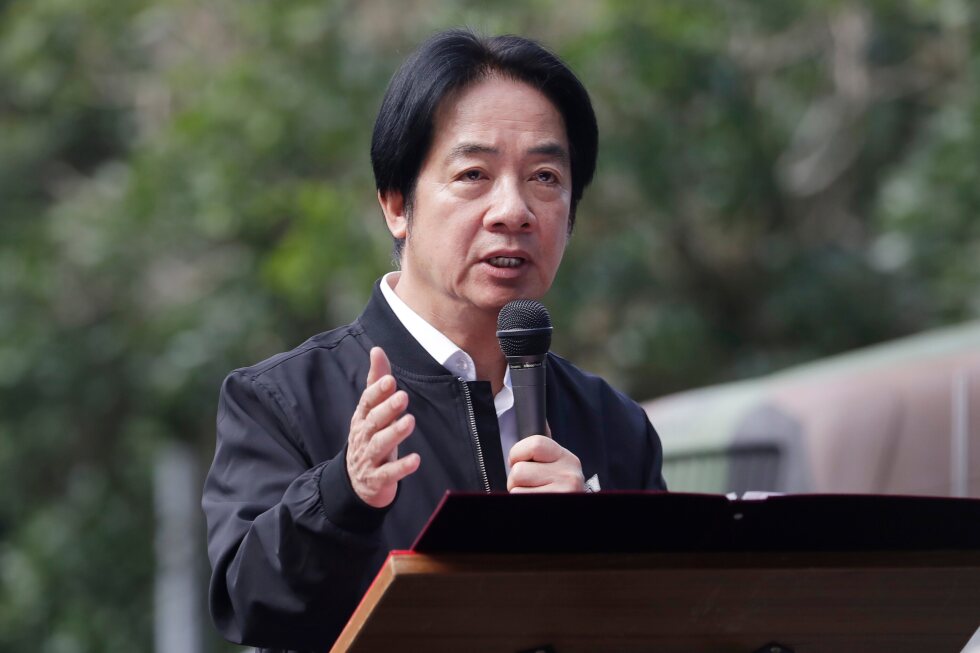
After a weeks-long delay driven by cross-border pressure from Beijing, Taiwanese President Lai Ching-te announced his arrival in Eswatini on Saturday, marking the completion of a trip that became a high-stakes symbol of Taipei’s efforts to maintain international diplomatic space.
Lai’s journey to Eswatini — Taiwan’s last remaining formal diplomatic ally on the African continent — was originally scheduled to begin on April 22, but the trip was put on hold after three regional nations, Seychelles, Mauritius and Madagascar, withdrew prior approval for Lai’s aircraft to cross their airspace. Taiwanese officials attributed the permit revocations directly to heavy political and economic coercion from Chinese authorities, who have long demanded that no country grant official access to Taiwanese leaders.
In a public post on the social platform X following his arrival, Lai emphasized the purpose of his visit: to reaffirm the deep, decades-long diplomatic friendship between Taipei and Mbabane. “Taipei is a self-governing democracy that Beijing claims as its own territory, but we will never be deterred by external pressure,” Lai wrote. In an additional Facebook post, he credited his diplomatic and national security teams with the careful behind-the-scenes planning that made the visit possible, noting that the trip would deepen bilateral cooperation across key sectors including economic development, agriculture, cultural exchange and education. “Our resolve and commitment are rooted in one core truth: Taiwan will continue engaging with the global community, no matter what obstacles we face,” he added. Notably, Taiwanese authorities chose not to pre-announce the final itinerary of Lai’s trip for security reasons, keeping the revised travel plans confidential until he landed in Eswatini.
Beijing responded quickly and sharply to the news of Lai’s arrival. A spokesperson for China’s Ministry of Foreign Affairs dismissed the visit as a “laughable stunt” staged for the global public, dismissing Lai’s journey as an act of “smuggling” out of Taiwan. The spokesperson reiterated Beijing’s longstanding position that Taiwan is an inalienable part of Chinese territory, stating that Lai’s “undignified” visit is a losing cause that can never alter that core fact. “We urge Eswatini and other individual countries to recognize the natural arc of history, and stop acting as props for ‘Taiwan independence’ separatist forces,” the statement read.
For decades, China has leveraged economic and political influence to shrink Taipei’s network of formal diplomatic allies, and has not ruled out the use of military force to bring Taiwan under Beijing’s control. Currently, only 11 United Nations-recognized states maintain full official diplomatic ties with Taipei, down from 29 in 2000. Eswatini, a small landlocked southern African nation with a population of roughly 1.2 million, has held out as Taipei’s only ally on the African continent since 2018, when Burkina Faso switched diplomatic recognition to Beijing. In recent years, Eswatini has also faced economic consequences for its alliance with Taiwan: it is the only African country excluded from China’s duty-free market access program for developing nations.
The visit comes amid a sharp recent escalation of cross-strait and Sino-U.S. tensions. Just one day before Lai’s arrival, Beijing warned Washington that the Taiwan issue remains the single biggest potential flashpoint for conflict between the two global powers, with Chinese Foreign Minister Wang Yi telling newly confirmed U.S. Secretary of State Marco Rubio in a phone call that Taiwan is the “biggest risk” to bilateral relations. Taiwan’s government issued a formal statement of concern in response to Wang’s remarks.
The last visit by a sitting Taiwanese president to Eswatini took place in 2023, when Lai’s predecessor Tsai Ing-wen traveled to the country for diplomatic talks.