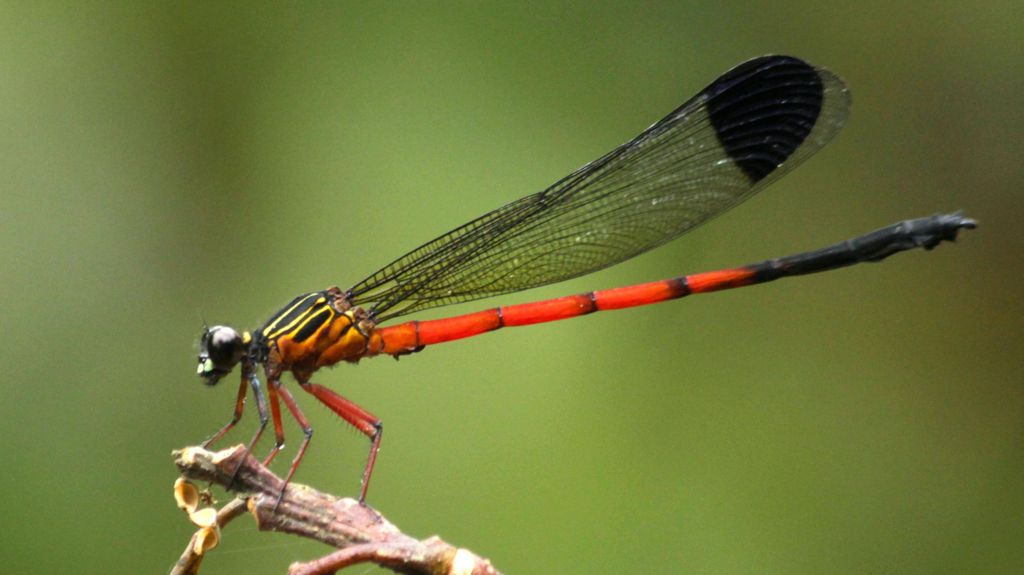
A groundbreaking, first-of-its-kind two-year study focused on dragonfly and damselfly populations in India’s Western Ghats, one of the planet’s most critical global biodiversity hotspots, has uncovered results that blend fascinating new insights with urgent warnings about ecosystem health.
Funded by the Indian government’s Department of Science and Technology, the research was conducted between 2021 and 2023 across five Indian states covering the full span of the Western Ghats mountain range. When survey work concluded, the research team led by evolutionary ecologist Pankaj Koparde confirmed 143 distinct species of dragonflies and damselflies currently residing in the region. Of these confirmed species, at least 40 are endemic, meaning they exist nowhere else on Earth. The team also made a landmark discovery: seven entirely new species to science, one of which was named *protosticta armageddonia*, a deliberate reference to the global “ecological armageddon” of widespread insect population collapse that scientists have documented in recent decades.
Beyond these new discoveries, the study delivered a deeply worrying finding: 79 species that had previously been recorded in the Western Ghats were not located during the extensive two-year survey. This missing species count represents an almost 35% drop in the total number of confirmed odonate (the order that includes dragonflies and damselflies) species in the region. Koparde notes that part of this gap could stem from research limitations: some species may be extremely rare, or only active during narrow seasonal windows that the survey did not capture. But he also cautions that the decline could signal actual species loss, with some populations already pushed to extinction.
This trend is particularly concerning because dragonflies and damselflies are widely recognized as sensitive bioindicators of freshwater and overall ecosystem health. A decline in their populations often acts as an early warning signal for broader ecosystem degradation, Koparde explains. The Western Ghats, a 1,600-kilometer mountain range stretching along India’s western coast and designated a UNESCO World Heritage Site, is already one of the most threatened biodiversity regions on the planet. It supports more than 30% of India’s total plant and animal species, including 325 species classified as globally threatened by conservation authorities, and hosts an extraordinary array of endemic species that evolved in isolation over millions of years. These unique endemic species play irreplaceable roles in their ecosystems, from regulating local climate to supporting pollination networks that maintain overall biodiversity.
Geologically, the Western Ghats formed roughly 150 million years ago during the Jurassic Period, when the supercontinent Gondwana split apart and the Indian tectonic plate separated from Africa. This ancient origin means many species in the region carry genetic links to the ancient supercontinent, making them extraordinarily valuable for evolutionary research. For this reason, Koparde’s team is now building a comprehensive genetic library of all odonate species they documented during the survey, which will allow researchers to trace the evolutionary origins of each endemic species and deepen global understanding of how the region’s unique biodiversity formed.
To complete the field work, the team had to navigate extremely challenging terrain, hiking to remote, unstudied locations, wading through mangrove swamps and traversing moss-covered riverbanks to locate and document the insects, starting their surveys at dawn to maximize species detection.
The latest findings add to a growing body of research highlighting the accelerating biodiversity loss in the Western Ghats. In 2025, the International Union for Conservation of Nature (IUCN) rated the region’s conservation status as “of significant concern,” noting that ongoing threats including unplanned urbanization, agricultural expansion, livestock overgrazing, large-scale infrastructure development such as dams and wind energy projects, invasive species incursion, and mining continue to degrade and fragment critical habitat. Recent prior studies have already documented dramatic declines in other endemic taxa: a 2025 study reported the local extinction of a rare population of galaxy frogs after recreational photographers destroyed their sensitive forest floor habitat; a 2024 study found industrial farming practices were pushing multiple endemic frog species toward extinction; and a 2023 bird survey recorded a 75% population decline across 12 endemic Western Ghats bird species.
Koparde emphasizes that the lack of systematic population monitoring for most species in the region is a major barrier to effective conservation, making baseline surveys like this one critical to tracking future changes and protecting the Western Ghats’ irreplaceable biodiversity before it is lost forever.