A sharp constitutional and political standoff has erupted in Washington over US military action against Iran, after President Donald Trump informed congressional leaders that all active hostilities between American forces and Tehran have formally ended following a weeks-long ceasefire — while asserting he never required legislative authorization for the conflict in the first place.
In a formal letter sent to top congressional leaders Friday, Trump confirmed that “There has been no exchange of fire between the United States Forces and Iran since April 7, 2026,” adding that “The hostilities that began on February 26, 2026 have terminated.”
The notification lands precisely on the 60th day after Trump formally informed Congress of the launch of strikes against Iran, a timeline that carries critical legal weight under the decades-old War Powers Resolution of 1973. Enacted in the wake of the Vietnam War to curtail unilateral presidential war-making authority, the law requires a sitting president to end all military engagement within 60 days of formal notification unless Congress grants explicit approval to continue hostilities, or issues a formal declaration of war. The legislation only allows a 30-day extension to facilitate safe withdrawal of forces if authorization is not granted.
Trump pushed back firmly against the law’s requirements in his letter, arguing that his constitutional authority as Commander-in-Chief and chief architect of US foreign policy grants him independent power to order military action regardless of congressional approval. “I have and will continue to direct United States Armed Forces consistent with my responsibilities and pursuant to my constitutional authority to conduct United States foreign relations as Commander in Chief and Chief Executive,” he wrote.
The Trump administration’s top defense official doubled down on this legal interpretation one day earlier, during a congressional hearing. Defense Secretary Pete Hegseth told lawmakers that the 60-day legal clock mandated by the War Powers Resolution had been paused by the current ceasefire. “We are in a ceasefire right now, which our understanding means the 60-day clock pauses or stops in a ceasefire,” Hegseth said. Democratic Senator Tim Kaine, who questioned Hegseth on the issue, rejected this reading outright: “I do not believe the statute would support that.”
For weeks, Capitol Hill has been roiled by growing pressure to hold a formal vote on whether to authorize the ongoing conflict with Iran. Democratic lawmakers, who hold slim majority control of both chambers, have repeatedly introduced measures to constrain Trump’s ability to continue military action against Iran, but all such attempts have failed so far due to united opposition from most Republican lawmakers. That opposition may be shifting, however: a small number of Republican legislators have signaled they may rethink their positions now that the 60-day legal deadline has passed. According to CBS News, the BBC’s US partner, Trump administration officials have already held behind-the-scenes discussions with congressional members about securing formal authorization for the conflict.
While active fighting has halted under the ceasefire, the two sides have yet to reach a durable long-term peace agreement through negotiations. On Friday, Iranian state media reported that Tehran had sent a new negotiation proposal to intermediaries in Pakistan, but the details of the proposal have not been released, and it remains unclear whether the proposal has been shared with US negotiators.
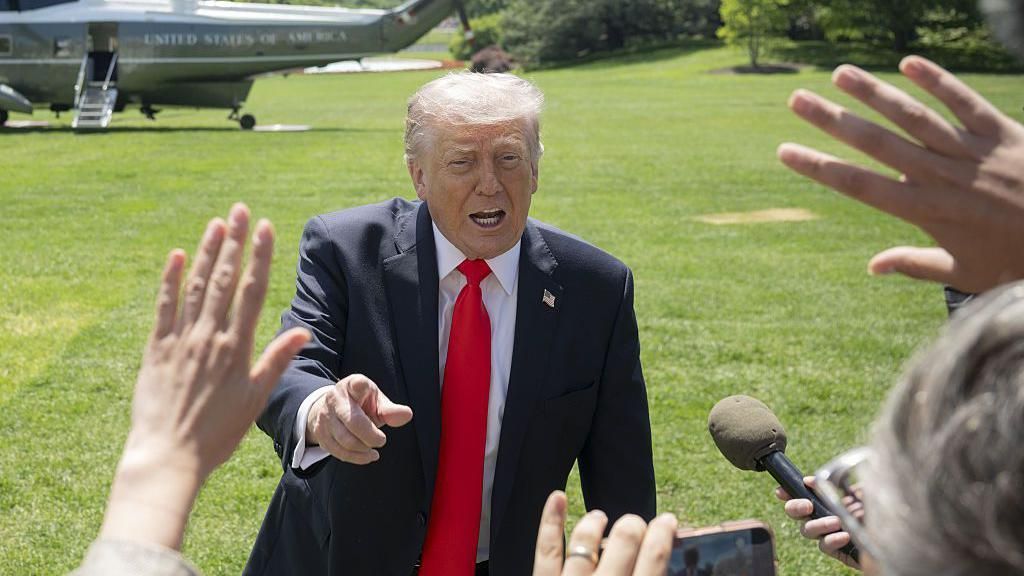
Speaking to reporters Friday afternoon, Trump acknowledged that ongoing diplomatic talks had not yet yielded a breakthrough, and expressed frustration with the pace of negotiations. “We just had a conversation with Iran. Let’s see what happens. But, I would say that I am not happy,” the president said. He blamed the slow progress on disarray within Iran’s leadership, arguing that the decimation of top Iranian military commanders in early strikes has left the country’s ruling circle “very confused” and unable to make key concessions.
Trump also confirmed that he had received a full range of military and diplomatic options from US Central Command on Thursday, with proposals spanning from a full-scale resumption of offensive operations to “finish them forever” to continuing diplomatic efforts to reach a negotiated settlement.