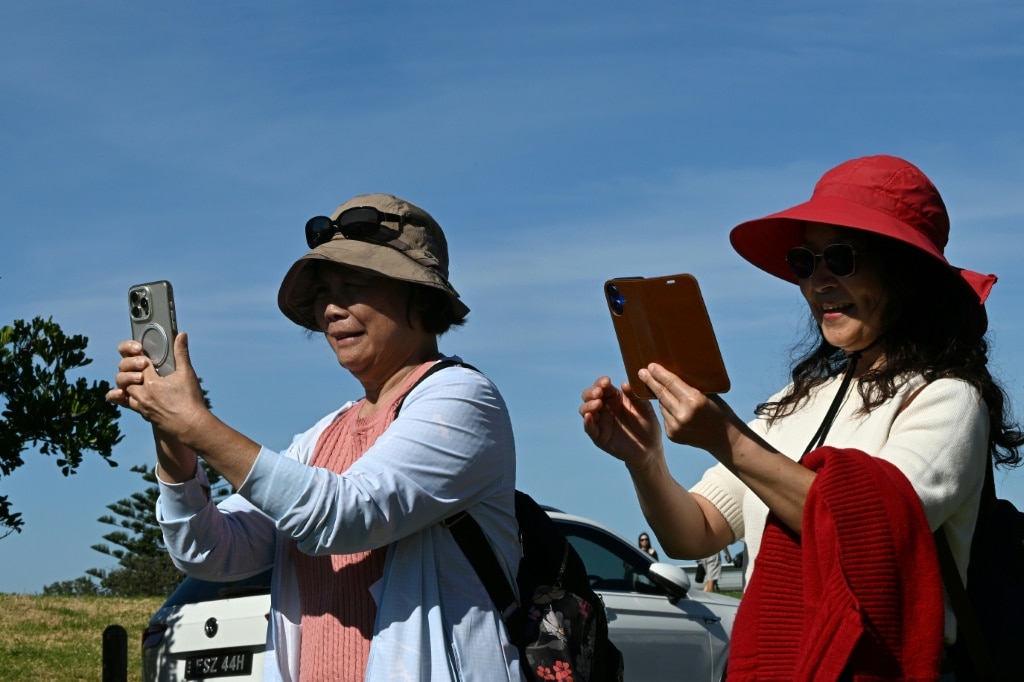
Across the globe, iconic travel hotspots from Barcelona to Venice have pushed back against the chaos of overtourism — and now a tiny Australian coastal hamlet is the latest community to draw a line in the sand. Tasman Drive, a tree-lined road in Gerringong, a quiet town two hours south of Sydney, has been labeled the country’s ‘most beautiful street’ in viral social media content, and the flood of visitors drawn by the posts has left long-term residents fed up with the constant disruption to their daily lives.
Gerringong has long been a postcard-perfect spot along Australia’s east coast, where multi-million-dollar clifftop homes overlook the bright turquoise expanse of the Tasman Sea, drawing a steady trickle of holidaymakers. But in recent months, viral reels, photos and posts across Instagram, TikTok, and even China’s RedNote platform have turned the quiet residential street into a bucket-list destination, attracting thousands of tourists every month. For locals who moved to the town to escape the hustle of big cities, the sudden fame has turned their peaceful paradise into an endless traffic jam and photo shoot.
81-year-old local resident Peter Hainsworth told Agence France-Presse that the constant stream of visitors has turned life on the street into a farce. Tourists regularly block the entire road to take selfies, execute clumsy three-point turns in their rental cars, and leave discarded trash scattered across public spaces and private lawns. Nearby, as a group of tourists posed for photos in the middle of the pavement, one angry local cyclist hurled expletives at the group before declining to speak with reporters.
The backlash in Gerringong mirrors a growing global trend: as social media turns little-known hidden gems into overnight viral destinations, communities are dealing with the fallout of unplanned overtourism. In 2024, Japanese officials even installed a concrete barrier to block the most popular viewing spot for Mount Fuji, fed up with unruly tourist behavior and overcrowding that disrupted local life.
Fed up with the disruption, some Gerringong residents have taken matters into their own hands. Multiple homeowners have turned on their garden sprinklers to deter tourists from tramping across their lawns to get the perfect viral shot. A group of residents is now organizing a formal committee to lobby the local council to reclassify Tasman Drive as a one-way street, a move designed to cut down on the constant line of cars stopping mid-road to film the iconic view. The tension has gotten so bad that at least one resident has already sold their home and moved away to escape the chaos.
76-year-old local Linda Bruce, who lives steps from the famous viewpoint, said while she understands the draw of the landscape, the volume of visitors has become unsustainable. “It’s nice to see people enjoying it, but really, it’s just getting a bit too much,” she said, noting that tourists are now traveling from across Asia to see the street — a level of international interest that is unprecedented for the small town. “I mean, it’s an amazing country, and it’s there to share… it’s just a bit much for the locals.”
For tourists, the viral fame has been a chance to see one of Australia’s most talked-about new destinations. Sagar Munjal, a 28-year-old taxi driver from Sydney’s western suburb of Parramatta, made the two-hour drive with friends after seeing the view on Instagram. “My eyes were totally stunned,” he said. “You can enjoy the coastal drive with the beach plus beautiful mountains. I was amazed to see that.”
Andy Liao, a Chinese-born property developer based in Sydney, told AFP he brought his family to Gerringong after seeing posts of the street on RedNote. “The landscape is so beautiful. That’s why I drove two hours,” he said, adding that he sympathized with frustrated locals. “If I’m living here, I don’t want too many people coming to my backyard.”
Not all tourists share that understanding, however. 22-year-old Colombian cook Kevin Medina sparked an angry outburst from a local when he posed for selfies in the middle of the road, arguing that residents should be grateful for the attention. “They should be really happy, because [now] more people get to know this beautiful place,” he said.
One of the core complaints from locals is that most tourists do not contribute to the local economy: they pull over, snap their photos, and drive away without stopping to shop, eat or stay in the town. Deputy Mayor Melissa Matters, who also owns a local business, said the economic impact of the viral fame has been split. Some local cafes and shops have seen a notable bump in sales, she said, while other businesses have seen almost no increase in custom from the flood of day-trippers. Matters also noted that Gerringong has always relied on tourism, but the sudden, unregulated influx of viral visitors is unprecedented.
As tourists continued to pose for photos beside a speed bump sign on Tasman Drive this week, with glowering residents watching on, Bruce questioned the motivation behind the viral travel trend. “You sort of wonder, why are they doing this?” she said. “Is it because they really, really love the area and think it’s so wonderful to see the view, or are they just ticking off another box on their to-do list?”