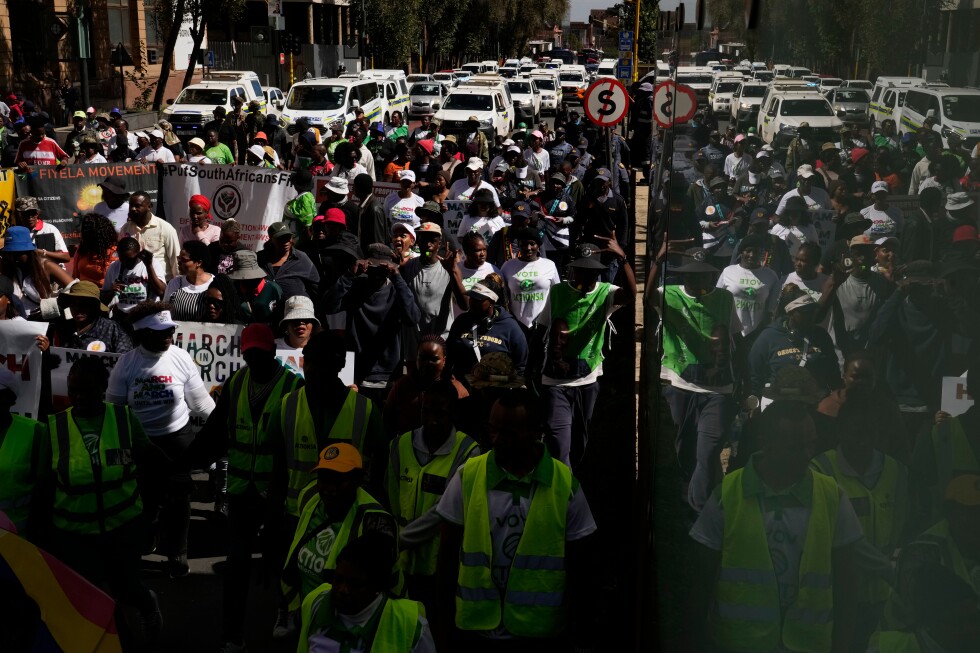
A wave of anti-illegal immigration demonstrations has gripped South Africa this week, with hundreds of protesters marching through the streets of Johannesburg on Wednesday to demand stricter border controls and mass deportations of undocumented migrants. The Johannesburg rally follows a similar protest held just one day earlier in the nation’s capital, Pretoria, marking a growing public mobilization around the hot-button issue of unauthorized migration.
As Africa’s most industrialized economy with a wide range of economic opportunities, South Africa has long drawn migrants from across the continent and beyond, with both documented and undocumented people arriving in search of better work and living prospects. Current estimates of the country’s undocumented migrant population vary wildly, with commonly cited figures falling between 3 million and 5 million. No accurate, up-to-date official count exists because most migrants without legal status avoid government documentation processes.
Wednesday’s demonstration was led by the anti-immigration group March and March, and drew participation from other prominent anti-migration organizations including Operation Dudula, as well as two registered political parties: ActionSA and the Patriotic Alliance. In comments during the march, ActionSA representative Themba Mabunda pushed back against accusations of xenophobia, framing the protest as a demand for equitable policy rather than anti-foreign sentiment. “We are not xenophobic, we just want the right thing to done in South Africa, to put the South African first,” Mabunda said. “We do want to live with foreigners in our country, but those foreigners must be legally in the country.”
The protest disrupted daily life across Johannesburg, forcing dozens of businesses—owned by both South African locals and migrant entrepreneurs—to close their doors out of fear of potential looting, violence, or opportunistic criminal activity.
Anti-immigration groups anchor their demands on South Africa’s ongoing socioeconomic crisis: the nation’s official unemployment rate currently sits above 30%, leaving millions of local people out of work. Proponents of stricter enforcement argue that undocumented migration contributes to urban overcrowding, unfair competition in the labor market, lost tax revenue, rising crime, and weakened border security. In some high-tension cases, anti-migration activists have even forcibly turned foreign nationals away from public health clinics, claiming undocumented visitors worsen drug shortages and overcrowding in already under-resourced facilities.
Tensions around the issue have already spilled over into violence in recent weeks. Last month, an anti-migration march in Eastern Cape Province ended with protesters setting fire to minibus taxis and destroying public infrastructure. In KwaZulu-Natal, reported targeted attacks on Ghanaian migrants sparked a full diplomatic incident, which led to Ghana’s government summoning South Africa’s ambassador to Accra to formally address the violence.
United Nations Secretary-General António Guterres has recently raised alarm over the growing unrest, issuing a public statement expressing concern over xenophobic attacks, harassment, and intimidation targeting migrants and foreign nationals across multiple South African provinces including KwaZulu-Natal and Eastern Cape.
In response to rising political and public pressure, South African authorities have ramped up deportation efforts in recent years. Government data shows that between the 2021 and 2023 financial years, South Africa deported more than 109,000 undocumented migrants living in the country.