Mali has been plunged into a dramatic new phase of its decade-long insurgency after a coordinated multi-group rebel offensive killed the country’s top defense official and forced a strategic retreat by Russian-backed government forces, newly verified video and satellite evidence confirms.
On Saturday, a coalition of jihadist fighters from Jama’at Nusrat al-Islam wal-Muslimin (JNIM), an al-Qaeda-linked group, and Tuareg separatists from the Azawad Liberation Front (FLA) launched simultaneous attacks across multiple regions of the West African nation. The deadliest strike targeted the residence of Defense Minister Sadio Camara in the garrison town of Kati, located just 12 miles outside the capital Bamako. A suicide bomber drove an explosive-laden vehicle into the compound, sparking a fierce firefight that left Camara dead, according to a Malian government spokesperson. Satellite imagery of the aftermath confirms the entire residence was leveled in the blast, with widespread damage to adjacent properties in the neighborhood.
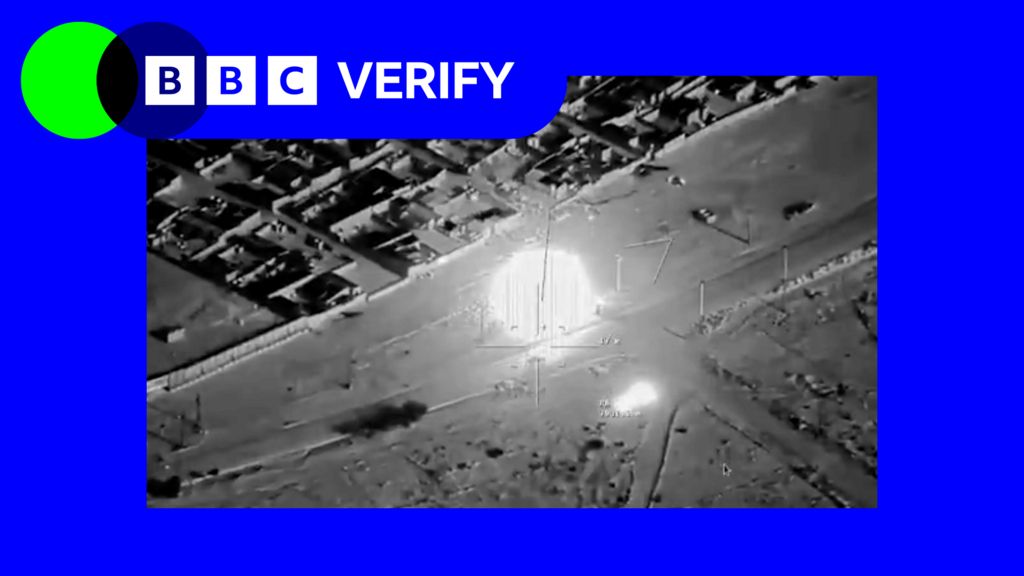
In response to the Kati attack, the Kremlin-controlled Africa Corps — the Russian paramilitary force that backs Mali’s ruling military junta — launched a series of retaliatory air strikes against rebel positions near the capital. Verified footage posted by the Africa Corps shows attack helicopters launching missiles at ground targets, while drone footage captures a direct missile strike on a rebel convoy speeding along an outer Kati highway, triggering a massive fireball. BBC Verify’s geolocation analysis confirmed all clips were filmed in the Kati area, matching the group’s claims of offensive operations near Bamako.
Despite this show of force, the Africa Corps and Malian government forces have confirmed they have fully withdrawn from Kidal, a strategically critical northern hub that served as the center of government counterinsurgency operations in the region. Kidal was captured by joint Wagner Group and Malian forces in a bloody 2023 battle, and hosted a large heavily armed garrison for over a year. However, intensifying rebel attacks in recent weeks left the base increasingly untenable.
Before the official withdrawal announcement, BBC Verify verified footage showing military convoys evacuating the Kidal base. The Africa Corps claimed it removed all heavy equipment ahead of the pullout, but footage posted by advancing rebels shows multiple armored personnel carriers, patrol vehicles and jeeps were abandoned during the hasty retreat. Verified video from the base after the withdrawal shows rebel fighters freely roaming the abandoned facility. Malian forces have also withdrawn from the more northerly town of Tessalit, and scattered clashes have been reported on the outskirts of Bamako near the Africa Corps’ main headquarters in the capital.
Mali has been mired in a widespread insurgency for more than a decade, and the current military junta seized power in a 2020 coup, arguing the previous civilian government had failed to contain the growing rebel threat. Since the junta took power, it cut security ties with Western nations including France, which pulled all its peacekeeping and counterinsurgency troops out of the country by 2022, and turned to Russian mercenary forces first the Wagner Group and after restructuring of Russian irregular forces, the Kremlin-controlled Africa Corps. Under the terms of the partnership, the Africa Corps provides security support to the junta in exchange for cash and access to Mali’s valuable natural resource reserves.
However, the paramilitary force has been unable to reverse the growing momentum of rebel groups across the country, with a senior French military official estimating last year that the Africa Corps only has around 2,500 personnel deployed across Mali. Late last year, Bamako itself was placed under a rebel blockade, and Saturday’s offensive marks a major new escalation in the conflict, according to regional analysts.
“This is a major escalation of the conflict between the military government and rebel groups,” said Jean-Hervé Jezequel, Sahel director for the International Crisis Group. “Where JNIM originally focused on seizing rural and peripheral areas, it is now directly targeting major population centers.” BBC Verify has confirmed 22 separate videos of rebel movements across seven Malian locations since Saturday’s offensive began, confirming the broad scope of the attacks. The Africa Corps has claimed that as many as 12,000 rebel fighters participated in the coordinated offensive, a figure that has not been independently verified.
Analysts warn the fall of Kidal and the death of Camara represent significant strategic setbacks for both the Malian junta and the Russian Africa Corps model of security partnership. “Other countries that have hired the Africa Corps are watching this very closely,” said Dr. Sorcha MacLeod, a former member of the UN working group on mercenaries and a lecturer at the University of Copenhagen. “The model Moscow offers isn’t working, and it’s already costing poor countries millions of dollars in natural resources. It’s unsustainable.”
Charlie Werb, an analyst with Aldebaran Threat Consultants, noted that while the loss of abandoned armored vehicles will be a tangible loss for the Malian military, it remains unclear whether rebel groups will be able to integrate the heavy equipment into their speed and maneuver-focused insurgent tactics. The setbacks in Mali have already raised new questions about the long-term viability of Russia’s irregular security partnerships across the Sahel, as rebel groups continue to expand their control of territory across the region.