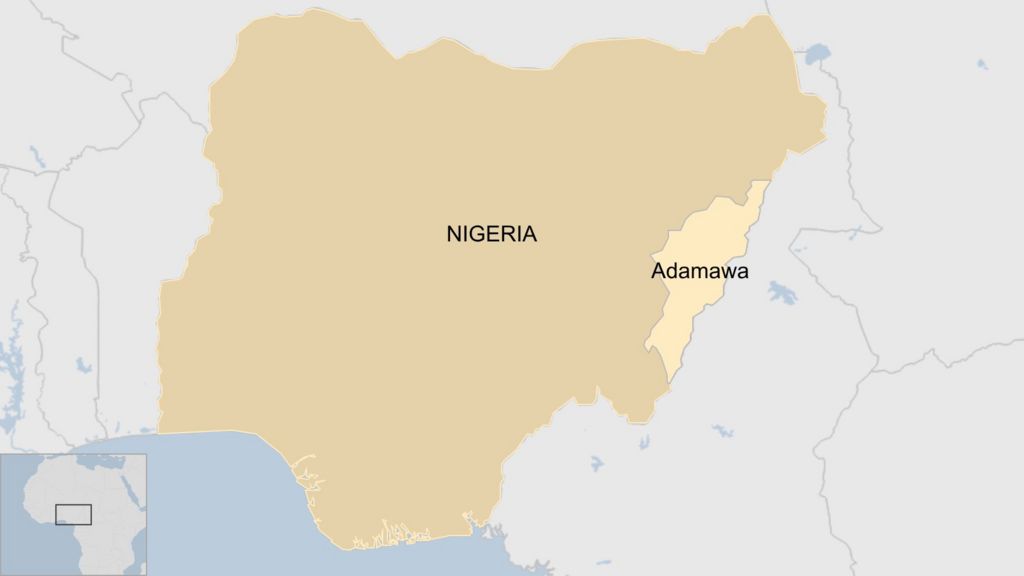
In a devastating act of violence that has deepened concerns over persistent insecurity in Nigeria’s restive northeast, gunmen aligned with the Islamic State group have killed at least 29 civilians in a targeted assault on a remote village in Adamawa State, local government officials have confirmed. The attack, which the terror group has claimed responsibility for without outlining a clear motive, unfolded in the village of Guyaku, located within the Gombi local government area, and unfolded over the course of several hours, according to state authorities. Witness accounts and official reports detail that militants first stormed a local football pitch where community members had gathered for a public event, opening fire indiscriminately on unarmed civilians before launching a coordinated arson attack that destroyed dozens of residential homes, local places of worship, and hundreds of civilian motorcycles. In the wake of the bloodshed, Adamawa State Governor Ahmadu Umaru Fintiri traveled directly to the attack site to assess the damage and meet with affected community members, sharing on-the-ground photos of his visit and condemning the violence as a fundamental “affront to our humanity”. In a public post shared to his Facebook page, the governor’s spokesperson captured the raw mood gripping the small, close-knit community, writing that “the atmosphere in the community remains tense, with grief and fear evident” following the carnage. Many residents, the spokesperson added, have already fled their homes in search of safer ground, driven out by widespread anxiety that follow-up attacks could target the area in the coming days. Governor Fintiri moved quickly to reassure the public in a statement posted to X, formerly Twitter, affirming that “We are intensifying security operations immediately to restore peace and ensure every resident feels safe in their home again.” The region where the attack took place, which sits along Nigeria’s porous border with Cameroon, has been plagued by near-constant violence linked to Islamist militant factions and local criminal gangs for more than a decade. The current wave of instability traces its origins back to 2009, when the jihadist group Boko Haram launched a full-scale insurgency focused on establishing an Islamic caliphate in northeast Nigeria. According to international aid organizations, the decades-long conflict has claimed the lives of more than 35,000 people and forced over 2 million Nigerians to flee their homes as internally displaced persons, while violence has spilled across national borders into neighboring Niger, Chad, and Cameroon. In recent years, Boko Haram has fractured into rival factions, with the larger breakaway group, the Islamic State West Africa Province (ISWAP), aligning itself with the global Islamic State network and carrying out regular attacks against civilian and military targets across the region. Earlier this month, Nigerian courts concluded mass trials that saw almost 400 convicted individuals handed down sentences for their ties to both Boko Haram and ISWAP, marking one of the largest crackdowns on militant affiliation in the country’s recent history. The latest attack comes as the Nigerian federal government faces mounting domestic and international pressure to rein in widespread insecurity across the country, with general elections scheduled for January drawing increased global scrutiny of the administration’s ability to protect civilians and maintain stability. Late last year, the United States launched what it described as “powerful and deadly” drone strikes against IS-aligned militants operating in northwest Nigeria, marking a escalation of international counter-terrorism cooperation in the region even as militant factions continue to carry out high-profile attacks against soft civilian targets.