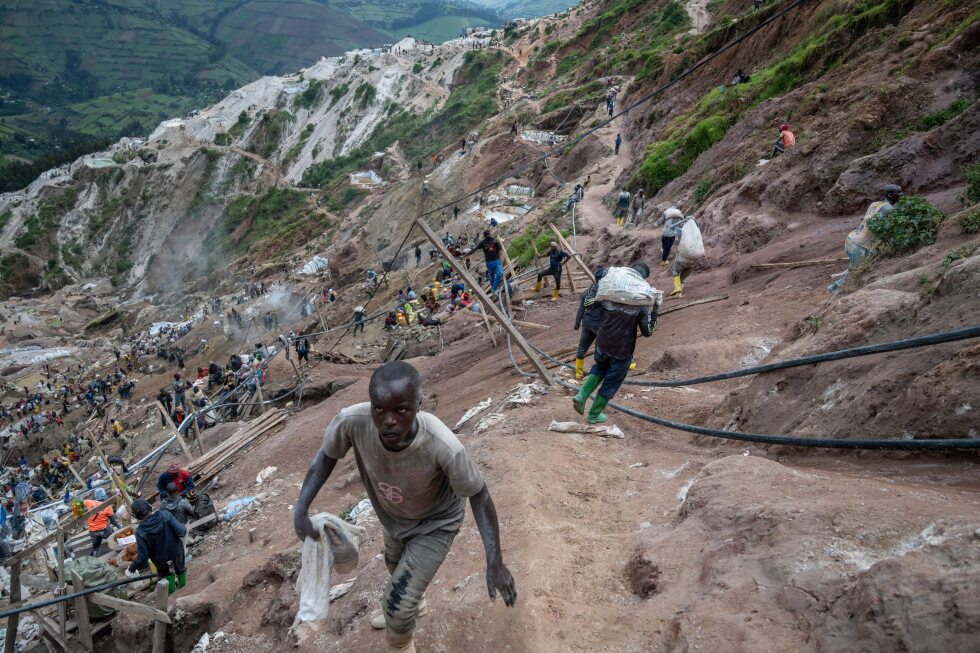
KINSHASA, DRC – The Democratic Republic of Congo officially announced the establishment of a specialized paramilitary mining guard on Monday, a $100 million security initiative backed by the United States and the United Arab Emirates. The move comes as Washington works to shore up alternative access to critical battery and tech minerals, amid a fragile peace process in Congo’s conflict-plagued eastern region.
Per an official statement released by the country’s General Inspectorate of Mines, the new security unit will be rolled out in phased deployments. An initial contingent of 2,500 to 3,000 personnel is scheduled to complete six months of joint military training and enter active service by December this year. By the end of 2028, the force is planned to expand to more than 20,000 members, with a presence across all 22 of Congo’s mining-producing provinces.
Core goals of the new force include strengthening state regulatory oversight of the $1 trillion-plus mining sector, cutting down on rampant illegal mineral smuggling, and rebuilding confidence among international investors looking to access Congo’s vast untapped mineral reserves. The $100 million price tag for the program is covered through partnership agreements with the U.S. and UAE, according to the statement.
As a top global supplier of coltan, the ore that holds tantalum – a critical component used in everything from consumer smartphones and laptops to commercial aircraft engines – Congo holds enormous strategic importance for global tech and clean energy supply chains. For decades, however, the country has grappled with systemic illicit mineral trafficking and persistent insecurity, particularly in its eastern provinces. There, ongoing clashes between Congolese government forces and Rwanda-backed rebel groups have killed thousands of people and displaced hundreds of thousands more, leaving large swathes of key mining territory outside of state control.
Rafael Kabengele, Inspector General of Mines, noted in the statement that Congolese President Félix Tshisekedi has made overhauling the mining sector a core policy priority, aiming to “clean up the entire mining sector, by eliminating practices that run counter to good governance, transparency and the traceability of minerals.”
The new paramilitary guard will take over all mining security responsibilities currently handled by regular conventional military units. Its formal mandate covers protecting active mine sites, escorting mineral cargo from extraction sites to processing facilities and national border crossings, and safeguarding foreign direct investment in the sector.
The initiative is a key part of Washington’s broader strategy to reduce China’s current dominance over global critical mineral supply chains, as demand for these resources surges amid the global transition to renewable energy and electric vehicle production. Last year, Congo and the U.S. signed a bilateral minerals partnership, which has already led to American firm Virtus Minerals acquiring a controlling stake in major copper-cobalt producer Chemaf. Multiple other Western companies have also expressed interest in developing new mining projects in the country, including for assets located in currently rebel-held territory.
U.S. Geological Survey data shows that Congo produced roughly 40% of the world’s total coltan output in 2023. More than 15% of the global supply of tantalum originates from the Rubaya mining region in eastern Congo, which remains largely under the control of armed rebel groups.
Eastern Congo has cycled between open conflict and fragile ceasefires for nearly three decades, with more than 120 active armed groups operating across the region. Last year, the Congolese and Rwandan governments signed a U.S.-brokered peace agreement, which was paired with the bilateral critical minerals deal that opened new access for U.S. firms and government stakeholders. While peace negotiations between the Congolese government and M23, the main Rwanda-backed rebel group, remain ongoing, active clashes have continued across multiple frontlines in the east, keeping the region in a state of persistent instability.