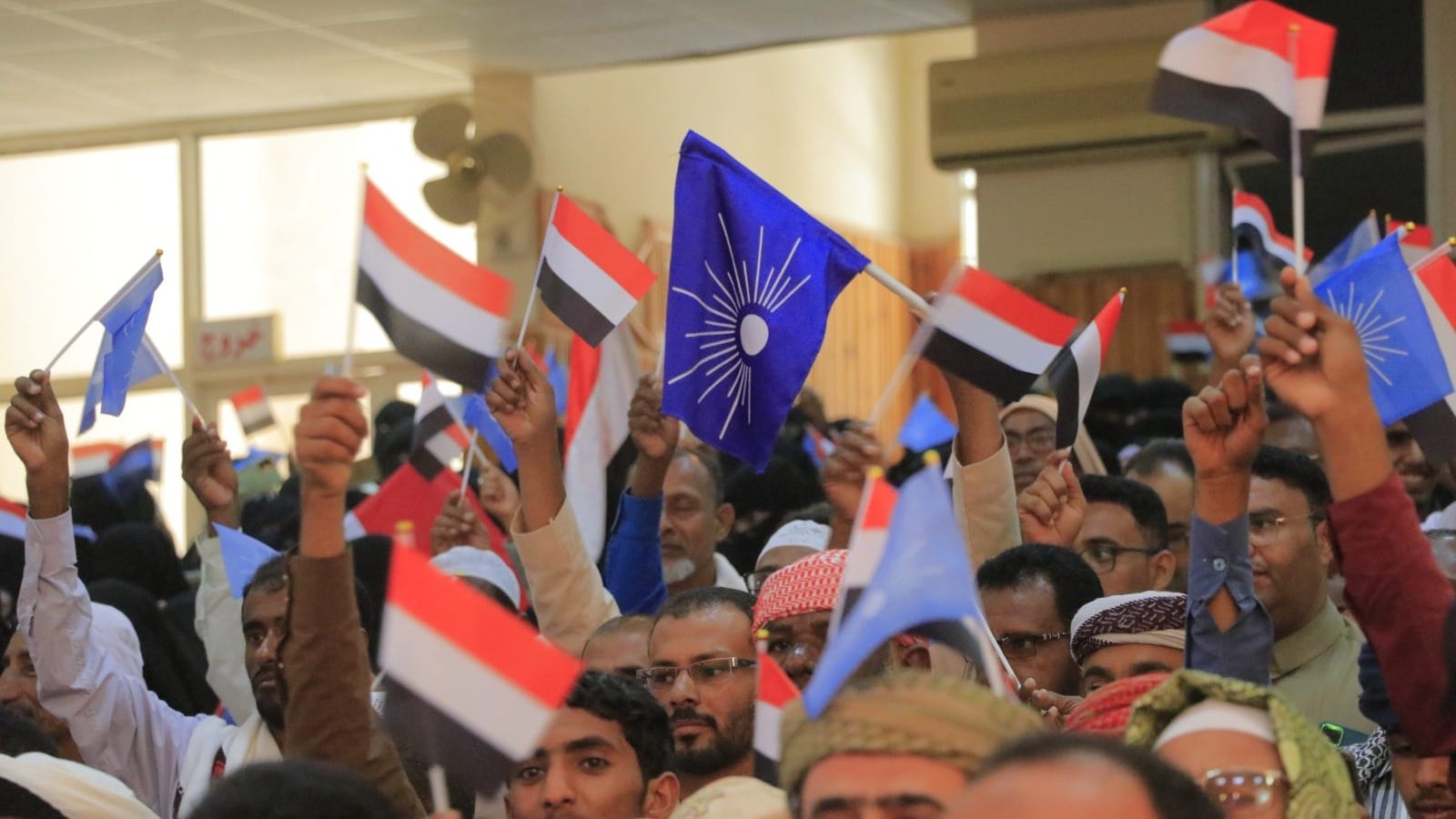
A diplomatic rift is brewing in the Middle East after multiple anonymous regional, U.S. and Yemeni sources confirmed to Middle East Eye that the United Arab Emirates has waged an aggressive, four-month lobbying campaign to push the former Trump administration to designate Yemen’s Islah Party as a Specially Designated Global Terrorist (SDGT) – a move that would directly undercut Saudi Arabia, the group’s main international backer.
The push from Abu Dhabi came after the Trump administration designated three national branches of the Muslim Brotherhood – Egyptian, Jordanian and Lebanese – as terrorist organizations earlier this year. While the UAE issued a muted public statement praising the decision as a positive step for global counter-terrorism efforts, senior Emirati officials privately expressed deep frustration that the action failed to meet their longstanding demand: a blanket terror designation for the entire Muslim Brotherhood movement, a goal Abu Dhabi has pursued for more than a decade across Washington and European capitals.
A senior U.S. official, speaking on condition of anonymity to discuss sensitive diplomatic deliberations, noted that Emirati leaders genuinely believed the Trump administration would move forward with the proscription at some point. While it remains unclear whether Abu Dhabi secured a formal timeline from U.S. counterparts, a terror designation would carry severe consequences: a SDGT label would force U.S. financial institutions to freeze all assets linked to the party and bar all its members from entering the United States. If the more severe Foreign Terrorist Organization (FTO) designation was adopted, any individual anywhere in the world suspected of providing material support or resources to Islah could face prosecution under U.S. anti-terrorism law.
The lobbying push sets the stage for a major escalation between Gulf rivals Saudi Arabia and the UAE, who have seen their once-aligned alliance fracture sharply over divergent strategic interests across the Middle East in recent years. Founded more than 30 years ago as the Yemeni Congregation for Reform, Islah is an independent Yemeni political party that blends Islamist, tribal and conservative ideological currents. While often characterized as ideologically sympathetic to the Muslim Brotherhood, the party has repeatedly denied any formal affiliation with the movement. Two members of the Saudi-backed Yemeni Presidential Leadership Council – Marib Governor Sultan Ali al-Arada and Abdullah al-Alimi Bawazeer – currently hold seats as Islah representatives.
A senior informed Saudi source confirmed the kingdom is well aware that the UAE’s broader campaign to ban all Muslim Brotherhood branches targets Islah specifically. “They see Islah as the most dangerous branch of the Brotherhood because of its political weight and its role in Yemen,” the source told Middle East Eye. The U.S. official added that while the administration had not formally assessed Riyadh’s reaction, pushing through the designation would almost certainly trigger fierce pushback from the kingdom.
Longtime coalition partners in the 2015 Yemen intervention, Saudi Arabia and the UAE have grown increasingly at odds over their strategic priorities in the country. Tensions boiled over in late 2022 when Riyadh forced the dissolution of the UAE-backed Southern Transitional Council (STC), a separatist group that Abu Dhabi has supported to politically and militarily marginalize Islah. Since that showdown, Saudi Arabia has moved to push Emirati forces and their local proxies out of key Yemeni territory. The rift extends beyond Yemen: the two Gulf powers also back opposing sides in Sudan’s ongoing civil conflict, with Riyadh supporting the Sudanese Armed Forces alongside Egypt and Turkey, while Abu Dhabi backs the Rapid Support Forces.
Following a November executive order from the Trump administration that launched the process of designating specific Muslim Brotherhood chapters, the State Department began reaching out to regional stakeholders to gather input on a potential Islah blacklisting. Administration officials sent a series of questions about the party to both Saudi officials and Islah representatives as part of internal deliberations. A State Department spokesperson declined to comment on the outreach, telling Middle East Eye that the agency does not disclose details of internal designation discussions.
Islah has not issued an official public response to the UAE’s lobbying offensive, but a senior party member told Middle East Eye the move did not come as a surprise. “We expected certain people to come after us after the Trump administration first unveiled the directive in November,” the source said, speaking on condition of anonymity amid a recent rise in targeted assassinations of Yemeni political figures. The party is currently pushing back against the terror allegations and is communicating with the State Department through a third-party intermediary. “Islah is a Yemeni party, and it isn’t a branch of the Muslim Brotherhood. It doesn’t have any links to them,” the source said. “We are happy with what the Muslim Brotherhood is doing in supporting Palestine, but that doesn’t mean Islah is a branch of the Muslim Brotherhood.”
Abdullah al-Arian, an associate professor of history at Georgetown University’s School of Foreign Service in Qatar, explained the divergent approaches of Saudi Arabia and the UAE to the Muslim Brotherhood. While both nations have formally designated the movement as a terrorist organization, al-Arian noted that the UAE maintains an uncompromising zero-tolerance policy for any group linked to the Brotherhood, “irrespective of what short-term political advantages it might offer.” “There is a far deeper, ideologically driven agenda on the part of the UAE that we don’t see necessarily manifesting from the Saudis,” al-Arian said. “Not because the Saudis are more amenable to these groups or their actual political projects or programmes, but more because they see in them the possibilities for tactical political advantages.”
Middle East Eye reached out to the UAE embassy in Washington and the Saudi foreign ministry for comment on the lobbying campaign, but did not receive a response prior to publication.