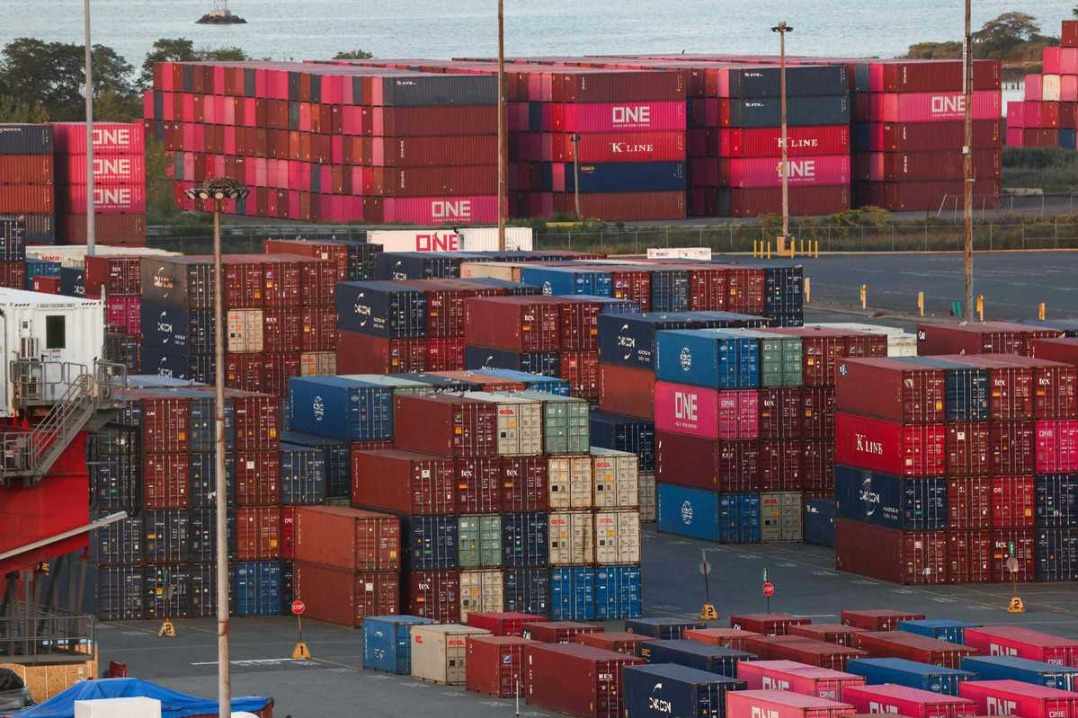
On Monday, U.S. Customs and Border Protection (CBP) launched a long-awaited online claims portal called CAPE, opening the door for thousands of American importing businesses to seek refunds on billions of dollars in unlawfully collected tariffs, a development that has been widely welcomed across the country’s business and retail sectors.
The refund process comes nearly three months after the U.S. Supreme Court issued a landmark 6-3 ruling striking down former President Donald Trump’s broad tariff regime, which was imposed under the 1977 International Emergency Economic Powers Act (IEEPA). The court found that the Trump administration had misused the emergency-focused legislation to enact sweeping levies, ordering CBP to return up to $166 billion in levies collected from importers over the course of the policy. By March 4 of this year, more than 330,000 importers had filed over 53 million import entries subject to the contested tariffs, government data shows. The newly launched CAPE portal will initially process approximately 63 percent of all eligible claims.
The tariffs in question targeted a wide range of consumer and industrial goods, including home appliances, apparel, electronics, machinery, toys, and games, with Chinese goods facing some of the highest levies, reaching at least 47 percent. As one of the United States’ top three trading partners, China saw a sharp decline in exports to the U.S. under the policy: 2025 data from the Office of the U.S. Trade Representative shows total U.S. goods imports from China fell to $308.4 billion, a 29.7 percent drop of $130.4 billion from 2024 levels.
The rollout of the refund portal marks the conclusion of a years-long legal battle, led by major retail and logistics firms including Costco, Revlon, Toyota, Nintendo of America, and FedEx, which were joined by more than 3,000 businesses in suing the Trump administration over the unlawful tariffs. Within minutes of the portal going live, businesses across the country began submitting claims, with some reporting minor early technical glitches that CBP has committed to addressing rapidly. Jay Foreman, CEO of Florida-based toymaker Basic Fun!, told reporters he had instructed his team to begin filing claims immediately once the system opened, calling the launch a long-awaited win for his business.
Industry groups have praised CBP for meeting the court-mandated timeline to launch the first phase of the refund program. Jonathan Gold, vice president for supply chain and customs policy at the National Retail Federation (NRF) — the world’s largest retail trade association, whose members span from small independent grocers to major department stores — called the opening of CAPE a significant milestone for hundreds of thousands of impacted businesses. “Although Phase 1 is limited in scope, it is an important step forward for the hundreds of thousands of businesses impacted,” Gold said in a statement to China Daily. “We are hearing a range of experiences from members as users begin filing early claims in the system, which is to be expected. CBP is working quickly to identify and address issues as they arise.”
The Supreme Court’s ruling represents a major reversal of one of the core planks of Trump’s trade agenda, and trade experts note that any future attempt to impose similar broad tariffs under alternative legal statutes will face significant hurdles. Gary C. Hufbauer, nonresident senior fellow at the Peterson Institute for International Economics and an expert in international trade, noted that the majority opinion creates major barriers for any administration seeking to reuse similar emergency trade measures. “The majority opinion implies that Trump will face an uphill battle if he invokes other statutes (Sections 338, 122, 232 and 301),” Hufbauer explained.
For most American importing businesses, timely refunds are not just a financial boost — they are a critical lifeline. Hufbauer’s research found that through early 2026, most businesses absorbed nearly all tariff costs rather than passing full increases directly to consumers. With average tariffs equal to roughly 15 percent of import value, and most U.S. firms operating on profit margins of less than 10 percent, the levies created significant financial strain that many businesses have been unable to absorb long-term. “Even absorbing a 10 percent tariff has a big adverse impact on most firms, since their profit margins are typically under 10 percent. For most firms, timely refunds are essential,” Hufbauer said.
Business advocacy groups across the country have echoed that sentiment, emphasizing the broad economic benefits of rapid refunds. Neil Bradley, executive vice president and chief policy officer at the U.S. Chamber of Commerce, noted that the refunds will provide critical relief to more than 200,000 small business importers across the country. “Swift refunds of the impermissible tariffs will be meaningful for the more than 200,000 small business importers in this country and will help support stronger economic growth this year,” Bradley said.
Gold added that the relief will allow businesses to restart paused investments in their operations, workforces, and customers. The U.S. retail sector, the nation’s largest private-sector employer, contributes $5.3 trillion to annual U.S. GDP, making the tariff relief a significant driver of broader economic activity. Some major firms, including Costco and FedEx, have already signaled they plan to pass a portion of their refund savings to consumers through lower prices, though Hufbauer noted that widespread immediate direct consumer refunds should not be expected. Legal and business groups across the U.S. are currently working to help eligible businesses understand their rights and navigate the claims process to secure the refunds they are owed.