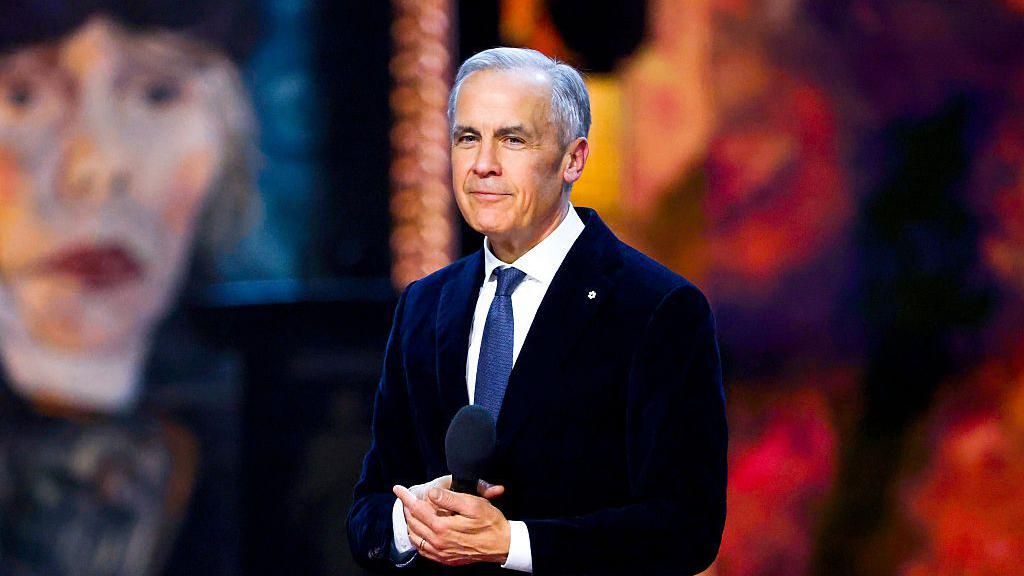
One year into Mark Carney’s tenure as Canada’s Prime Minister, the former two-country central banker with elite academic credentials from Harvard and Oxford finds himself at an unprecedented high in public approval, capping a meteoric rise from political outsider to leader of a G7 nation that has defied all conventional political playbooks.
Carney entered the political landscape 12 months ago, replacing Justin Trudeau as leader of the Liberal Party with a sterling professional resume but zero prior experience running for public office. Critics and political observers widely warned that his lack of elected experience would prove a fatal liability, but Carney defied those early expectations: he led the Liberals to a minority government in his first election, and within a year, secured a narrow parliamentary majority after five opposition Members of Parliament crossed the floor to join his caucus.
His rapid ascent has earned him international acclaim matching his domestic popularity. Last week, Time Magazine included Carney on its annual list of the world’s 100 most influential people. In a tribute written for the outlet, European Central Bank President Christine Lagarde dubbed Carney a “rock-star” economist and politician, crediting him as the first global leader to clearly conceptualize the breaking point of the old geopolitical order, fractured in the wake of Donald Trump’s second presidential term in the United States. “I trust he will now reinvent cooperation among the willing for the common good of all,” Lagarde wrote.
Carney’s high profile grew even larger following a January keynote address at the World Economic Forum in Davos, where he emerged as a leading global voice pushing back against Trump’s unilateral agenda. In the speech, he openly called out the rupture of the post-WWII rules-based international order and urged middle powers to collaborate to counter the growing risks of the new era of great power rivalry. The address was widely praised for its candor, cementing Carney’s reputation both at home and abroad as a steady leader for turbulent times.
Polling data from aggregate site 338Canada puts Carney’s current support at 46% — the highest approval rating of his tenure to date. David Coletto, CEO of leading Canadian polling firm Abacus Data, explains that a large part of Carney’s popularity stems from shifting voter priorities in Canada amid heightened tensions with the United States. Trump’s deeply unpopular policies, including steep sectoral tariffs on Canadian goods and repeated public comments suggesting Canada should become the 51st U.S. state, have left Canadians viewing external threats as the most pressing risk facing the country. This has upended long-standing Canadian political norms, where voters have historically prioritized domestic issues over foreign policy, Coletto notes. “It matters to Canadians that Canada has a leader that many in other parts of the world wish they had,” Coletto told the BBC, adding that the global acclaim reinforces public perception that Carney is “right for the job” at this moment of global uncertainty.
Carney has laid out an ambitious policy agenda for Canadians: the most sweeping housing construction plan since World War II, a push to position Canada as a global energy superpower, reduced economic dependency on the United States, and a forceful pushback against Trump’s tariffs. With high approval and a solid majority in parliament, expectations for transformative change run high. But as Carney enters his second year in office, political observers warn he has reached a critical inflection point: can he maintain his status as a global standard-bearer for progressive multilateral cooperation while delivering on core domestic promises to Canadian voters?
In his first year in office, Carney spent weeks traveling abroad, courting investment and trade opportunities in key markets including China, India, and the United Arab Emirates. But that global focus has drawn criticism from opposition leaders, who argue critical domestic files have been sidelined. Conservative Opposition Leader Pierre Poilievre has attacked Carney for lack of progress on renegotiating the U.S.-Mexico-Canada Agreement (USMCA), which is set for a mandatory review this summer. Steep U.S. tariffs on Canadian metals, automotive products, and lumber have already cost thousands of Canadian jobs, and as of yet, no formal negotiating date has been set for talks to resolve the dispute. Carney’s new U.S. Ambassador Mark Wiseman confirmed the timeline uncertainty to parliamentarians earlier this month. “What has Mark Carney really done in a year on this? He hasn’t held negotiations in five months,” Poilievre told reporters in Ottawa. “He’s done absolutely nothing on this file in the last year other than to stoke fear and distract from his catastrophic failings here at home.”
Domestic affordability is also reemerging as a top voter concern, putting pressure on Carney to deliver results. Global oil price spikes driven by the ongoing U.S.-Israel conflict with Iran have pushed up fuel costs across Canada, home prices remain out of reach for millions of first-time buyers, and youth unemployment has stayed stubbornly high. Carney has moved to address immediate pain points, recently announcing a temporary fuel tax cut and a one-time grocery rebate that will be deposited directly to eligible Canadians’ bank accounts in June. But longer-term promises have lagged: his flagship pledge to double annual home construction to cool housing prices has faced criticism from experts, who note his first budget allocated insufficient funding to the effort, and instead relies largely on tightening immigration to reduce housing demand. In a post-budget op-ed for the Toronto Star late last year, Mike Moffatt, a Canadian economist and former advisor to Justin Trudeau, wrote that Carney’s housing pledges had effectively been “watered down.”
Still, political insiders note Carney has room to deliver on his promises before the next general election, which is not scheduled until 2029 thanks to his newly secured parliamentary majority. “The country has been willing to give him a lot of rope to go out and do what he believes he needs to do in order to protect the country’s interests,” said Carlene Variyan, a veteran Ottawa-based political strategist who has worked with the Liberal Party for more than a decade, including a stint as the party’s national campaign spokesperson. The core question that will define Carney’s tenure, Variyan added, remains whether he can succeed as a global standard-bearer for a new multilateral coalition “while also taking care of his own people here at home.” Carney has acknowledged the growing pressure, releasing a 10-minute social media video last week reassuring Canadians that his administration “is acting and will continue to act” to solve the country’s most pressing challenges. But Poilievre argues that reassurances are not enough: Canadians need tangible action, not social media messaging.