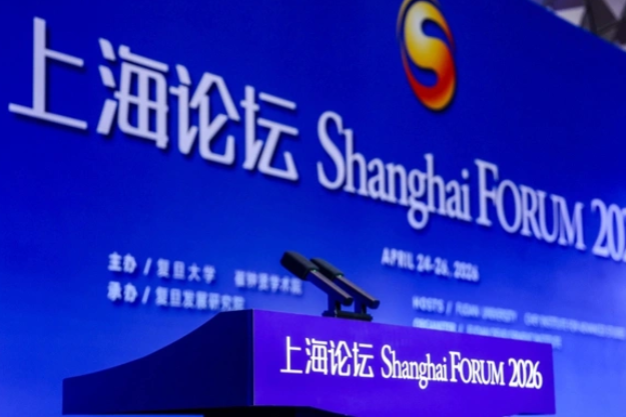
At a 2026 Shanghai Forum sub-forum focused on digital economic connectivity across the Global South, industry experts and policy researchers have highlighted that China’s cross-border e-commerce sector has stepped into a new era of high-quality growth, creating wide-ranging, mutually beneficial collaborative opportunities for emerging economies across the Global South. Today, China’s cross-border e-commerce ecosystem is defined by three key transformative trends: diversified consumer and marketing traffic channels, end-to-end integrated trade operations, and access to an expanding network of diverse global markets. As Chinese domestic sellers actively pursue new market frontiers and expand their product portfolios, Global South partner nations are positioned to gain substantial long-term advantages from these shifting dynamics.\n\nLi Mingtao, chief e-commerce expert at the China International Electronic Commerce Center, explained that Global South countries can capitalize on China’s decades of refined e-commerce operational expertise to accelerate the launch of their unique, high-quality local goods into global consumer markets. Beyond exporting their own products, Li noted that Global South enterprises can also collaborate with Chinese firms on secondary product development, leveraging China’s open cross-border e-commerce import channels to tap into the massive, evolving demand of China’s domestic consumer base.\n\nTo maximize these shared benefits, experts have proposed advancing the development of a large interconnected e-commerce market under the framework of the Belt and Road Initiative. This collaborative framework would prioritize upgrading digital infrastructure in partner nations, while fostering greater operational synergy between Global South economies and China’s robust production and supply chains. Qi Xin, director of the Belt and Road Initiative Economic and Trade Cooperation Research Institute at the Ministry of Commerce’s Chinese Academy of International Trade and Economic Cooperation, added that China has a key role to play in shaping inclusive global digital governance. She emphasized that China should work to advance the creation of a mutually beneficial, open, and transparent international rules-based system for the digital economy, while deepening strategic partnerships with core Global South regions to lift cross-border e-commerce cooperation to new levels.\n\nA growing number of Chinese cross-border e-commerce enterprises have already laid the groundwork for this collaboration by building out localized service networks across Global South countries. One standout example is Kilimall, a Chinese-founded e-commerce platform launched in Kenya that has built localized operational hubs across multiple African nations. To date, the platform has created more than 10,000 local jobs across logistics, customer service, and retail sales, delivering tangible improvements to local employment and quality of life.\n\nShanghai, China’s frontier of reform and opening-up, has emerged as a key national hub for bridging China and Global South economies through digital trade empowerment. Zhou Lan, deputy director of the Shanghai Municipal Commission of Commerce, outlined the city’s ongoing efforts to facilitate these connections, pointing to Shanghai’s Hongqiao International Coffee Harbor as a successful model. The hub hosts roughly 100 online and offline enterprises, curates coffee products from 60 countries across the globe, and maintains a complete end-to-end industrial ecosystem that spans every stage from raw coffee bean production to retail consumer sales. Twenty-five Belt and Road partner countries including Ethiopia, Kenya, Vietnam, and Peru supply coffee beans to the harbor, and a growing volume of products from these regions enter China through Shanghai’s Silk Road e-commerce channels before being distributed across the country.\n\nGlobal South partners have already reported tangible economic gains from existing cross-border e-commerce collaborations with Chinese enterprises. Eldor Tulyakov, executive director of the Development Strategy Center of Uzbekistan, noted that his country’s ongoing digital transformation has delivered clear commercial progress in recent years, with partnerships with Chinese platforms including Alibaba laying the foundation for Uzbekistan’s modern online retail ecosystem and opening access to hundreds of millions of global consumers. Last year, an Alibaba capacity-building initiative gave 100 local Uzbek small and medium-sized enterprises direct access to the global e-commerce market, integrating these local businesses into global value chains for the first time. Tulyakov added that Uzbekistan has recently produced its first domestic technology unicorn, valued at more than $2 billion, which now serves more than half of the country’s population and stands as a successful benchmark for inclusive digital transformation.\n\nWhile the opportunities are significant, stakeholders have noted that realizing inclusive, mutually beneficial cross-border e-commerce growth requires deeper, more balanced collaborative partnerships between China and Global South nations. Siwage Dharma Negara, a senior fellow with the Indonesia Studies Programme at Singapore’s ISEAS-Yusof Ishak Institute, explained that Indonesia is working to strike a careful balance between short-term market regulation and long-term development targets. Over the long term, the country aims to strengthen its overall economic resilience while protecting consumer interests enabled by expanded digital trade, he said.