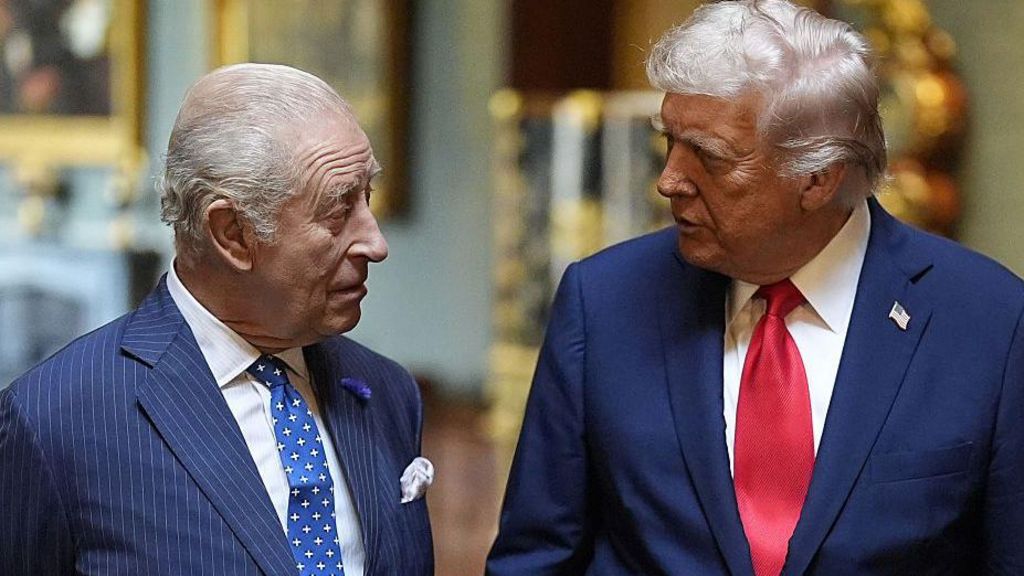
Just days ahead of King Charles III’s first state visit to the United States as Britain’s monarch, a shooting incident at the Washington DC White House Correspondents’ Dinner has forced security officials on both sides of the Atlantic to re-evaluate the trip’s operational plans. The four-day visit, which will also see Queen Camilla accompany the King, is still scheduled to kick off Monday, when the royal couple is set to arrive in the nation’s capital to be hosted by President Donald Trump.
Buckingham Palace confirmed in an official statement released Sunday that King Charles has received continuous updates on the Saturday evening shooting. The statement added that the monarch was “greatly relieved” to learn that President Trump, former first lady Melania Trump, and all other attendees at the dinner left the incident unharmed. Throughout Sunday, UK and US security and diplomatic teams held a series of discussions to assess whether the shooting would alter the trip’s itinerary and security protocols.
The details of the shooting have now been confirmed by law enforcement and administration officials: a 31-year-old suspect identified as Cole Tomas Allen, a native of Torrance, California, opened fire while attempting to force entry into the dinner venue. President Trump and Melania Trump were immediately evacuated, and footage of the immediate aftermath shows armed security personnel rapidly removing U.S. Vice President JD Vance from the event stage. One Secret Service agent sustained a close-range gunshot wound, but his bulletproof vest prevented a fatal injury; no other attendees or officials were hurt. Acting U.S. Attorney General Todd Blanche told NBC’s *Meet the Press* that Allen is believed to have targeted current Trump administration officials, and will be arraigned on federal charges on Monday, the same day the royal visit begins.
Blanche sought to reassure the public that robust security arrangements are already in place for the King’s visit, saying he is “very confident” in the royal couple’s safety. He framed the response to the Saturday shooting as proof that the U.S. national security system functions as intended, noting that an “all-government approach” is being deployed to secure the visit.
UK officials echoed that the trip will move forward with adjusted, enhanced security. Chief Secretary to the Prime Minister Darren Jones told the BBC’s *Sunday with Laura Kuenssberg* that Downing Street and Buckingham Palace have maintained close coordination with U.S. security teams since before the shooting, and additional discussions would continue Sunday to finalize updated plans. A senior government official emphasized that “appropriate security in place in relation to the risk” for the visit.
Shadow Home Secretary Chris Philp also agreed the visit should not be canceled, arguing that violence must not be allowed to disrupt normal diplomatic and political activity. Even so, he urged joint UK-US security teams to conduct a full overnight review of the King’s security detail to close any potential gaps, noting that while standard high-level visit security is already stringent, a fresh review was “vital” after the shooting.
Top UK political leaders from across the partisan divide have already united to condemn the shooting. Prime Minister Keir Starmer wrote on X that he was shocked by the incident, calling any attack on democratic institutions and press freedom something that “must be condemned in the strongest possible terms.” Liberal Democrat leader Ed Davey called the scenes “really shocking,” stressing that “political violence is wrong” and expressing relief that no lives were lost. Reform UK leader Nigel Farage echoed that sentiment, noting that “however much we disagree about politics, if violence is used we all lose.”
This state visit marks the first by a British monarch to the United States since Queen Elizabeth II’s 2007 trip, and the itinerary includes major diplomatic engagements: King Charles is expected to address a joint session of the U.S. Congress, lay a wreath honoring fallen British and American service members in Virginia, and visit the 9/11 Memorial in New York City. While the trip is moving forward, security planners are weighing adjustments to the King’s traditional public meet-and-greets with crowds, a staple of royal overseas visits. Security was already set to be extremely high-profile for the trip, but has now been elevated another tier. The unprecedented security bubble that surrounded President Trump’s autumn 2024 visit to the UK, which kept him entirely within the secured grounds of Windsor Castle and cut off all public interaction, is being cited as a potential precedent for any last-minute changes.
Beyond security, the visit arrives amid a fresh diplomatic point of friction: recent reports have emerged that the U.S. may review its longstanding position on UK sovereignty over the Falkland Islands. Philp said it would be “very reasonable” for the King to raise the issue with President Trump during their talks. While Jones declined to speculate on what the King would discuss in private, he reaffirmed the UK government’s clear stance: “The Falklands is British territory and the only people that get to decide otherwise are the islanders themselves.”
Not all voices have backed moving forward with the trip, however. Jonathan Dimbleby, a prominent broadcaster, royal historian, and close associate of King Charles, told BBC Radio 4 that the visit should be postponed. He argued that the inherent unpredictability of President Trump, who Dimbleby claimed has “systematically mocked” the UK, makes this a poor moment to deploy the monarch as a tool of British soft power. “Sound judgement is to deploy that asset, that soft power, at the right time. I think this is not the right time,” Dimbleby said, noting that Trump can be effusive in praise of the royal family one day and critical of British leadership and institutions the next. For trip planners already navigating a diplomatically complex visit, the Saturday shooting has added a new set of last-minute uncertainties and decisions to resolve before Monday’s arrival.