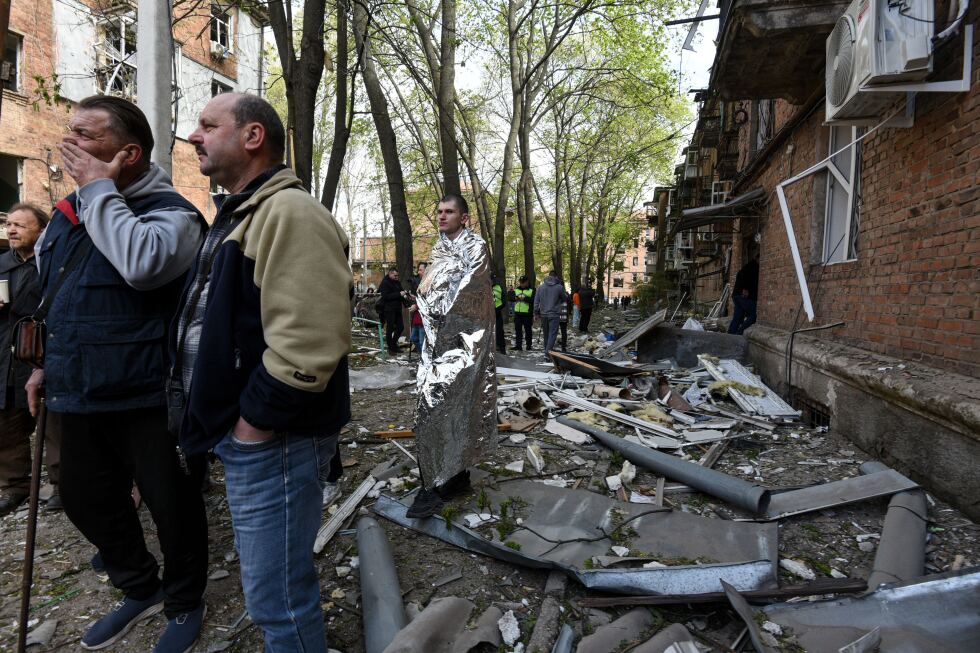
On the 40th anniversary of the 1986 Chernobyl nuclear catastrophe, a wave of reciprocal drone and missile strikes across Ukraine, Russian-occupied territories and mainland Russia has left at least 16 people dead, amplifying urgent global warnings about nuclear risks stemming from more than two years of Russian full-scale invasion of Ukraine.
In southern Ukraine’s Dnipro, regional governor Oleksandr Hanzha announced Sunday that the death toll from recent Russian drone and missile attacks on the city climbed to nine. Cross-border strikes have extended into Russian-held areas as well: Moscow-appointed officials in Sevastopol, the main port on the annexed Crimean Peninsula, reported one fatality from a Ukrainian drone strike. Since Russia’s 2014 illegal annexation of Crimea, the peninsula has functioned as a key military staging and supply hub for Russian forces in the ongoing war. Further north, in Russia-claimed Luhansk Oblast of eastern Ukraine, Moscow-installed leader Leonidypasechnik stated three civilians were killed in an overnight Ukrainian drone attack on a rural village, following two deaths from a separate strike in the same region early Saturday. Ukraine has not issued official comment on any of these strikes against Russian-held territory, and the details of the attacks could not be independently verified by the Associated Press.
The streak of cross-border attacks preceded these fatal incidents: Russian local authorities reported one woman killed in a Ukrainian drone strike on the border region of Belgorod just days prior. On Sunday, Ukraine’s General Staff confirmed it had targeted a major oil refinery in Yaroslavl, a facility located hundreds of kilometers inside Russian territory. The strike ignited large fires at the refinery, which processes 15 million tons of crude annually and supplies gasoline, diesel and jet fuel directly to the Russian military. Moscow has not yet released an official response to the Yaroslavl attack.
Kyiv’s expanded long-range strike capability is rooted in its domestically produced drone program, which has developed systems capable of reaching targets 1,500 kilometers deep into Russian territory. In recent weeks, Ukraine has repeatedly targeted Russian energy infrastructure, particularly oil processing facilities. These strikes come after the Trump administration granted Russia a temporary sanctions waiver to boost energy exports, a move Kyiv has openly criticized, arguing that the additional export revenue will be funneled into new military weapons to intensify attacks on Ukraine.
The flurry of attacks coincided with global commemorations of the 40th anniversary of the Chernobyl disaster, drawing renewed attention to the ongoing threat of nuclear catastrophe at the abandoned plant. In his official address marking the anniversary, Ukrainian President Volodymyr Zelenskyy warned that Russian military aggression risks repeating the 1986 disaster. “Through its war, Russia is once again bringing the world to the brink of a man-made disaster,” Zelenskyy wrote on Facebook. “Russian-Iranian Shahed drones regularly fly over the Chernobyl plant, and one of them struck the confinement structure last year.” He added, “The world must not allow this nuclear terrorism to continue, and the best way is to force Russia to stop its reckless attacks.”
International Atomic Energy Agency (IAEA) Director General Rafael Grossi echoed these warnings during a visit to Kyiv, stressing that urgent repairs to the plant’s damaged outer protective shell must begin without delay. Grossi noted that IAEA safety assessments confirm damage from last year’s strike has already compromised a core safety function of the structure. Leaving the damage unrepaired for years, he warned, would increase risks to the original reinforced sarcophagus that contains radioactive debris from the 1986 reactor explosion. The European Bank for Reconstruction and Development has estimated that critical repairs will cost at least 500 million euros ($586 million).
Ukrainian officials say a Russian drone struck the New Safe Confinement, a $2.1 billion arch-shaped protective enclosure completed in 2019 over the ruins of Chernobyl’s Reactor No.4, in February 2024. Moscow has repeatedly denied targeting the plant, claiming Kyiv staged the incident to rally international support.