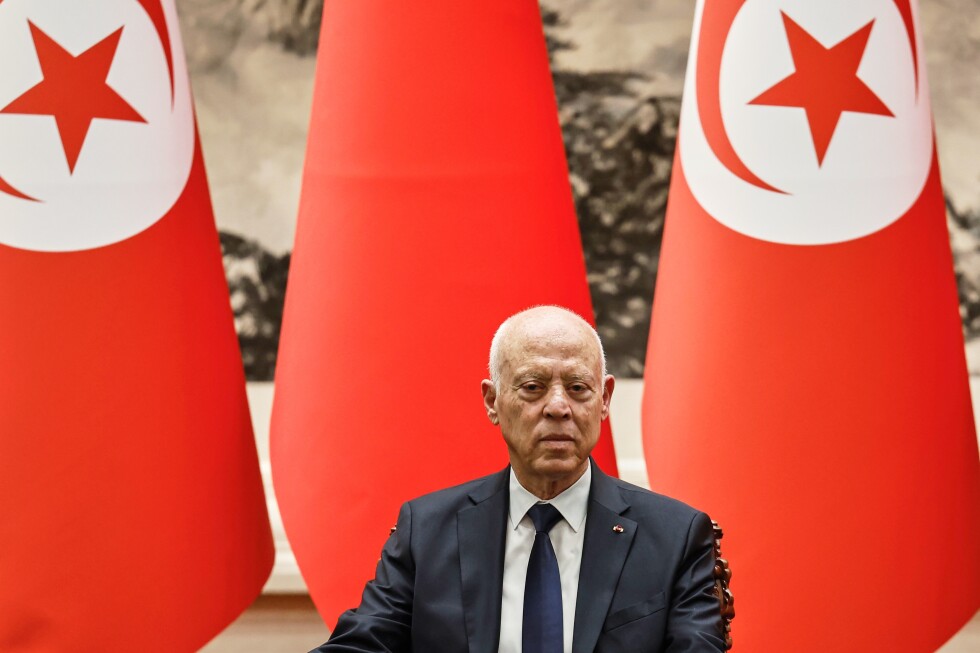
TUNIS, Tunisia – Tunisian authorities have ordered a 30-day suspension of the Tunisian League for Human Rights, an organization with deep regional roots as one of the oldest human rights groups across Africa and the Arab world, and a core member of the National Dialogue Quartet that won the 2015 Nobel Peace Prize. The move is the latest development that has amplified international alarm over a growing crackdown on independent civil society in the North African nation.
The league confirmed the suspension in an official statement released late Friday, condemning the order as a blatant, unjustified violation of the fundamental right to freedom of association. The group emphasized the decision constitutes a direct attack on one of the most pivotal democratic achievements Tunisia has secured since its 2011 revolution.
For months, Tunisian President Kais Saied has framed foreign funding – a common revenue stream for many independent rights organizations – as a direct threat to national sovereignty. He has leaned heavily on this narrative to build populist support, repeatedly labeling political opponents and grassroots activists as foreign agents working to incite domestic unrest.
In its statement, the league made clear that this suspension cannot be separated from a broader, systemic campaign of pressure targeting civil society and independent voices across Tunisia. The organization announced it would appeal the “unjust” ruling in national courts, and pledged to continue its core work defending victims of human rights abuses without discrimination of any kind.
This latest order is not an isolated action: it follows a string of identical restrictive measures against independent rights groups over the past year. In 2024, Tunisian courts ordered 30-day activity halts for multiple high-profile non-governmental organizations, including leading groups advocating for migrant rights and gender equality.
The suspension also coincides with growing repression of independent journalism and political dissent. Just this week, prominent journalist Zied El-Heni was taken into 48-hour police custody over content he posted to Facebook, part of a consistent pattern of arrests and legal pressure targeting critics of Saied’s administration.
Mohamed Yassine Jlassi, former head of the Tunisian National Union of Journalists (SNJT), spoke to the Associated Press during a protest held in central Tunis Friday. He told reporters that hundreds of Tunisians are currently detained on charges linked solely to freedom of expression, including content shared on social media platforms.
“Repression now touches every corner of public life,” Jlassi said. “Practicing journalism has been criminalized. Civil society work is treated as a crime. Political opposition has been effectively outlawed. People are increasingly being subjected to arbitrary prosecutions that lack even the most basic guarantees of a fair trial.”
In another high-profile case targeting independent media, Tunisian investigative outlet Inkyfada is scheduled to appear in court on May 11, as authorities move forward with a legal push to dissolve Al Khatt, the non-profit association that publishes the outlet. Inkyfada’s team has stated publicly that it rejects the legal foundation of the government’s case, noting that the claims cited by authorities have not been reviewed by Tunisian courts at any point since 2024.
These cumulative developments have deepened longstanding concerns among global and regional human rights advocates about accelerating restrictions on independent media, civil society, and all dissenting speech under Saied’s administration. Since seizing executive control and consolidating power in 2021, Saied has steadily expanded targeted action against groups he accuses of accepting foreign funding to destabilize Tunisia and undermine national interests.