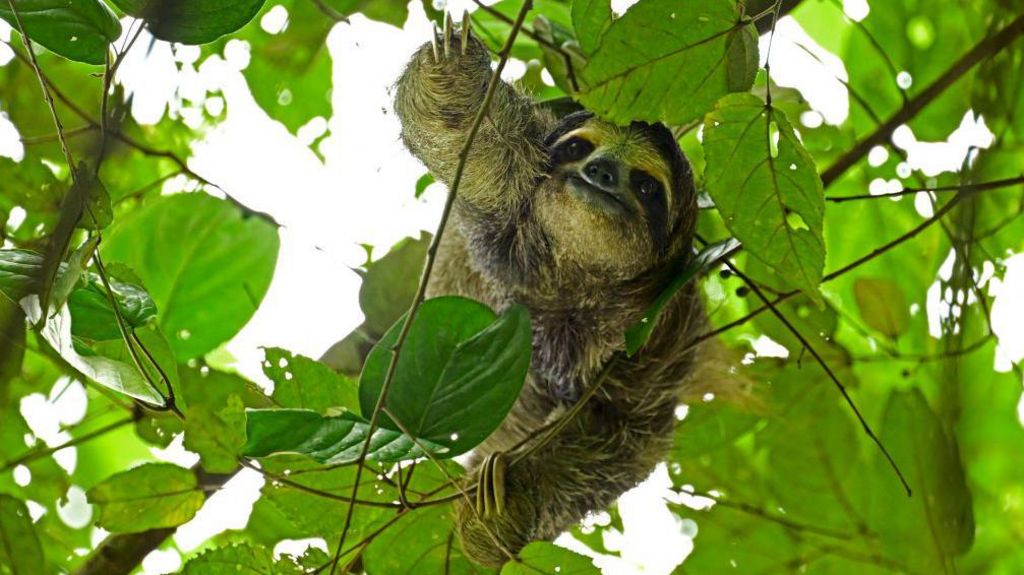
A planned Orlando, Florida, sloth exhibit billed as the region’s only purpose-built “slothnarium” has been thrown into chaos after regulators confirmed 31 of the mammals imported for the attraction died months before its scheduled spring opening, triggering widespread scrutiny of animal welfare practices and regulatory gaps in the state’s wildlife permitting system.
According to a report released Friday by the Florida Fish and Wildlife Conservation Commission (FWC), the bulk of the fatalities stemmed from dangerous, unfit living conditions at a private Florida warehouse where the imported sloths were held awaiting the attraction’s completion. The incident has already prompted additional investigations from multiple state and local regulators, as well as harsh criticism from animal conservation groups and elected officials.
The 31 sloths were imported in two separate shipments to be displayed at Sloth World, a permanent public tourist attraction marketed as a rainforest-inspired sanctuary built specifically to prioritize sloth welfare, located along Orlando’s busy tourist corridor. The FWC’s investigation, obtained by the BBC, details two separate fatal incidents that unfolded between late 2024 and early 2025.
The first shipment, carrying 21 sloths imported from Guyana, arrived in Florida in December 2024. Investigators found the animals were held in a disused warehouse that lacked basic running water and working electricity. Staff purchased portable space heaters to warm the temperature-sensitive tropical mammals, which naturally thrive in constant temperatures between 70°F and 86°F, but the heaters overloaded the building’s electrical system, tripping a circuit breaker that cut off power to the heaters. For at least one full night, the sloths were left without any heating during a week when outdoor low temperatures dropped to 46°F, according to regional historical weather data. All 21 sloths ultimately died from exposure to cold, a condition investigators labeled “cold stun.”
A second shipment of 10 sloths imported from Peru arrived in February 2025. Two of the animals were already dead on arrival, and the remaining eight were found to be severely emaciated. All eight later died from complications linked to their poor pre-existing health, the report confirmed.
When FWC investigators launched their probe, Peter Bandre, who is publicly listed as Sloth World’s vice president and promoted in the attraction’s marketing as “one of the most respected sloth experts in the world,” admitted the warehouse was never properly prepared to receive the animals. He told investigators the shipment could not be canceled after it was already en route, confirming the cold exposure killed the first group of sloths. The FWC also found that on two separate occasions, sloths under Bandre’s care were held in enclosures that failed to meet the state’s minimum captive wildlife welfare standards, resulting in a verbal warning at the time, but no formal citation.
Ben Agresta, owner of Sloth World, has pushed back against the FWC’s findings, dismissing the official report as rife with misinformation. Agresta claims the sloths died from an undetectable virus that produced no visible symptoms and could not be identified even after post-mortem necropsies. The BBC has reached out to Agresta, Sloth World, and its listed representatives for additional comment, but has not received a formal response.
The FWC closed its investigation without issuing any written warnings or formal citations, but an agency spokesperson confirmed that multiple other regulatory bodies are currently conducting separate probes into the incident. Last week, Orange County’s Building Safety Department posted a stop-work order at the warehouse where the sloths were held, citing alleged violations of state building codes and local county regulations.
With regulatory investigations ongoing and the site shuttered by local officials, it remains unclear whether Sloth World will ever open to the public as planned. The 13 surviving sloths intended for the attraction are currently being cared for by another accredited zoo in Central Florida, according to local media reports. While Agresta holds a valid state wildlife permit that allows him to exhibit captive wildlife, the incident has exposed major gaps in Florida’s regulatory framework, according to critics.
Democratic Florida State Representative Anna Eskamani, who has publicly criticized the handling of the case, noted that current rules do not require the FWC to be automatically notified when captive wildlife dies under a permit. She argued that the deaths would likely have never been uncovered without reports from concerned private citizens. “If it wasn’t for everyday people who care and reported these deaths it’s hard to know when FWC would have even learned about the deaths,” Eskamani said.
Leading sloth conservation organizations had already raised red flags about Sloth World long before the deaths were revealed. The Sloth Institute and the Sloth Conservation Foundation both warned that capturing wild sloths and shipping them long distances for captive exhibits puts the animals at extreme risk of life-threatening health complications stemming from sudden diet changes, stress, and adaptation to artificial environments. Sam Trull, executive director of The Sloth Institute, noted that for many illegally or improperly captured sloths, the stress of transit and captivity proves fatal.