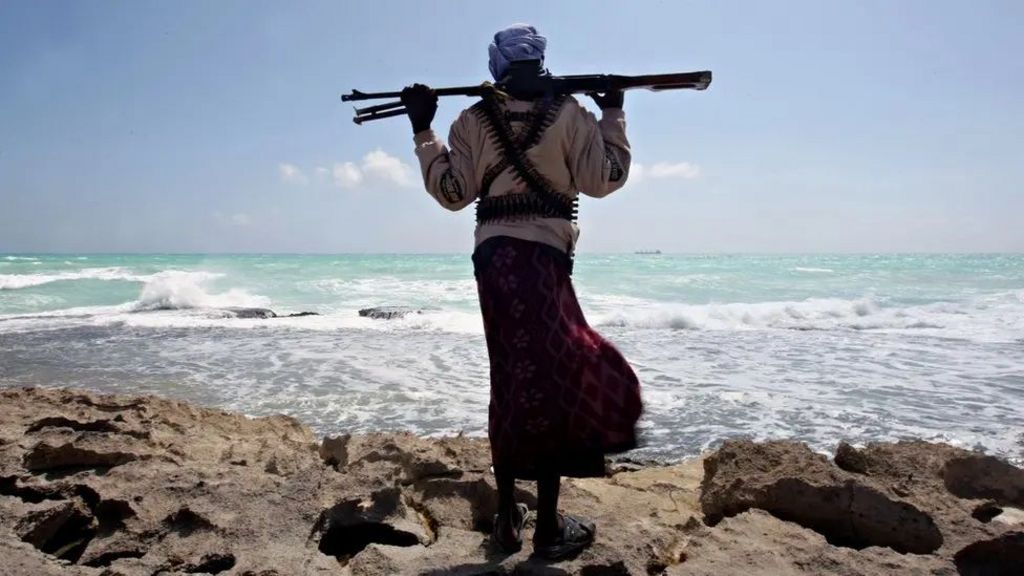
After nearly a decade of sharp decline following coordinated international anti-piracy interventions, pirate activity off the coast of Somalia has reemerged as a critical threat to regional maritime security in recent years. The latest and most high-profile incident has underscored the growing risk: armed pirates have seized the oil tanker *Honour 25*, carrying 17 crew members and thousands of barrels of fuel, while it transited waters roughly 30 nautical miles from the Somali shore.
Multiple regional security sources confirmed to the BBC that six armed assailants boarded and took control of the vessel late Wednesday. Shipping tracking data from ShipAtlas details the tanker’s weeks-long route ahead of the hijacking: it departed Berbera Port, located in the self-declared independent region of Somaliland, on February 20. Shortly after the outbreak of cross-border conflict tied to the U.S.-Israel Iran tensions, the *Honour 25* reached waters near the United Arab Emirates, then loitered near the Strait of Hormuz entrance before reversing course on April 2 to head for Mogadishu, Somalia’s capital.
Puntland regional security officials, the governing body for Somalia’s semi-autonomous northeastern territory, confirmed the tanker was carrying 18,500 barrels of oil destined for Mogadishu. Following the hijacking, the vessel has been anchored near the Somali coast between the coastal fishing towns of Xaafun and Bander Beyla, under full pirate control. Additional reinforcements have since joined the hijacking party: five more armed men have boarded the *Honour 25*, according to anonymous regional sources. Investigators currently believe the hijackers launched their attack from a remote, unpatrolled stretch of coastline near Bander Beyla, though it remains unclear how the group was able to intercept and overwhelm the tanker without detection.
The 17-person crew on board includes 10 Pakistani nationals, four Indonesians, one Indian, one Sri Lankan, and one Myanmarese national. No reports on their condition have been released to date.
This hijacking comes amid a well-documented resurgence of piracy in the Indian Ocean region off Somalia’s coast. Once the global epicenter of maritime hijacking, the area saw pirate attacks drop to near-zero after 2011, when international naval coalitions launched widespread anti-piracy patrols and vessel security mandates. Over the past three years, however, attacks have rebounded, with fishing trawlers, cargo container ships, and now large oil tankers targeted by armed groups.
The seizure of a fuel tanker bound for Mogadishu is expected to exacerbate already severe economic strain in the capital. Local fuel prices have already tripled in the wake of regional conflicts linked to escalating tensions between Iran and the U.S.-Israel alliance, and renewed fears of disrupted shipping will almost certainly push prices higher and deepen public anxiety.
As of Thursday, neither formal Somali national government authorities nor the European Naval Force – the multinational body that coordinates official anti-piracy operations in Somali territorial waters – has issued an official statement confirming the hijacking or outlining next steps for response.