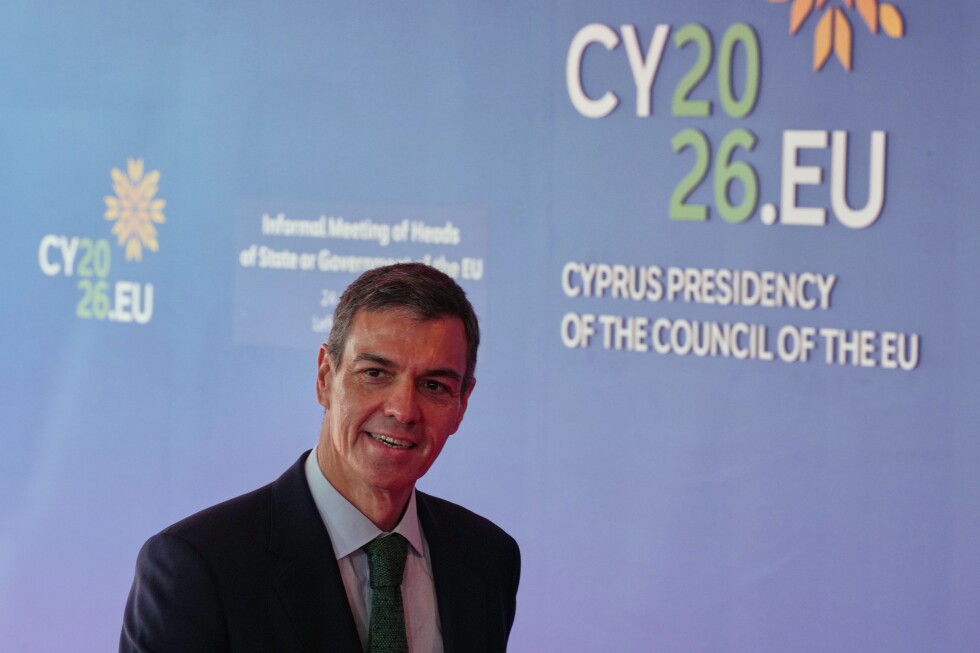
Amid growing transatlantic friction over U.S. military operations in the Iran war, Spanish Prime Minister Pedro Sánchez has declined to engage with unconfirmed reports that the Pentagon is considering punitive measures against NATO allies that refuse to back American actions. Spain has emerged as a primary target of this potential pushback, after Madrid formally barred U.S. forces tied to the conflict from accessing its military bases and national airspace. The Spanish government has repeatedly justified its position by arguing that U.S.-Israeli military action in Iran violates international law.
Spain is not alone in its refusal: both France and the United Kingdom have also declined to grant U.S. forces unfettered access to their territories for bombing operations against Iran. Reports of the Pentagon’s internal deliberations first emerged via Reuters, which cited an anonymous U.S. official referencing an internal Defense Department email. The document even raised the possibility of suspending Spain’s full membership in NATO, alongside a proposal to reassess longstanding U.S. support for the United Kingdom’s territorial claim over the Falkland Islands (known as the Islas Malvinas in Argentina).
Speaking to reporters on the sidelines of a European Union summit held in Nicosia, Cyprus, Sánchez pushed back on the unsubstantiated claims. “We do not work with emails,” the prime minister noted. “We work with official documents and positions taken, in this case, by the government of the United States.” He reaffirmed that Spain’s stance remains unchanged: “The position of the government of Spain is clear: absolute collaboration with the allies, but always within the framework of international legality.”
This tension comes as NATO itself has formally distanced itself from the Iran conflict. Operating on the basis of consensus, the alliance requires the unanimous agreement of all 32 member states to launch collective action. Crucially, NATO’s founding charter also lacks any formal mechanism to suspend or expel a member nation, even if a member disagrees with the policies of one ally. Member states are only permitted to voluntarily exit the alliance, a process that requires one year’s formal notification to other partners. As an institution, NATO’s only direct role tied to the conflict is limited to defending its own sovereign territory.
The friction has its roots in former U.S. President Donald Trump’s public anger over what he frames as a failure of many NATO allies to back U.S. actions in Iran and assist with security patrols in the Strait of Hormuz, a critical global oil trade chokepoint. Trump has repeatedly questioned the value of U.S. membership in the transatlantic military alliance, and has even threatened to impose trade restrictions on Spain in retaliation for its base access ban. Beyond the Iran war, Spain has also drawn criticism from allies for failing to meet agreed NATO defense spending targets.
EU officials have voiced confusion over the U.S. criticism of European allies, noting that France and the United Kingdom are already leading a planned effort to secure maritime trade in the Strait of Hormuz once hostilities in Iran end. EU High Representative for Foreign Affairs Kaja Kallas pointed out that Washington has already asked the bloc to deliver exactly the post-conflict support Europe has committed to providing. “When we have had contacts with the American counterparts, then actually their asks for us have been exactly what we are able to offer after the cessation of hostilities,” Kallas said. “Demining, escorting of ships, all of this that we have been discussing.”
NATO Secretary-General Mark Rutte, however, has implicitly criticized the position of Spain and other allied holdouts, noting that long-standing bilateral agreements between the U.S. and European allies covering overflight access and base hosting should be honored. To date, several other NATO allies have permitted U.S. warplanes to use their airspace and American military bases on their territory for operations tied to the Iran war.
Against a backdrop of growing uncertainty over the durability of U.S. security commitments to Europe, EU leaders used the Nicosia summit to debate new frameworks for collective European self-defense. With Cyprus holding the rotating EU presidency through July, Cypriot President Nikos Christodoulides confirmed that leaders have instructed the European Commission to draft a strategic blueprint outlining how the bloc would respond if one member requests collective assistance under Article 42.7 of the EU treaties.
This mutual defense clause has only been invoked once in the bloc’s history, when France requested support following the 2015 terror attacks in Paris. Next month, EU envoys and defense ministers will hold table-top simulation exercises to test how the clause could be activated in future scenarios, mapping out how the bloc can leverage not just its combined military capabilities, but also other policy tools unavailable to NATO—including trade sanctions, border management, and visa restrictions.