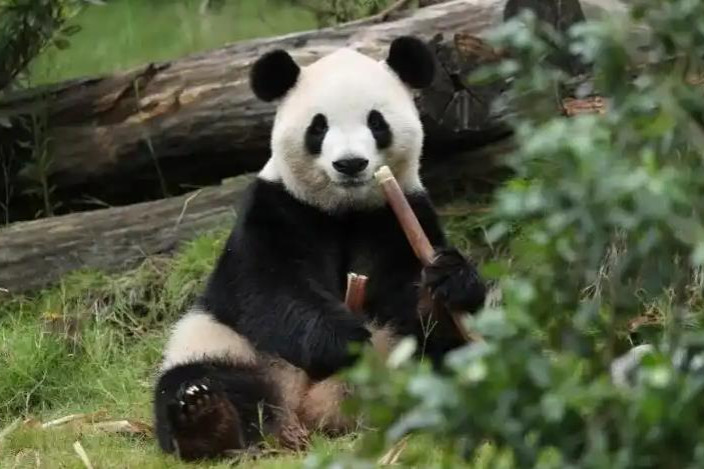
After 25 years of productive transboundary giant panda conservation collaboration that yielded seven captive-bred cubs, China and the United States are set to extend their landmark partnership. The China Wildlife Conservation Association made a formal announcement on Friday confirming that a new 10-year conservation agreement has been activated, paving the way for two young giant pandas to relocate to Zoo Atlanta.
Both new pandas – a male named Ping Ping and a female named Fu Shuang – were born and raised at the Chengdu Research Base of Giant Panda Breeding, one of China’s leading facilities for endangered species protection and captive breeding. The cooperative framework between the association and Zoo Atlanta was first finalized last year, kicking off a new chapter of scientific collaboration that traces its origins back to the initial partnership established in 1999.
In preparation for the pandas’ arrival, Zoo Atlanta has already launched targeted upgrades to its giant panda enclosures. Chinese conservation specialists have been on hand to provide specialized technical guidance covering every critical detail of the pandas’ future care, from meeting strict global enclosure design standards and developing science-based husbandry routines to securing a consistent supply of high-quality bamboo and establishing rigorous animal health monitoring protocols.
Under the previous 25-year agreement, the collaborative program earned a place in history as the most successful panda breeding initiative between China and any Western nation. The pair of pandas housed at Zoo Atlanta during that period – Lun Lun and Yang Yang – produced seven cubs across five separate litters, a record that demonstrated the effectiveness of the bilateral cooperative model.
Beyond breakthroughs in captive breeding, the two sides have built a robust partnership across multiple areas of giant panda conservation over the decades. Joint projects have included development of modern behavioral training techniques for captive pandas, advancement of preventive veterinary medicine practices tailored to the species, and the expansion of public conservation education programs that reach millions of visitors annually.
Officials from the China Wildlife Conservation Association noted that these years of academic exchange and collaborative research have done more than advance global scientific understanding of giant pandas. The program has also served as a people-to-people cultural bridge, strengthening mutual understanding and connections between the citizens of China and the United States.
Moving forward under the new 10-year agreement, the partnership will expand its focus to include four key priority areas: enhanced giant panda disease prevention and control, continued cross-border scientific knowledge exchange, expanded support for in-situ giant panda conservation in China’s natural habitats, and collaborative development of China’s Giant Panda National Park, one of the world’s largest protected areas for endangered wildlife.