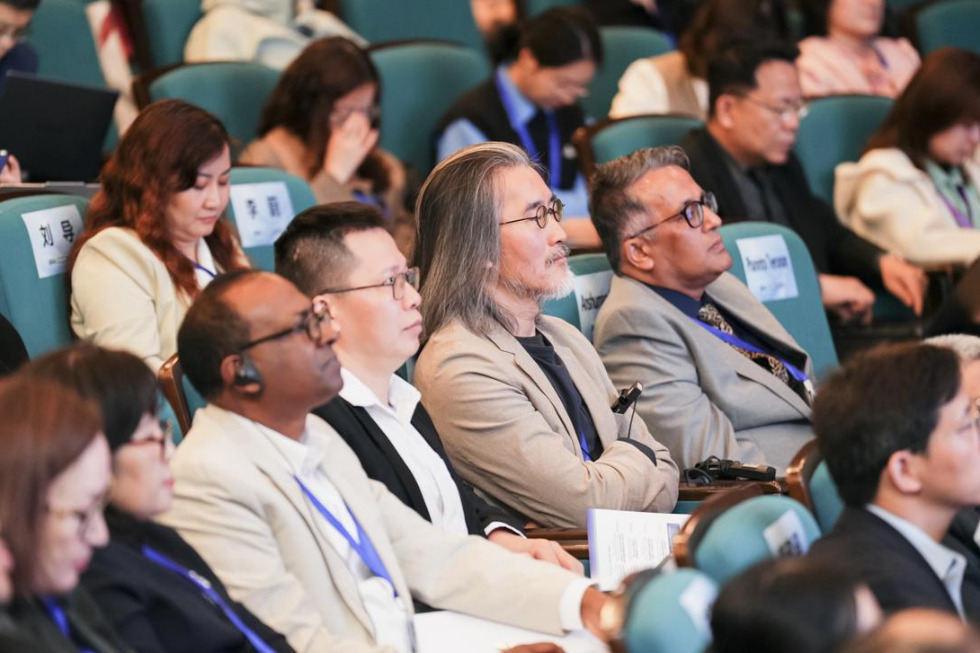
As the global community grapples with the accelerating urgency of climate change, international industry and academic experts gathered in Shanghai this week to highlight education as an underrecognized, transformative force for driving meaningful climate progress. The discussion took place Thursday at the Climate Change Education Forum, a core event of 2026 Shanghai Climate Week hosted on the campus of East China Normal University (ECNU), where leaders from institutions across Asia called for expanded cross-border collaboration to embed climate literacy and green action into learning systems worldwide.
Opening the forum, Zhu Junwen, deputy Party chief of ECNU, framed climate change as one of the most existential shared challenges facing modern humanity, arguing that education stands apart as a foundational catalyst for systemic change. He emphasized that climate education must evolve far beyond simple knowledge dissemination, arguing that its core goal should be reshaping public mindsets and catalyzing widespread behavioral change that reduces individual and collective carbon footprints.
A leading hub for climate education research and policy development, ECNU has leveraged its cross-disciplinary research platforms to deepen engagement in the field, contribute to the drafting of international climate education standards, and advance multilateral collaborative projects. Currently, the university is working with higher education institutions and research organizations from a dozen countries across the globe to launch the “BRICS+” Joint Laboratory for Climate Change Education and Green Development, a new initiative designed to align global research efforts and share best practices for climate-focused learning.
“ECNU remains committed to deepening partnership with all stakeholders around the world, to leverage the power of education to enable just green transition, and to contribute to global sustainable development and the construction of a global community with a shared future for humanity, Zhu added.
Supakorn Pongbangpho, president of Thailand’s University of Phayao, echoed the call for a reimagined approach to climate education, noting that the core mission of climate learning is to embed long-term green thinking into the next generation of global leaders. He stressed that truly sustainable development pathways can only be achieved when modern innovative technology is paired with the traditional ecological wisdom held by local communities around the world, creating a holistic approach to climate action that benefits all populations.
By the close of the forum, participating organizations had already advanced a range of collaborative agreements and actionable outcomes, said Zou Rong, co-director of the executive committee of Shanghai Climate Week. Looking ahead, Zou called for continued cross-sector, cross-border cooperation to turn pledges into tangible progress, expanding access to high-quality climate education and turning learning into measurable action to cut global emissions and build climate resilience.
The forum comes as policymakers and climate activists increasingly recognize that even the most ambitious national emissions reduction pledges will fail without broad public buy-in, which can only be built through widespread climate literacy that empowers people to adjust their behaviors and demand systemic change from governments and corporations.