As China rapidly closes the technological gap with the United States in global artificial intelligence development, the Trump administration has launched a new crackdown on what it frames as unfair exploitation of American AI innovation by foreign firms, with China positioned as the primary target of the policy push.
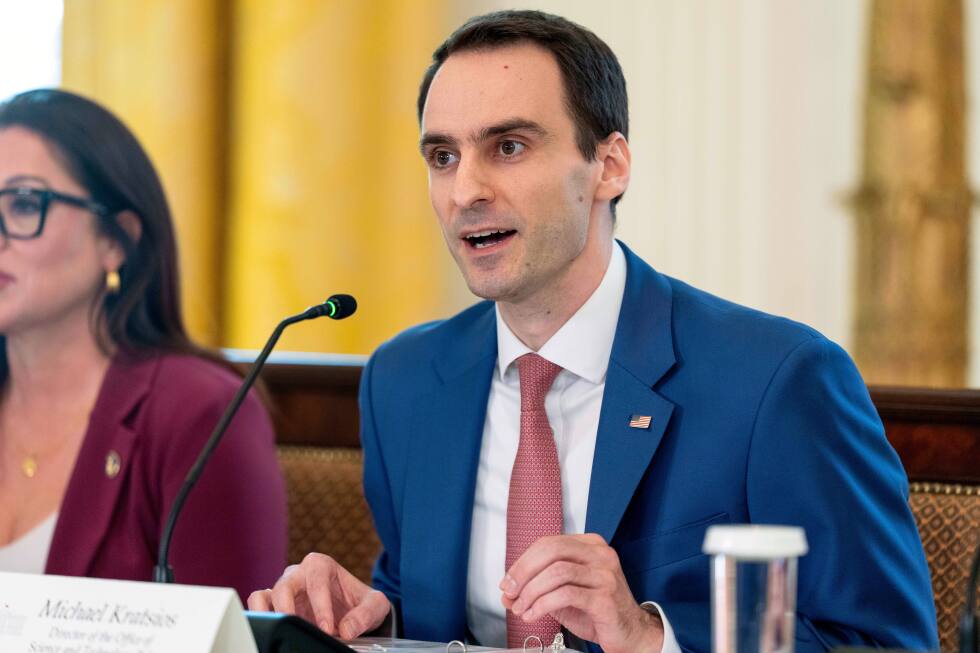
In a formal memorandum released Thursday, Michael Kratsios, then-President Trump’s top science and technology advisor, leveled accusations that foreign entities—most headquartered in China—are running coordinated, industrial-scale campaigns to “distill” core capabilities from leading U.S.-built AI systems, effectively siphoning off American research and development work for their own gain. “Foreign actors are exploiting decades of American expertise and innovation to cut corners on their own AI development,” Kratsios wrote, outlining that the administration would partner with leading U.S. AI companies to map unauthorized extraction activity, reinforce defensive systems, and implement penalties against bad actors.
The policy announcement lands amid a shifting global AI landscape: the White House has repeatedly framed AI dominance as a critical strategic priority, arguing U.S. leadership is necessary to set global technical norms and secure long-term economic and military advantages. However, a recent analysis from Stanford University’s Human-Centered AI Institute found that the performance gap between the world’s top U.S. and Chinese AI models has “effectively closed” in recent years, eroding the long-held American competitive edge.
China’s embassy in Washington swiftly pushed back against the accusations, condemning what it called the United States’ “unjustified suppression of Chinese companies.” “China has always been committed to advancing global scientific and technological progress through open cooperation and healthy, fair competition,” embassy spokesperson Liu Pengyu said in a statement, adding that China prioritizes rigorous intellectual property protection for all innovators.
Kratsios’ memo coincided with a key congressional development that same week: the U.S. House Foreign Affairs Committee gave unanimous, bipartisan backing to a new bill that would establish a formal government process to identify foreign actors that steal core technical details from closed-source, U.S.-owned AI models, and impose punitive measures including economic sanctions against offenders. The bill’s sponsor, Republican Representative Bill Huizenga of Michigan, framed model extraction attacks as a new front in Chinese economic aggression and intellectual property theft. “American AI models are delivering transformative new capabilities that will reshape our economy and national security,” Huizenga said. “It is absolutely critical that we block China from stealing these decades of technological advancement to boost their own strategic position.”
Tensions over AI extraction first flared last year, when Chinese AI startup DeepSeek launched a high-performance large language model that could compete with products from top U.S. AI giants—at a fraction of their development cost, sending shockwaves through U.S. tech markets. David Sacks, who served as Trump’s AI and crypto advisor at the time, publicly claimed there was substantial evidence that DeepSeek had distilled proprietary knowledge from OpenAI’s leading models to build its own product. OpenAI, the developer behind ChatGPT, echoed these claims in a February letter to U.S. lawmakers, arguing that China should not be allowed to build what it called “autocratic AI” by “appropriating and repackaging American innovation.”
Shortly after, Anthropic—creator of the popular Claude chatbot—accused DeepSeek and two other China-based AI research labs of running coordinated campaigns to illicitly extract Claude’s core capabilities to improve their own competing models via knowledge distillation, a technique that involves training a smaller, less advanced model on the output of a more powerful, cutting-edge system. While Anthropic acknowledged that distillation can be a legitimate, widely used method for AI training when done with permission, the company argued that it becomes unfair and illicit when competitors use the technique to gain powerful AI capabilities in a fraction of the time and at a tiny fraction of the cost required to develop leading models independently.
However, cross-border knowledge sharing in AI works in both directions. San Francisco-based startup Anysphere, maker of the widely used coding tool Cursor, recently confirmed that its latest flagship product is built on an open-source model developed by Chinese AI firm Moonshot AI, creator of the popular Kimi chatbot.
Industry and policy experts note that enforcing new restrictions on unauthorized AI distillation will pose massive practical challenges. Kyle Chan, a Brookings Institution fellow based in Washington D.C. and a leading expert on Chinese technology development, explained that distinguishing unauthorized extraction from the massive volume of legitimate, routine data requests from AI systems is comparable to “looking for needles in an enormous haystack.” That said, Chan added that coordinated information sharing between U.S. AI research labs could help mitigate the risk, and the federal government can play a key facilitating role in aligning anti-extillation defenses across the private sector.
While it remains unclear how far the House-passed bill will advance through the legislative process, Chan noted that the Trump administration may be hesitant to escalate tensions with Beijing ahead of a planned mid-May state visit by the U.S. president to China, creating uncertainty about how aggressively the new policy will be implemented.
This reporting included contributions from Matt O’Brien, an AP technology writer based in Providence, Rhode Island.