In recent months, a loose collection of deaths and disappearances of roughly 10 people linked to U.S. scientific and national security work has ignited a firestorm of baseless conspiracy theorizing across social media, drawing official scrutiny from federal investigators and congressional oversight bodies while inflicting unnecessary additional pain on grieving families who have repeatedly tried to set the record straight.
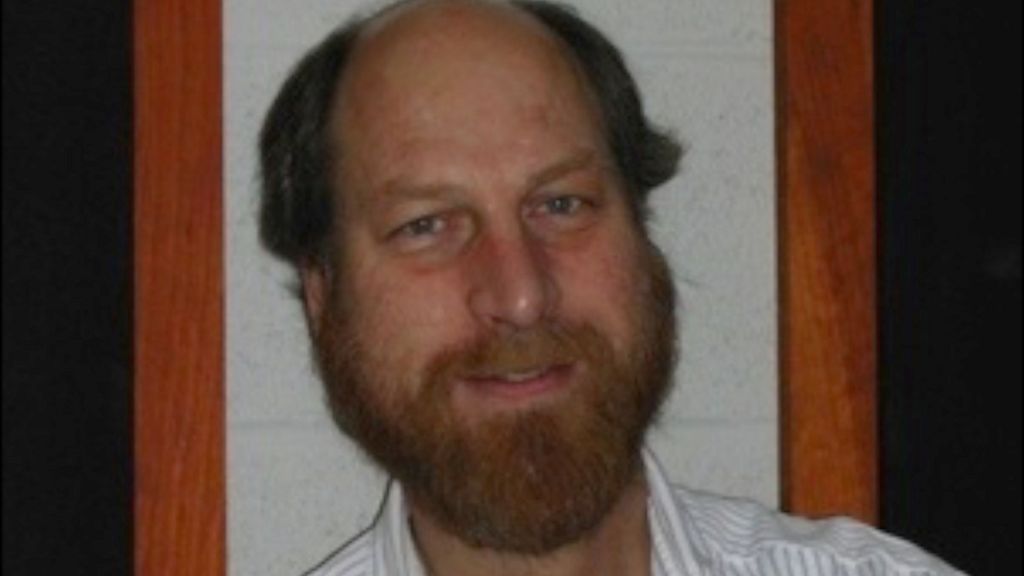
Among the cases at the center of the online speculation is the February killing of 67-year-old Carl Grillmair, a respected astronomer at the California Institute of Technology’s IPAC science and data center, who was shot and killed at his rural Llano, California, property. A local 29-year-old man named Freddy Snyder has been charged with murder and burglary in the case, and is scheduled for arraignment next week. Despite an arrest and a clear, publicly outlined motive from the victim’s family, Grillmair’s name has become a centerpiece of unsubstantiated online narratives that frame the 10 cases as part of a coordinated, hidden plot tied to classified research.
According to Grillmair’s widow, Louise, the killing was the result of a misplaced revenge plot, not a targeted assassination tied to her husband’s work on exoplanets and astronomy. Months before the shooting, Snyder had trespassed on the couple’s land while claiming to hunt coyotes, and later escalated disruptive behavior across the neighborhood. When a local resident called 911 to report Snyder’s activity, the suspect incorrectly blamed Grillmair for the call, Louise explained. After returning to the property with a baseball bat two weeks prior to the killing, Snyder came back armed on February 16 and fatally shot Grillmair.
Louise Grillmair has dismissed the online conspiracies as utter nonsense, noting that her late husband — a kind, morally grounded man who regularly helped others and refused to pursue legal action even when he was not at fault in car accidents — would laugh off the wild claims and use statistical reasoning to debunk them. She called the unfounded speculation denigrating to the memory of those who have died or gone missing, a sentiment echoed by other grieving relatives who have described the theorizing as disgusting and disrespectful, compounding the pain of their loss.
Other cases included in the online conspiracy lists equally straightforward explanations that theorists routinely ignore. Retired Air Force General William Neil McCasland, the highest-profile person on the list, disappeared from his New Mexico home in February, with his wife Susan McCasland Wilkerson quickly clarifying that all evidence points to a deliberate departure driven by declining health. McCasland, who had retired nearly 13 years prior and only held routine clearances, had recently struggled with anxiety, memory loss, and insomnia, and had told his wife he did not want to live if his physical and mental health continued to deteriorate. He left his phone behind and took only his gun, leading Susan to note that he planned not to be found. Even dryly addressing the conspiracies, she joked that if there was no evidence of any foul play, the only outlandish hypothesis left was that aliens had beamed him to a mothership — a claim she noted had no supporting evidence.
Eight months before McCasland’s disappearance, Melissa Casias, an administrative assistant at Los Alamos National Laboratory, vanished from Taos, New Mexico, with her family confirming she left deliberately. Even with that public statement, conspiracy theorists continue to fixate on her case. MIT physicist Nuno Loureiro was murdered by a former classmate, who confessed to the killing on video and was arrested for additional homicides at Brown University. Another researcher died by suicide after suffering devastating grief following the loss of both of his parents in a single day, his body later recovered from a local lake, while another death was officially ruled the result of cardiovascular disease by a coroner.
Mick West, a well-known science writer and debunker of pseudoscience, has pushed back against the conspiracy claims, pointing out that statistical probability explains the small number of deaths among the hundreds of thousands of people with security clearances in the U.S. aerospace and nuclear sectors. Over a 22-month period, ordinary mortality would predict roughly 4,000 deaths, 70 homicides, and 180 suicides among that population, West noted, making the 10 cases cited by conspiracy theorists entirely unremarkable.
Despite the clear explanations and family members’ repeated attempts to quell the hysteria, the conspiracy theories have gained enough traction online that both the FBI and the U.S. House Oversight Committee have launched formal investigations. For Louise Grillmair, the attention would be better focused on celebrating her husband’s legacy: groundbreaking scientific research, a commitment to helping others, and a quiet life spent enjoying flying, outdoor work, and astronomy from the small observatory he built at his home.